Recent global events have dramatically reshaped commodity markets, particularly affecting the dynamics between gold and oil. The current conflict in Iran, coupled with disruptions in the Strait of Hormuz, has initiated a market movement not witnessed in decades. This situation has led to an unprecedented decline in gold's value relative to crude oil, a trend that echoes the significant shifts seen during the 1973 Arab oil embargo. Consequently, the mining sector is experiencing a severe downturn, reflecting the deep and far-reaching impact of these geopolitical tensions on the global economy.
The traditional perception of gold as a reliable safe-haven asset during times of global uncertainty is being challenged by these developments. Instead, gold's sensitivity to interest rates and inflationary pressures is coming to the forefront. As oil prices surge due to supply concerns, fears of resurgent inflation are prompting a reevaluation of central bank policies, with potential interest rate hikes now on the table. This complex interplay of factors is creating a highly volatile environment, forcing investors to reassess their strategies and adapt to a new economic reality where established market behaviors are being upended.
The Unprecedented Decline of Gold and Mining Equities
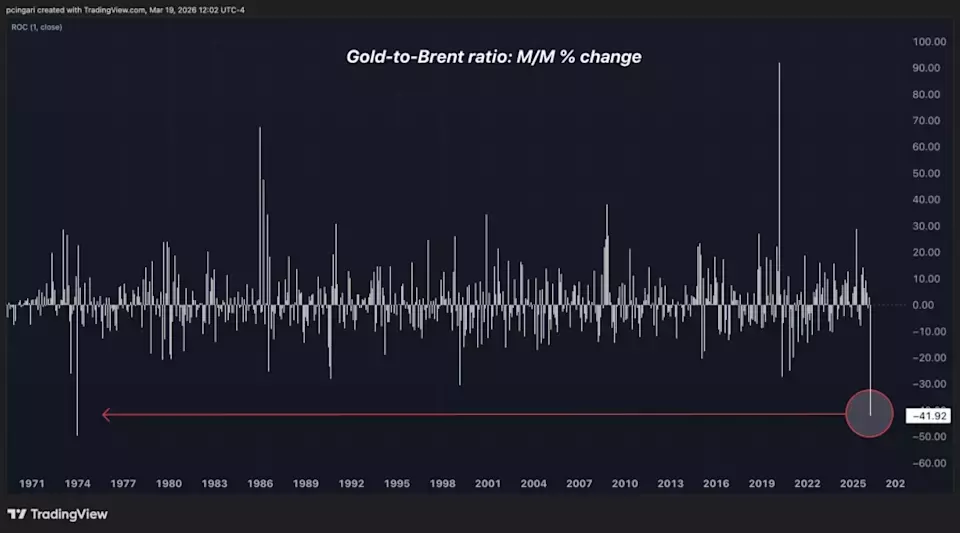
The current global scenario, marked by geopolitical tensions and energy market volatility, is profoundly impacting the gold and mining sectors. Gold prices, as reflected by the SPDR Gold Shares, have plummeted by 13% this month, reaching $4,580 per ounce. This marks the most significant monthly drop since the financial crisis of October 2008, following the collapse of Lehman Brothers. More tellingly, the gold-to-Brent crude ratio has seen a staggering 43% decrease this month, settling around 40. This decline represents gold's weakest performance against oil in a single month since December 1973, a period famously defined by the Arab oil embargo, which fundamentally reshaped global commodity markets. This historic shift challenges the conventional wisdom that gold acts as a primary safe-haven asset in times of geopolitical turmoil, revealing its susceptibility to interest rate fluctuations and inflationary pressures.
The repercussions of these developments are particularly severe for gold mining companies. The VanEck Gold Miners ETF has experienced a 29% loss in value within 19 days, dropping from $117 to $82. This positions the sector for its most significant monthly collapse since October 2008. The profitability of mining operations is directly threatened as gold prices decline while energy costs, a substantial component of operational expenses, soar. Wholesale diesel prices, crucial for heavy mining equipment, have surged by 61% since the onset of the conflict. With energy typically accounting for 15% to 20% of total cash costs, such a sharp increase can entirely erode profit margins for higher-cost mines. The gold-to-oil ratio, a key indicator of mining profitability, underscores the extent of this damage, highlighting a market dislocation reminiscent of the 1973 oil crisis, where a sudden energy shock triggered both soaring crude prices and a significant reevaluation of inflation expectations, devastating non-yielding assets and energy-intensive industries alike.
Shifting Economic Paradigms: Inflation, Interest Rates, and Market Expectations
The prevailing geopolitical climate has triggered a significant shift in global economic paradigms, primarily driven by escalating oil prices and the re-emergence of inflationary concerns. The disruption in the Strait of Hormuz, a critical maritime passage, has led to a surge in crude oil prices, reigniting fears of inflation that markets had previously dismissed. This renewed inflationary pressure has forced a drastic reassessment of monetary policy expectations. Prior to the conflict, market analysts had anticipated two Federal Reserve interest rate cuts in 2026. However, these expectations have now dissipated entirely. Instead, a more alarming scenario is gaining traction: should the energy shock persist, the possibility of outright interest rate hikes by the Federal Reserve has re-entered the economic discourse. This potential policy shift directly contrasts with the factors that fueled the historic gold rally of 2025, where falling inflation and expectations of aggressive rate cuts propelled gold to unprecedented highs, including an all-time peak of $5,589 per ounce by January 2026.
The current market dynamics demonstrate a reversal of the mechanisms that previously supported gold's ascent. According to Polymarket data, the probability of a Fed rate hike this year has risen to 17%, more than double the odds observed before the conflict began. This indicates a profound change in investor sentiment and economic outlook. The traditional understanding of gold as a hedge against inflation is being challenged as rising oil prices directly contribute to inflation, simultaneously pushing interest rates higher and making non-yielding assets like gold less attractive. This intricate relationship means that while geopolitical stress often increases demand for safe-haven assets, the specific nature of the current crisis – an energy shock leading to inflation and potential rate hikes – is creating a unique environment where gold, despite initial expectations, is under significant pressure. The economic landscape is now characterized by uncertainty, with a clear departure from the conditions that fostered the bullish metal narrative just weeks ago, thereby compelling a broad reevaluation of investment strategies.
