
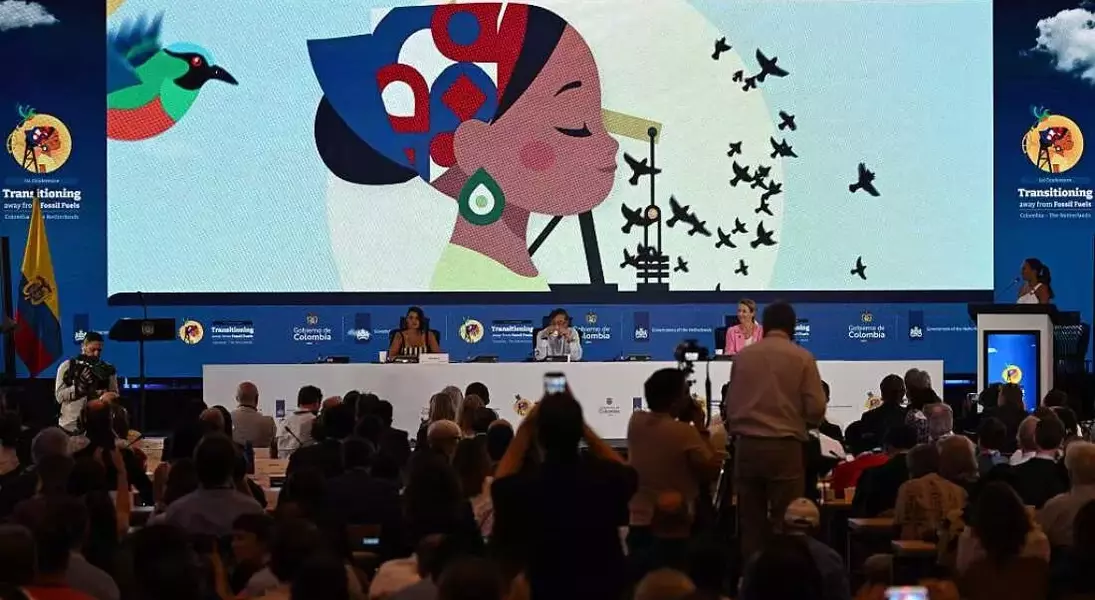

In an effort to confront the escalating climate crisis, an international assembly convened in Santa Marta, Colombia. This gathering, co-chaired by Colombia and the Netherlands, aimed to accelerate the global shift away from fossil fuels. Over fifty countries participated, signaling a collective desire to move beyond aspirational goals and implement tangible solutions. Discussions centered on practical approaches, including redirecting subsidies from fossil fuels to renewable energy projects and fostering new employment opportunities in the green sector. This conference emerged as a critical platform to address the transition from oil, gas, and coal, providing a focused dialogue that complements broader climate negotiations.
Global Leaders Convene in Santa Marta to Chart a Path Beyond Fossil Fuels
On April 28, 2026, the vibrant coastal city of Santa Marta, Colombia, became the epicenter of a crucial two-day international conference dedicated to a just transition away from fossil fuels. Hosted jointly by Colombia and the Netherlands, this landmark event brought together high-level representatives from more than 50 nations. Among the prominent figures were Colombia's President Gustavo Petro, Environment Minister Irene Vélez Torres, and Dutch Minister of Climate and Green Growth Stientje van Veldhoven. The discussions focused on concrete strategies to expedite the global phasing out of oil, gas, and coal, which are recognized as primary contributors to human-induced climate change.
Colombia, a significant global producer of coal, oil, and gas, has been actively pursuing economic diversification and a transition towards sustainable energy sources. This initiative aligns with a growing international consensus that such a shift is imperative. During the opening plenary, Colombian Environment Minister Irene Vélez Torres urged participants to transform aspirations into actionable plans, declaring the conference a potential "turning point in history."
The backdrop for these critical discussions includes a rapidly warming planet and an energy crisis exacerbated by geopolitical events, such as the U.S.-Israeli conflict in Iran. These developments have led to soaring oil and gas prices and energy shortages, prompting an increased urgency among nations to reduce their reliance on fossil fuels. Ralph Regenvanu, Vanuatu's Minister for Climate Change, emphasized this sentiment, noting that for his island nation, threatened by rising sea levels, the crisis has spurred rapid advancements in renewable energy, including an accelerated target for electrifying government vehicle fleets.
Experts like Leo Roberts from the climate nonprofit E3G highlighted that the transition is increasingly driven by economic viability and security, not just environmental concerns. Renewable energy, particularly when coupled with advanced grid management and battery storage, is proving to be more cost-effective and reliable than traditional fossil fuel sources, as indicated by analyses from financial services firm Lazard. This economic advantage is further demonstrated by the proliferation of affordable Chinese electric vehicles and large-scale solar and wind projects globally.
While nations like Australia, Mexico, and Nigeria, significant fossil fuel producers, participated in the conference, notable absences included the United States and China, the world's largest oil consumer and coal consumer, respectively. Daniela Durán, head of international affairs at Colombia's Ministry of Environment, reiterated that the conference serves as a dedicated forum for countries committed to advancing the fossil fuel transition, complementing the broader, often contentious, United Nations climate conferences (COPs).
This new conference aims to circumvent the stalemates frequently encountered at COPs, where unanimous consent from all member states, including major fossil fuel producers, often hinders progress on specific fossil fuel phase-out language. As Mary Robinson, former President of Ireland, aptly put it, this gathering represents a "coalition of the doers," united by a shared urgency to enact rapid change. Johan Rockström, director of the Potsdam Institute for Climate Impact Research, acknowledged that while the 1.5-degree Celsius warming limit is "inevitably" in jeopardy, the collective will and accelerated actions discussed at Santa Marta offer a beacon of hope for steering humanity towards a more sustainable future.
The assembly in Santa Marta represents a significant step towards global energy transformation. It underscores a growing understanding that transitioning away from fossil fuels is not merely an environmental imperative but also an economic and security necessity. The discussions around concrete actions, such as reallocating subsidies and fostering green employment, highlight a pragmatic approach to climate action. The collective spirit and determination shown by the participating nations offer a hopeful outlook, suggesting that despite past challenges and political inertia, a coordinated and accelerated shift towards renewable energy is not only possible but actively underway. This collaborative effort could indeed mark a pivotal moment in the ongoing battle against climate change, proving that when ambition translates into action, profound change can begin.
