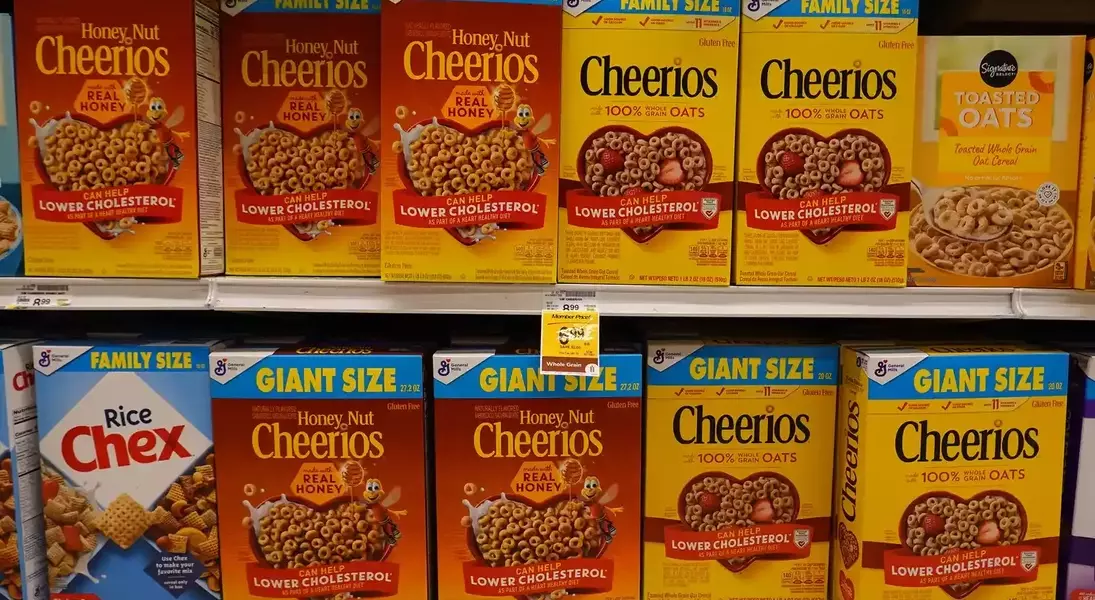
General Mills, a prominent player in the food industry, has recently adjusted its financial projections for the current fiscal year. The company anticipates a decrease in both sales and profits, attributing this revised outlook to a challenging consumer market and escalating operational expenses. This development reflects a broader trend affecting the packaged food sector, where shifting consumer behaviors, driven by economic pressures, are impacting corporate performance.
The updated forecast by General Mills indicates an expected organic net sales decline of between 1.5% and 2% for the year, a significant revision from its earlier projection of up to 1% growth. Concurrently, adjusted earnings per share are now predicted to fall by 16% to 20%, a notable downturn from the previously estimated 10% to 15% decrease. Following this announcement, the company's stock experienced an 8% dip in Tuesday's trading, signaling investor concerns about the firm's future profitability.
During a recent conference, General Mills CEO Jeff Harmening elaborated on the factors contributing to the company's downgraded outlook. He emphasized that persistent inflationary pressures, reductions in SNAP benefits, and global economic uncertainties have collectively created significant financial strain for consumers, especially those in the middle and lower-income brackets. This economic environment is compelling shoppers to prioritize discounted goods, moving away from full-price purchases.
The impact of these market dynamics extends beyond General Mills, affecting other major players in the packaged food industry. Companies such as Mondelez International, the producer of popular brands like Oreo and Ritz, saw its shares decline by 5%. Similarly, Kraft Heinz and Campbell's experienced drops of 5% and over 7%, respectively, underscoring a widespread challenge across the sector. These movements indicate that the trend of consumers opting for more affordable alternatives is not isolated to a single company but is a pervasive force reshaping the competitive landscape.
The divergence in consumer sentiment between different income groups is stark. Recent data from the University of Michigan's Survey of Consumers reveals a substantial gap in confidence levels between individuals with and without stock market investments. While higher-income consumers, benefiting from a prolonged bull market, have maintained a degree of financial resilience, lower- and middle-income groups have borne the brunt of rising costs and diminished purchasing power. This disparity in economic experience is directly influencing spending habits, pushing more consumers towards value-oriented options and consequently impacting the sales performance of established food brands.
In response to these challenging conditions, General Mills and its peers are grappling with how to adapt their strategies to regain market share and stabilize financial performance. The current economic climate necessitates a re-evaluation of pricing, product offerings, and marketing approaches to align with the evolving demands of a cost-conscious consumer base. The coming months will be crucial as these companies navigate a volatile economic landscape and strive to meet revised financial targets amidst an environment of reduced consumer spending and heightened price sensitivity.
