
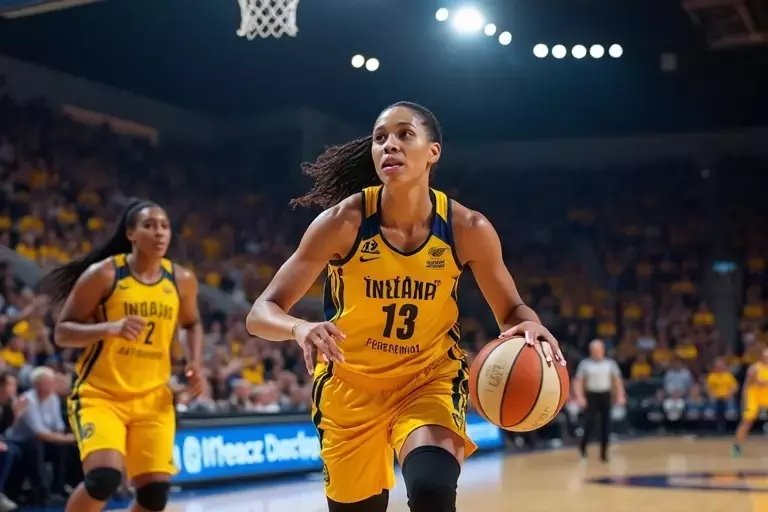


Women's basketball has surged to prominence as a favorite spectator sport across the nation. Teams like the Indiana Fever, with standout Caitlin Clark, consistently fill arenas to capacity. Last year, several W.N.B.A. games drew audiences exceeding two million viewers. Remarkably, the 2024 N.C.A.A. women's championship game garnered a larger television audience than its male counterpart. Despite this success, W.N.B.A. players earn significantly less than their male counterparts in less popular sports leagues, and only a fraction of what an average N.B.A. player earns. This disparity cannot be justified by any rational argument.
As a labor economist and economic historian, I have extensively studied gender pay gaps within the U.S. workforce. While much of the gender pay gap today stems from occupational and industrial choices rather than outright discrimination, professional basketball provides a glaring example of persistent gender bias. Over the past year, I collaborated with the Women’s National Basketball Players Association to analyze earnings disparities among basketball players, uncovering startling discrepancies. The average N.B.A. player's salary is roughly $10 million per season, which is 80 times more than the average W.N.B.A. player earned in 2024. These disparities reflect how N.B.A. owners disproportionately allocate revenue between the two leagues.
Breaking Down the Disparity in Earnings
Professional basketball showcases one of the most visible examples of gender pay inequality in sports. While women's basketball continues to gain popularity and attract substantial viewership, the financial rewards for female athletes lag far behind those of male athletes. This imbalance raises critical questions about fairness and equity within the industry. The structure of the N.B.A.'s relationship with the W.N.B.A., where the former holds significant control over revenue distribution, further complicates the issue. As a result, the vast majority of league profits fail to reach W.N.B.A. players, perpetuating a cycle of undercompensation.
Delving deeper into the specifics, the disparity becomes even more alarming. In the current season, the average N.B.A. player earns approximately $10 million, while the average W.N.B.A. player receives around $127,000—a ratio of 80 to 1. This enormous gap does not align with the growing popularity and increasing viewership of women's basketball. Moreover, the opaque financial arrangements between the N.B.A. and W.N.B.A. contribute to this inequity. With the N.B.A. owning roughly half of the W.N.B.A. and controlling key aspects such as television contracts, the allocation of funds remains heavily skewed toward male athletes. For instance, a recent joint television deal secured $77 billion over 11 years for both leagues, yet the distribution of these funds clearly favors the N.B.A., leaving W.N.B.A. players at a severe disadvantage.
Addressing the Root Causes of Inequality
Beyond the numbers, understanding the root causes of this pay disparity requires examining broader economic and structural factors. The lack of transparency in league finances exacerbates the problem, making it difficult for stakeholders to assess whether revenue sharing is equitable. Additionally, societal perceptions of women's sports may influence investment and sponsorship decisions, indirectly affecting player salaries. Addressing these underlying issues necessitates a multifaceted approach that involves both policy changes and shifts in public perception.
From an economic standpoint, the gender pay gap in professional basketball mirrors broader trends observed across industries. Research indicates that much of the gender pay gap arises from differences in occupation and industry preferences, alongside systemic biases. However, in the context of professional basketball, these explanations fall short. The W.N.B.A. operates under a unique arrangement with the N.B.A., creating a situation where revenue generated by women's basketball does not proportionally benefit its players. To bridge this gap, several measures could be implemented. First, enhancing transparency in league finances would allow for a clearer understanding of revenue streams and their allocation. Second, renegotiating television contracts to ensure fairer compensation for W.N.B.A. players could help address immediate financial disparities. Lastly, fostering greater public awareness and support for women's sports could drive increased investment and sponsorship, ultimately benefiting players. By tackling these challenges head-on, the basketball community can move closer to achieving true equality and fairness for all athletes.
