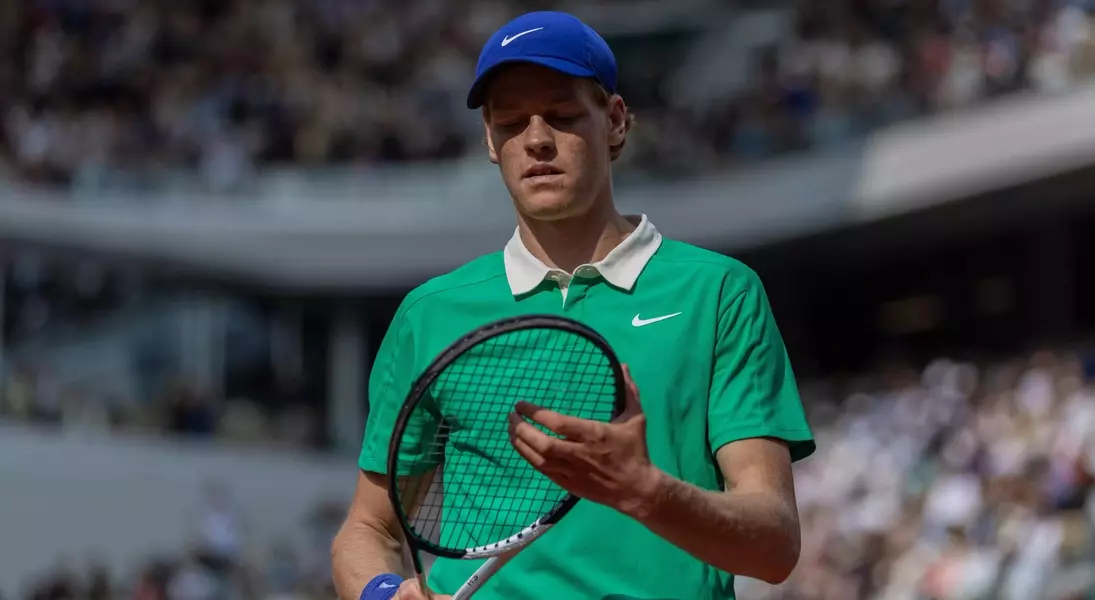
French tennis star Richard Gasquet has offered a compelling perspective on the current generation's talent, specifically addressing the comparisons between the dominant world No. 1, Jannik Sinner, and the revered 'Big Three' of men's tennis: Roger Federer, Rafael Nadal, and Novak Djokovic. Gasquet, a seasoned veteran of the sport, contends that Sinner, despite his remarkable achievements, has not yet ascended to the extraordinary heights consistently demonstrated by these legendary figures during their prime.
French Veteran Gasquet Compares Sinner to Tennis Legends at Roland Garros
In a candid assessment on Saturday, June 21, 2025, during the hallowed grounds of Roland Garros, French tennis stalwart Richard Gasquet, who recently concluded his professional career, shared his insights regarding the reigning world No. 1, Jannik Sinner. Gasquet's remarks followed his final professional match, an encounter at the French Open against the dynamic Italian, where Sinner secured a decisive victory with a scoreline of 6-3, 6-0, 6-4. This match served as a poignant backdrop for Gasquet's reflections on Sinner's position relative to the titans of the sport.
Sinner, at 23 years old, has showcased an almost flawless performance over the past year, maintaining his world No. 1 ranking for over 52 consecutive weeks and clinching three Grand Slam titles. His remarkable consistency and commanding presence on the ATP Tour have led many observers, including prominent analysts like Jon McEnroe, to suggest that Sinner could even rival Rafael Nadal's peak performance at Roland Garros. However, Gasquet expressed a differing viewpoint, underscoring the formidable legacy of the sport's greatest champions. He particularly emphasized the unparalleled dominance of Rafael Nadal on clay, stating that Nadal, at his peak, exhibited an unmatched ruthlessness that would place him above both Sinner and Carlos Alcaraz on the challenging red dirt of Paris.
Gasquet also drew parallels between Sinner and Novak Djokovic, acknowledging Sinner's evident progress but noting that the Italian still has a significant journey ahead before reaching the heights of Djokovic in his prime. He cited his own match against Djokovic in 2015, where, despite being a top-ten player, he suffered a comprehensive defeat. This personal experience reinforced his belief in the enduring superiority of the 'Big Three'. Gasquet also pointed out that while Djokovic's current form might not mirror his absolute peak, he continues to demonstrate his enduring class, as evidenced by his victory over Carlos Alcaraz at the Australian Open.
Ultimately, Gasquet's analysis suggests that while the younger generation, exemplified by Sinner and Alcaraz, possesses immense talent and potential, their careers are still in their formative stages. He highlighted that even a player of Roger Federer's caliber continued to evolve and improve significantly between the ages of 22 and 28, implying that Sinner and Alcaraz still have considerable room for growth before they can truly be measured against the historical benchmarks set by the sport's most iconic figures.
The discourse ignited by Richard Gasquet serves as a crucial reminder that while current achievements are noteworthy, the true measure of greatness in tennis often requires the passage of time and the sustained accumulation of unparalleled dominance across various eras and surfaces. It prompts us to appreciate the distinct brilliance of today's stars while reserving a special reverence for the enduring legacies that continue to inspire and define the sport.
