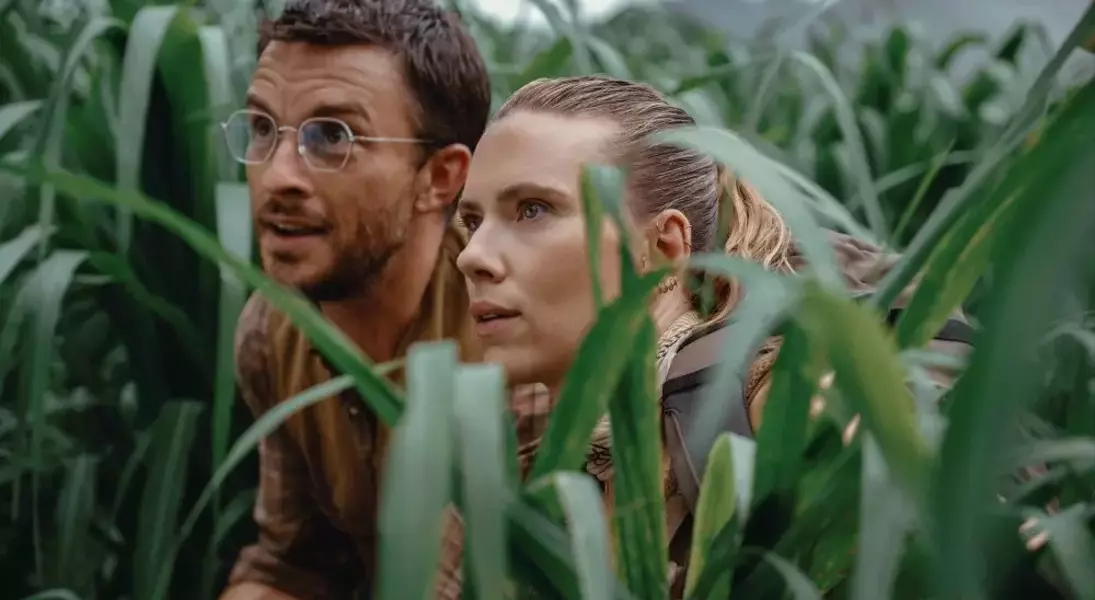
Gareth Edwards, the director behind the successful reboot "Jurassic World Rebirth," will not be returning for its continuation. The filmmaker has decided to step away from the Universal Pictures project, citing divergent creative visions. This news comes after the 2025 movie, which breathed new life into the science fiction franchise, achieved a remarkable global box office revenue of $870 million.
The original "Jurassic World Rebirth" featured a stellar cast including Scarlett Johansson, Mahershala Ali, and Jonathan Bailey, who embarked on a clandestine mission to extract dinosaur DNA for the development of a groundbreaking medical remedy. While specific details for the sequel's narrative remain under wraps, screenwriter David Koepp is anticipated to rejoin the production, with the main cast members also expected to reprise their roles. Universal aims to commence filming for this next installment in 2027.
Despite the enduring popularity of the "Jurassic" saga, the franchise has seen a gradual decline in box office performance over recent entries. The preceding "Jurassic Park" trilogy, led by Chris Pratt and Bryce Dallas Howard, which began with 2015's "Jurassic World" and concluded with 2022's "Jurassic World Dominion," each surpassed the $1 billion mark globally. However, these productions are known for their substantial financial commitments, with budgets frequently exceeding $250 million. This upcoming film marks the eighth chapter in the beloved "Jurassic" series, which originated from Michael Crichton's novel and was first adapted to the screen by Steven Spielberg in 1993, starring Sam Neill, Laura Dern, Jeff Goldblum, and Richard Attenborough. Spielberg also directed the 1997 sequel, "The Lost World," before Joe Johnston took the helm for "Jurassic World III" in 2001. Edwards himself is widely recognized for his directorial work on films such as "Godzilla," "Rogue One: A Star Wars Story," and "The Creator."
The departure of a director due to creative differences underscores the intricate balance between artistic vision and commercial objectives in major film productions. Such decisions, while sometimes challenging, highlight a commitment to the artistic integrity of a project and the pursuit of a cohesive creative direction. Ultimately, the success of a film, particularly within a beloved franchise, relies on the harmonious alignment of its creative team, aiming to deliver a product that resonates deeply with its audience and upholds the legacy of its predecessors.
