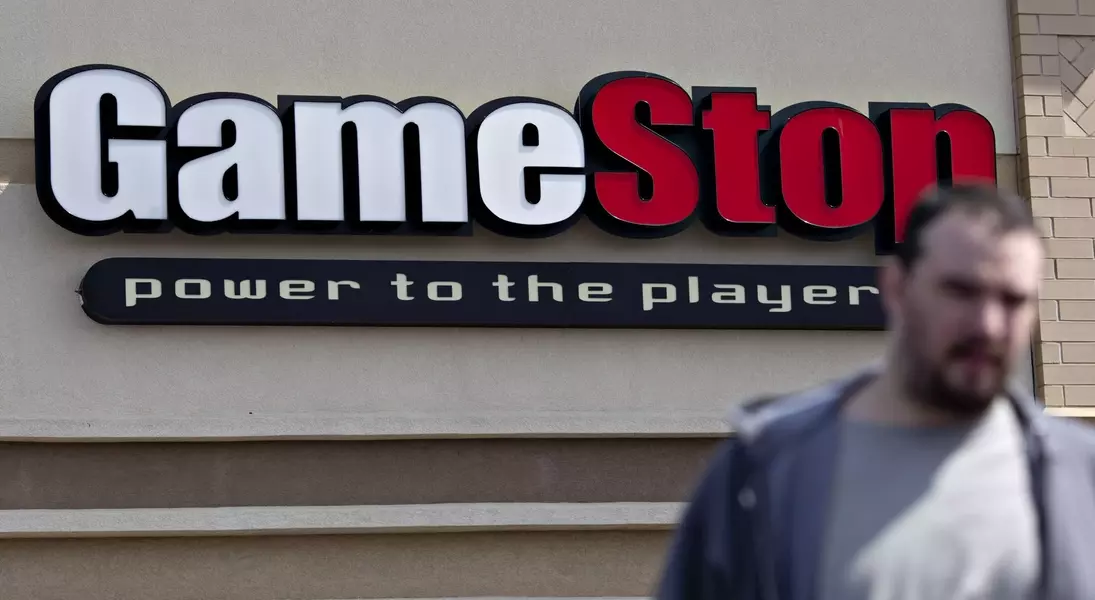
GameStop's chief executive, Ryan Cohen, has strongly advocated for the resurgence of physical game media, expressing concerns over the dwindling control consumers have when acquiring digital titles. His critique emerged as Grand Theft Auto 6, a major release, launched exclusively in digital format, exacerbating the industry's shift. Cohen emphasized that genuine game ownership should entail the freedom to sell, exchange, or lend games, a fundamental aspect of the secondary market that digital-only distribution negates. This stance is crucial for GameStop, whose business model significantly relies on the trade and resale of physical copies, a revenue stream jeopardized by the industry's move away from disc-based games. He contends that this digital push by publishers deliberately undermines competition by forcing consumers into new digital purchases, rather than allowing the more flexible option of used physical copies.
The ongoing transition towards an exclusively digital gaming ecosystem, exemplified by recent industry moves like Sony's plan to discontinue physical PlayStation disc production by 2028, has ignited considerable debate among players and policymakers alike. This evolving landscape has prompted legislative intervention, with US Congressman Richie Torres introducing the "Power To The Players Act." This proposed legislation seeks to empower the Federal Trade Commission to safeguard gamers' rights, ensuring their enduring access to purchased titles, even if those games are online-dependent and face potential server shutdowns. Torres asserts that a game, once paid for, should be unequivocally owned by the consumer, not merely rented under the guise of a sale, thereby championing the principles of true consumer property rights in the digital age.
The Case for Physical Media: Restoring Consumer Control
GameStop's chief, Ryan Cohen, recently underscored the critical importance of physical game discs, articulating deep-seated concerns regarding the perceived lack of control that consumers experience with digitally acquired entertainment. These pointed remarks came precisely as the highly anticipated Grand Theft Auto 6 made its debut as a digital-only title, intensifying discussions about the industry's accelerating move away from physical formats. Cohen's argument highlights a core tenet: when individuals purchase a game, they ought to possess the full prerogative to dispose of it as they see fit, whether through resale, trade, or lending to friends. This fundamental right to transfer ownership is vital for the health of the secondary market, a cornerstone of GameStop's operational model, which faces existential threats from purely digital distribution channels.
The business operations of GameStop are intrinsically linked to the vibrancy of the pre-owned game market, which generates a significant portion of its revenue. As the industry increasingly leans towards digital-only releases, this revenue stream diminishes, posing considerable challenges to traditional retail models. Cohen suggests that game publishers actively resist the trade-in market because the availability of used copies directly competes with new unit sales, thereby disincentivizing fresh purchases. By transitioning to exclusive digital distribution, publishers effectively eliminate this competition, funnelling all sales through their proprietary digital storefronts and exerting greater control over pricing and distribution. This shift, according to Cohen, ultimately disadvantages consumers by eroding their ability to manage their game libraries and extract value from their purchases beyond initial play.
Legislative Action and the Future of Game Ownership
The intensifying debate over who truly owns digital games has now captured the attention of lawmakers, signaling a growing recognition of consumer rights in the evolving gaming landscape. The abstract highlights the proactive stance of US Representative Richie Torres, who has proposed groundbreaking legislation aimed at fortifying players' access to their purchased titles. This legislative effort comes amid significant industry shifts, notably Sony's announcement to phase out physical disc production for PlayStation consoles by 2028, a move that stirred considerable public outcry. Torres's initiative seeks to prevent scenarios where digitally purchased games become inaccessible due to company decisions or server closures, asserting that consumers deserve permanent ownership, not merely temporary access.
In response to the industry's rapid digitalization, Congressman Richie Torres introduced the "Power To The Players Act," a legislative proposal designed to empower the Federal Trade Commission to establish and enforce protections for digital game consumers. The core principle of this act is to ensure that when a consumer pays for a game, they are acquiring an enduring asset with the rights to play, own, and transfer it, rather than a transient license that can be revoked at a company's discretion. Torres critically views the current digital-only paradigm as a "rental disguised as a sale," challenging the very definition of ownership in the digital realm. This political intervention reflects a broader societal concern about digital property rights and the long-term implications for game preservation, consumer autonomy, and the future viability of game libraries in an increasingly digital-first world.