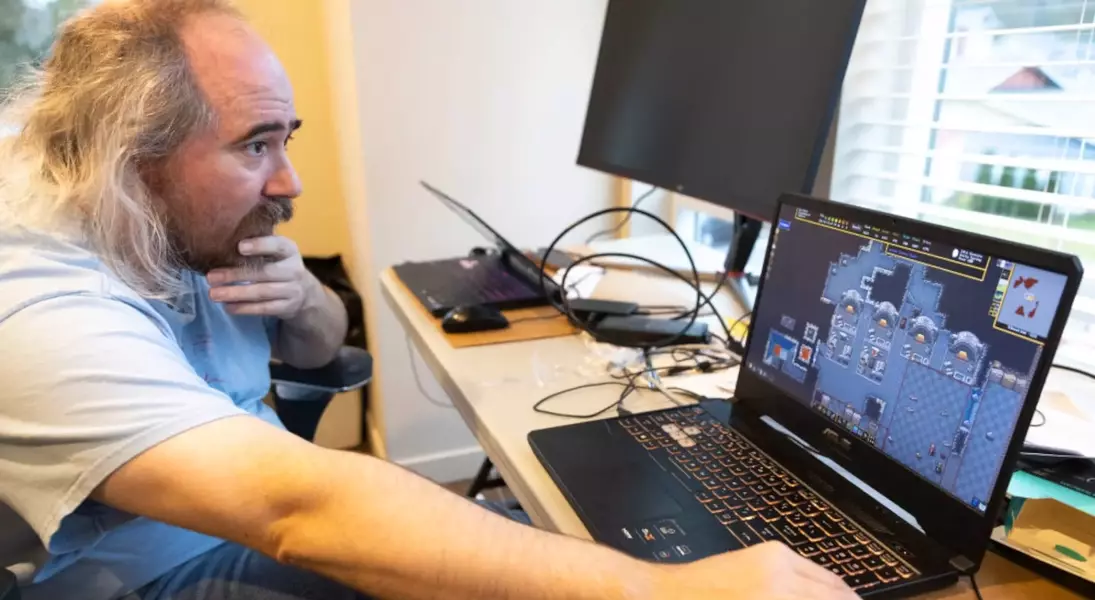
The gaming industry is currently navigating a period of profound transformation and upheaval. Despite consistent profitability, recent years have been marked by significant workforce reductions and numerous studio closures. This instability is further compounded by the burgeoning influence of generative artificial intelligence, which many industry leaders are prematurely embracing as the future, despite its current limitations and the concerns of veteran developers.
Concerns from a Veteran Developer Regarding AI and Industry Leadership
During a recent interview at Gamescom 2026, Tarn Adams, the visionary behind the renowned simulation game "Dwarf Fortress," openly shared his anxieties about these developments. Adams expressed his weariness with the industry's enthusiasm for AI, likening it to a CEO's misguided attempt to automate creativity. He provocatively questioned the sustainability of a model where games are created with a mere "button press" by executives, only to be sold to an audience whose livelihoods are simultaneously threatened by job displacement. Adams cautioned that such an approach is ultimately unsustainable and destined for a major collapse, unless there is a fundamental shift in strategy.
Adams highlighted that this issue extends beyond the gaming sector, observing a disturbing trend among leaders across various industries. He noted a pervasive "psychosis" among bosses who, enchanted by the superficial allure of AI, question their employees' methods and hint at machine replacements. He drew a parallel to a personal experience: his father's layoff from a sewage treatment plant due to a misunderstanding of his role as the "computer guy," which ultimately led to the company's downfall. This historical anecdote underscores Adams' belief that the current challenges are not novel but rather a recurring theme in the evolution of capitalism, where decision-makers often undervalue and misinterpret the intricacies of labor they do not fully grasp.
The advent of generative AI has exacerbated this long-standing issue. Executives, now presented with an output that merely imitates genuine creative work, become susceptible to self-deception, believing that these AI-generated products can be scaled indefinitely or match the quality of human-produced content. This misplaced confidence, Adams suggested, is alarming, particularly in light of ongoing research into AI-induced psychological effects on individuals. He implicitly warned that if even ordinary people are experiencing such impacts, the executive suite, often disconnected from practical realities, might be even more vulnerable to similar psychological phenomena, especially given their apparent struggle to comprehend public apprehension towards AI.
Adams further lamented the misappropriation of terminology, noting how the industry's focus on "dwarf AI" has forced him to redefine his work on "dwarf behavior," stressing that his creations involve genuine, complex behaviors, not mere AI algorithms. This semantic distinction, he argued, highlights a fundamental misunderstanding within the industry about the nature of intelligence and creativity, a misunderstanding that risks eroding the very essence of game development.
