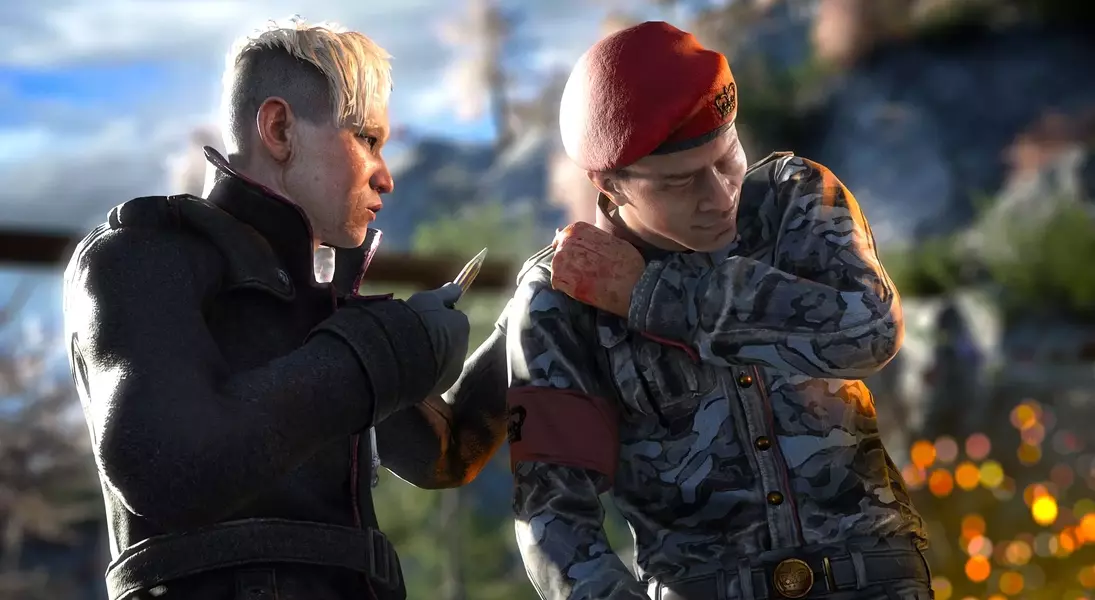

A recent discussion has emerged within the entertainment industry regarding the adaptation of video games into television series. Noah Hawley, a well-known writer and director recognized for his series 'Fargo' and 'Alien: Earth,' recently revealed his approach to a forthcoming TV series based on Ubisoft's 'Far Cry' franchise. His statements, which suggested that game narratives are often 'pointless' and secondary to gameplay, have ignited a debate, particularly among game developers.
Hawley expressed his intention not to directly translate any specific 'Far Cry' game, opting instead to engage with the franchise's core themes, much like his adaptations of 'Coen' films, 'X-Men,' or 'Alien.' He argued that video games are structured around player progression, with narrative elements frequently relegated to skippable cutscenes, making them unsuitable for dramatic television. This perspective drew a swift reaction from Alex Hutchinson, the director of 'Far Cry 4,' who, despite admiring Hawley's work, found the remarks dismissive of the effort put into game storytelling.
Hutchinson expanded on his critique, emphasizing that players value game narratives and that even if some cutscenes are skipped, the overarching themes, settings, and characters contribute significantly to player immersion and engagement. He further criticized Hawley's past adaptation of 'Alien: Earth,' suggesting it deviated too far from the source material's essence, transforming into something incongruous with the established brand. This highlights a fundamental tension between creators of interactive and linear entertainment, as they grapple with the nuances of adaptation and respect for original artistic intent. The debate underscores the evolving recognition of video games as a storytelling medium with unique strengths that deserve careful consideration in cross-platform translations.
The discussion between creators of interactive and linear entertainment highlights the importance of appreciating diverse storytelling forms. Each medium has its strengths, and a thoughtful approach to adaptation involves understanding and respecting the unique narrative qualities of the source material. True innovation and successful cross-medium transitions stem from a collaborative spirit that values and integrates the distinct contributions of every art form.
