Maximilian Senft's journey from a high-stakes poker player to a successful football manager is a testament to the transferable nature of strategic thinking and mental fortitude. This narrative explores how his unique background in professional poker has equipped him with invaluable insights and a distinctive approach to leading a football club, emphasizing calculated decision-making and emotional resilience in the unpredictable world of sports.
Mastering the Game: Where Calculated Risks Meet Athletic Prowess
A Unique Path to Managerial Excellence: The Poker Player's Transition to Football Leadership
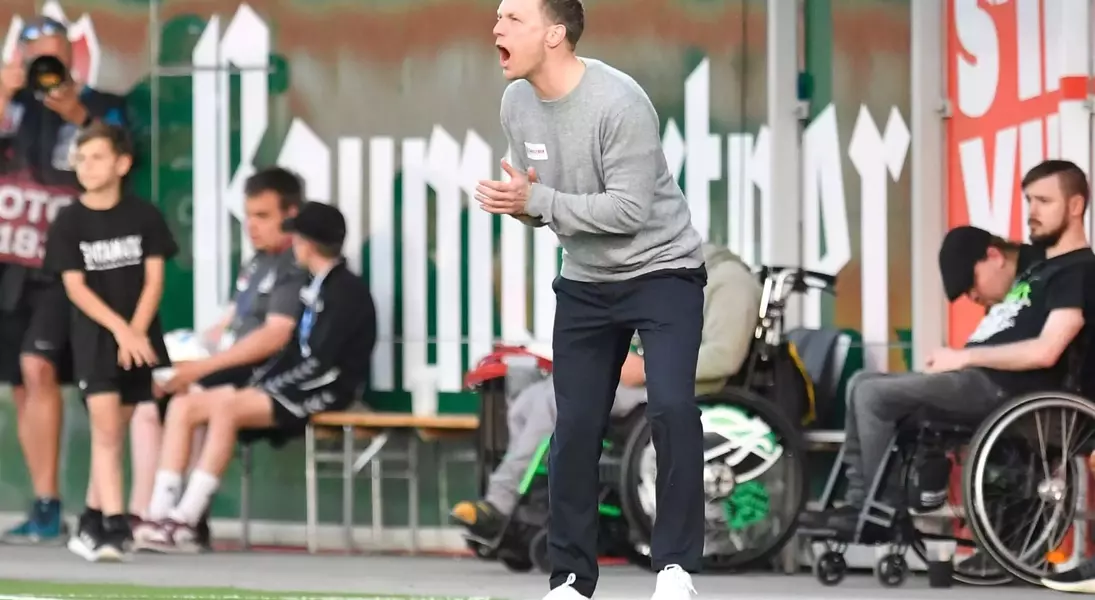
Few leaders in the realm of football possess the profound mental acuity demonstrated by Maximilian Senft. His philosophy, rooted in the understanding that "results contain elements of truth, but are not the entirety of it," highlights a crucial detachment from immediate emotional responses, a lesson honed during his professional poker career. Now 35, Senft has steered his team, SV Ried, to an impressive promotion into the Austrian Bundesliga, kicking off their current campaign with a notable draw against formidable opponents Red Bull Salzburg. This achievement is a culmination of a truly unconventional journey into football management.
From Amateur Pitches to High-Stakes Tables: Senft's Formative Years
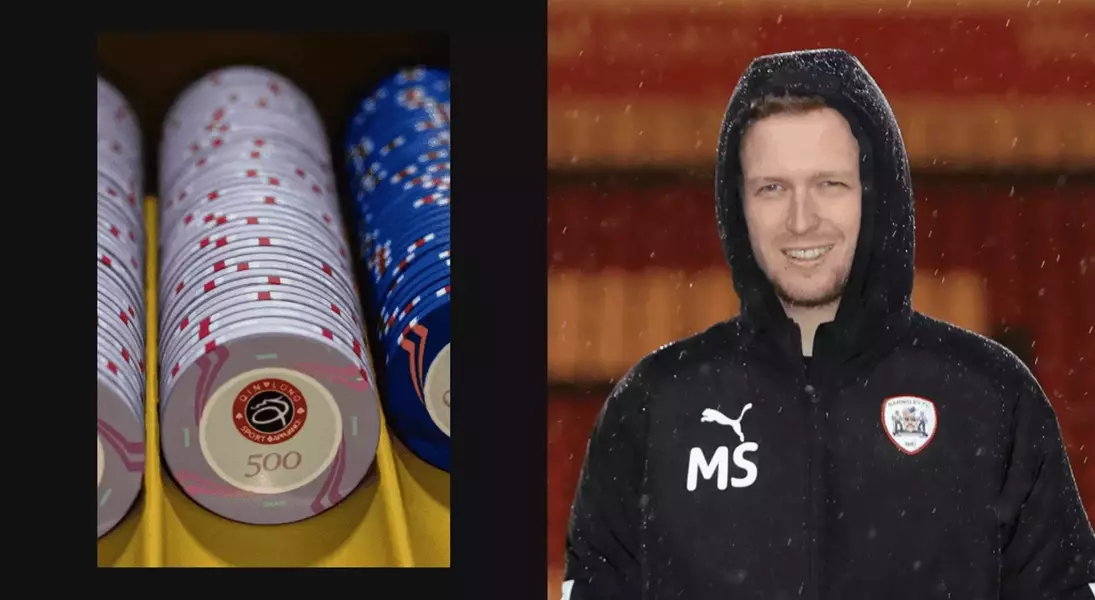
Senft's early engagement with football was limited to amateur leagues in Austria, with a professional playing career never materializing. Instead, his intellectual pursuits led him to an economics degree from Vienna University of Economics and Business. This academic foundation was soon complemented by a burgeoning passion for poker, which evolved into a full-time professional career. His most significant achievement in this field was an impressive 11th-place finish at the 2014 World Series of Poker in Las Vegas, where he competed against nearly 7,000 participants and secured approximately $500,000 in winnings. This period was instrumental in developing his strategic thinking and composure under pressure.
The Strategic Blueprint: Applying Poker Principles to Football Tactics
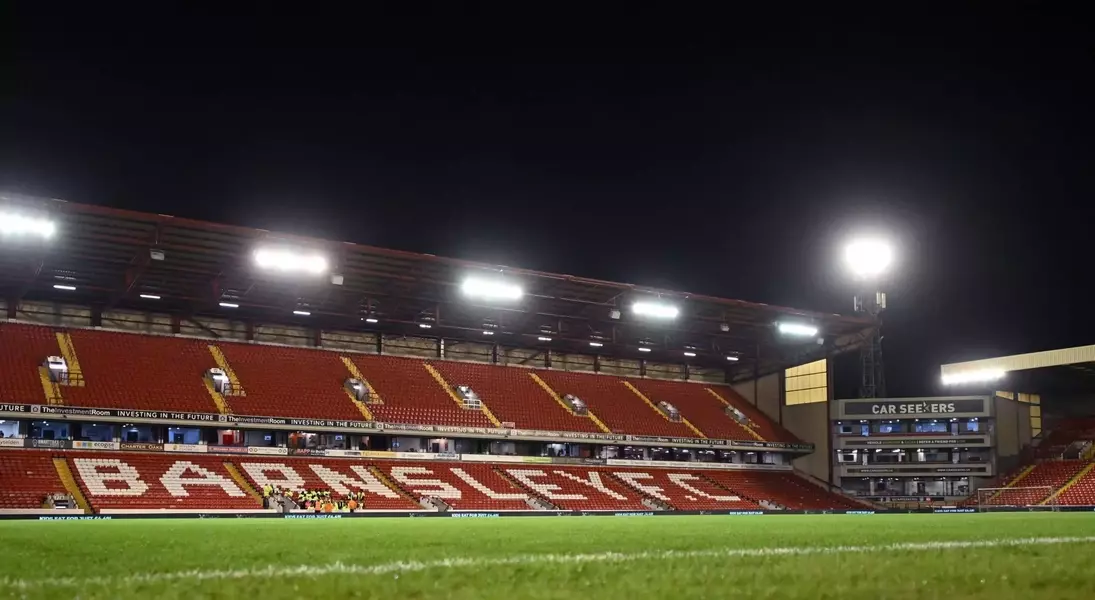
In his mid-twenties, Senft began to envision football coaching as a viable career. He immersed himself in coaching education, earning a Master's degree in training and sport. His analytical mind also connected him with the tactical experts behind the esteemed Spielverlagerung analysis website. Starting as an assistant coach and analyst in lower Austrian leagues, he steadily climbed the ranks, holding positions at top-tier clubs like Austria Vienna, and later serving as assistant to Gerhard Struber at Wolfsberger AC and Barnsley. Less than five years after his tenure in England, Senft returned to the pinnacle of Austrian football, ascending to head coach of SV Ried in March 2023. His poker background, though seemingly disparate, provided a unique lens through which to view football. "Both poker and football are games of incomplete information," Senft articulates. "You are never fully aware of all variables, be it an opponent's hidden cards or unforeseen match developments. This necessitates constant adaptation, a process that unfolds over the entire 90 minutes. I believe my poker experience allows me to approach decisions with greater composure, having learned to meticulously weigh all contributing factors."
Cultivating a Winning Philosophy: Adapting to Player Strengths and Tactical Nuances
Senft has meticulously crafted a clear tactical vision for his team, akin to a poker player adjusting to the cards dealt. His club operates with a foundational "logic" for football discussion and thought, allowing each coach to interpret and apply this framework. "If a goalkeeper excels at long balls, we integrate that into our strategy. If a player is a formidable dribbler, their skill must be central to our game model," he explains. "Our interpretations always align with the players' strengths." Typically deploying a 3-4-3 or 3-5-2 formation, Senft prioritizes aggression and intelligence in play, focusing on rhythm, manipulation, and numerical overloads. Set pieces are a particular emphasis, a lesson carried over from his time in England. SV Ried dedicates an entire day weekly to set-piece training, yielding significant returns. Data from Impect reveals that Senft's side was among Europe's elite in dead-ball situations last season, generating a 0.39 xG difference per game, indicating superior chance creation from these scenarios.
The Resolute Coach: Navigating Public Perception and Strategic Conviction
Despite the inherent emotional volatility of modern football, Senft's unwavering commitment to his tactical convictions remains paramount. "If I genuinely believe a decision is optimal, I will execute it. Sometimes you're hailed as a hero; other times, you're dismissed as someone who misunderstands football entirely," Senft reflects. "However, external judgment from the public or media should not sway your decisions, as their opinions often hinge solely on results. Football's complexity means that a single substitution, for instance, rarely dictates the outcome given the multitude of other variables." This resolute stance echoes the contrarian yet productive approach advocated by figures like Ian Graham, Liverpool's former director of research, highlighting the value of adhering to one's principles amidst external pressures.
Overperformance and Player-Centric Coaching: The SV Ried Success Story
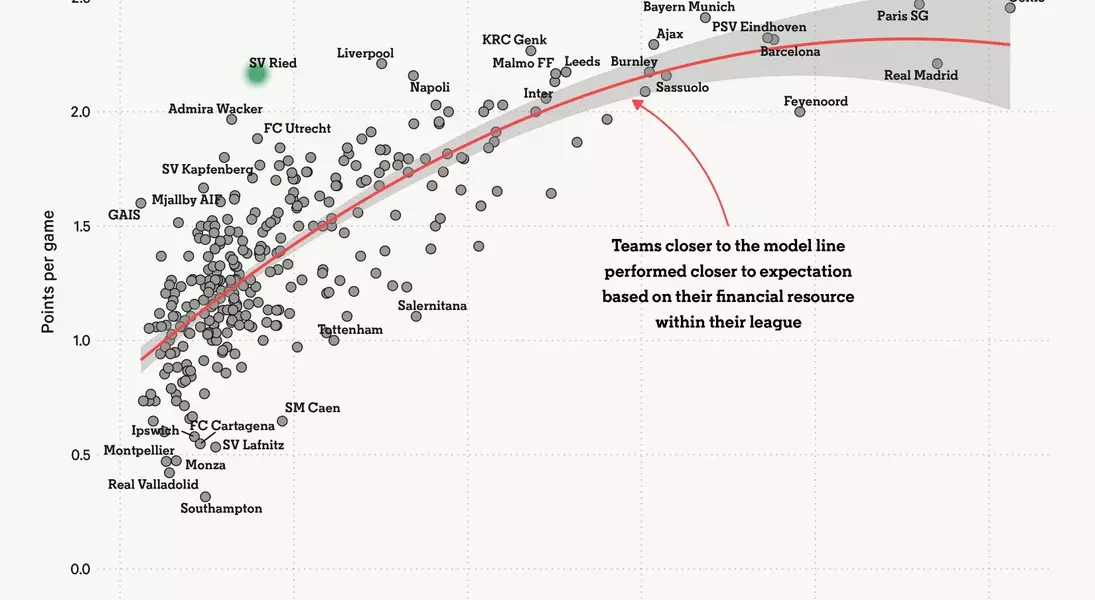
Senft's coaching prowess has been demonstrably validated by SV Ried's recent success. The club, where Crystal Palace manager Oliver Glasner spent the majority of his playing career, clinched the 2 Liga (Austria's second division) title by a six-point margin last season, boasting a remarkable +36 goal difference, more than double that of their closest competitor. Statistical analysis across various European leagues further underscores Senft's impact, showing SV Ried as a significant outlier in overperforming relative to their squad value. Despite these impressive numbers, Senft emphasizes the player's central role. "Football is a player's game," he asserts, acknowledging that a coach's influence fluctuates. "The tactical preparation and coaching input are most influential in the initial 20 minutes of each half. My role throughout the week is to prepare the team for those moments where player autonomy becomes critical, especially in the game's decisive latter stages."
The Human Element: Weaving Emotion and Relationships into Tactical Execution
While Senft's strategic mind thrives on analytical rigor, he recognizes the indispensable role of emotion and relationships in effective leadership. "To truly convey your message to players, you need to infuse it with emotion and cultivate strong relationships. This builds trust and ensures they believe in your vision," Senft explains. "In poker, I operate independently; I don't need to persuade anyone. But as a head coach, convincing the team, the board, and the fans is paramount, making emotional connection and strong relationships absolutely critical." The interplay between emotion and strategy is a fascinating aspect of Senft's approach. He employs specific 'anchors' to guide players during challenging moments, such as a red card or conceding a goal. "We have an emotional framework and pre-defined responses for certain situations, along with tactics to deploy when pressure mounts or risk aversion increases, as precise coordination often diminishes under stress," Senft elaborates. "It's not always emotions dictating tactics; a clear plan can enhance emotional control because players know they can execute specific actions regardless of their emotional state. This theoretical and practical preparation is vital." In high-stakes environments, a well-defined game plan provides crucial stability amidst uncertainty and chaos. For Maximilian Senft, this blend of strategic thinking and emotional intelligence is proving to be a winning hand in the competitive world of football management.
