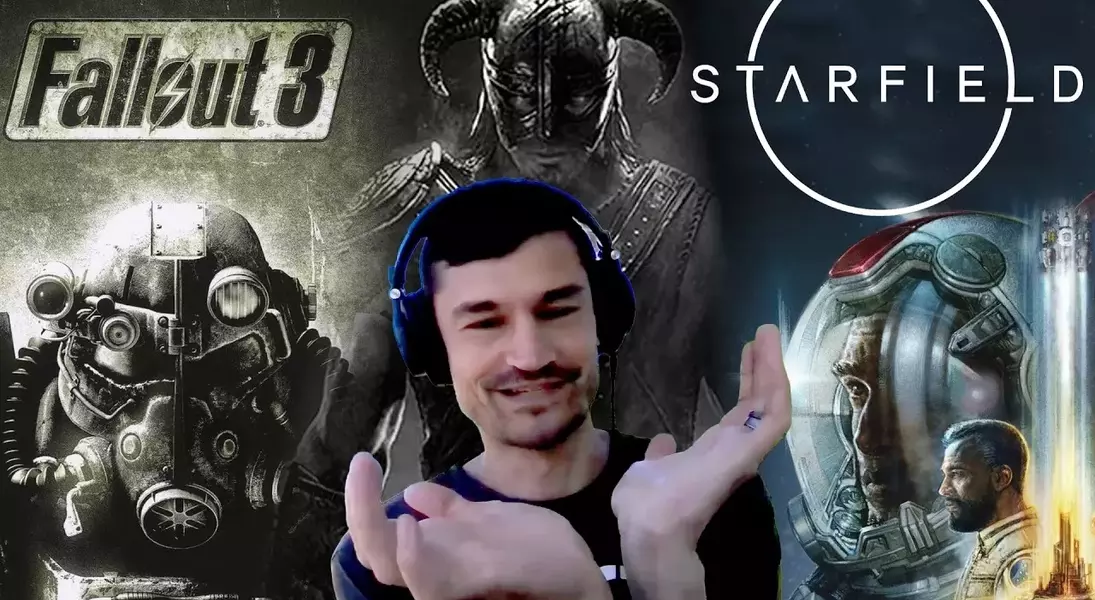

A recent discussion highlights a critical perspective on Starfield's design, particularly its expansive yet largely uninhabited cosmos. Nate Purkeypile, a seasoned environment artist who contributed significantly to earlier Bethesda titles like Fallout 3 and 4, and more recently released his own game, The Axis Unseen, shared his insights. He believes the game’s vastness, featuring thousands of planets, ultimately detracts from a meaningful player experience by prioritizing quantity over quality in environmental design.
Insights from a Veteran Developer on Starfield's Design Choices
In a recent installment of 'The Examined Game' podcast, Nate Purkeypile, a distinguished former environment artist at Bethesda, expressed his observations regarding what he perceives as a significant misstep in Starfield's development. Purkeypile, whose past work includes crafting iconic locations such as Diamond City in Fallout 4, Little Lamplight in Fallout 3, and the city of Neon in Starfield, departed from Bethesda a year into Starfield's production. His solo project, The Axis Unseen, was launched in 2024.
During the podcast, Purkeypile underscored the importance of intentional design and captivating points of interest within gaming environments. He articulated a preference for minimizing menu-driven interactions, especially concerning exploration. When directly questioned about whether he foresaw a fragmented, menu-centric travel system for Starfield, his response was unequivocal: "If I were leading the development of Starfield, my approach would have been entirely different."
He advocated for a more focused strategy, envisioning "a select number of planets, each meticulously designed with unique layouts," an approach reminiscent of Obsidian's acclaimed The Outer Worlds. Purkeypile candidly remarked on the parallels with Mass Effect 1's procedural planets, which often featured repetitive dungeons. He stated, "I didn't believe this was a sound idea. For a game aiming for thousands of planets, it needs to fully embrace the 'No Man's Sky' model, offering genuinely distinctive content generation, rather than simply assembling existing elements in slight variations. That isn't true procedural generation." He further criticized Starfield's major cities, noting their grandeur but pointing out the emptiness beyond their confines, which he found illogical within the game's world.
This perspective resonates with many players and critics who have observed Starfield's sprawling but often empty universe. Unlike titles such as Skyrim, where incidental encounters and side quests naturally unfold during travel between major locations, Starfield's design often funnels players through menus and loading screens, diminishing the sense of organic discovery. This issue has been a frequent topic of discussion among gaming enthusiasts and review teams, who hope that future Bethesda releases like Fallout 5 or The Elder Scrolls 6 will revert to a more integrated and immersive world design. Purkeypile also touched upon his anticipation for the upcoming Fallout 3 remaster, suggesting that the original release was constrained and did not fully realize the developers' initial vision.
Purkeypile's critique serves as a valuable insight into the challenges and trade-offs inherent in developing ambitious open-world games. His preference for fewer, more richly detailed planets over a multitude of procedurally generated, less engaging ones highlights a philosophical debate in game design. For players, this conversation underscores the desire for worlds that offer not just scale, but also depth, unexpected encounters, and a genuine sense of discovery that feels earned, rather than merely traversed.
