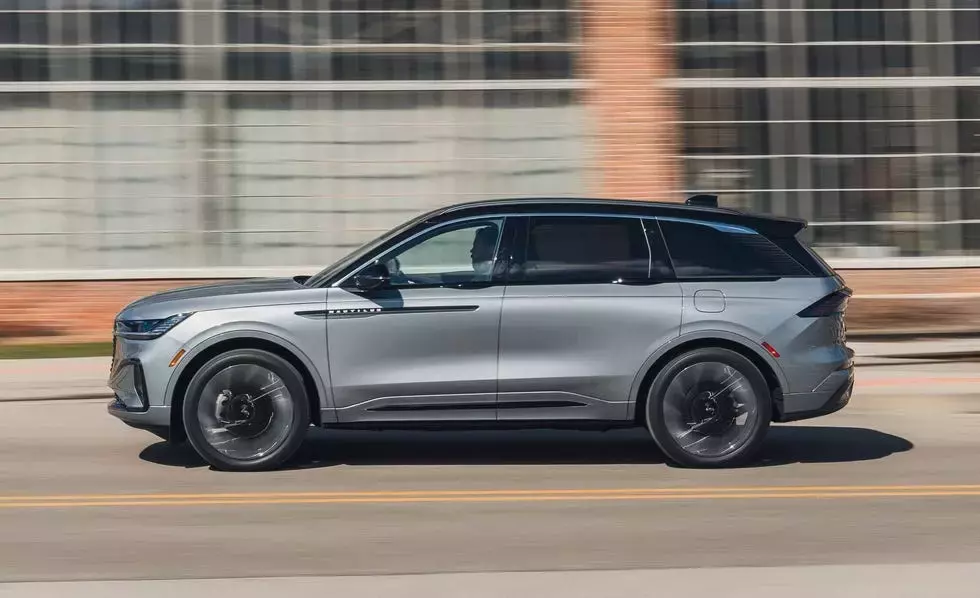
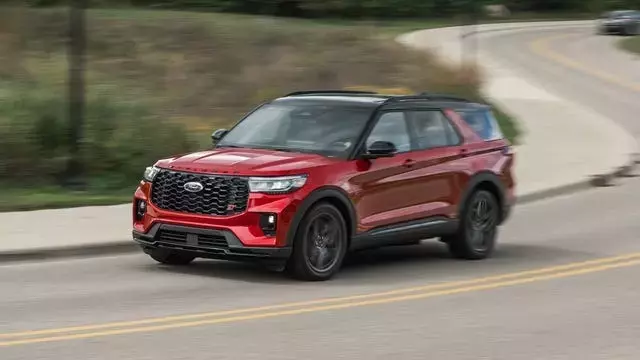
Ford has initiated a significant recall campaign, impacting nearly 340,000 sport utility vehicles. This action addresses a defect in the vehicles' rearview camera and advanced driver-assistance systems, which could compromise driver safety. The core of the problem lies within an image processing module that is prone to unexpected resets, potentially leading to a loss of vital visual and automated safety functions. This recall highlights the ongoing complexities and challenges in integrating sophisticated electronic systems into modern automobiles.
Ford Addresses Critical Safety Flaw in SUV Lineup
In a recent development, Ford Motor Company has announced the recall of 339,619 SUVs across several models, including the 2025 Ford Explorer, specific 2025 Lincoln Aviators, 2024–2025 Lincoln Nautilus, and 2022–2025 Lincoln Navigator vehicles. The National Highway Traffic Safety Administration (NHTSA) received detailed documentation outlining the issue: an Image Processing Module A (IPMA) that can unexpectedly and repeatedly reset. This malfunction results in the loss of the rearview camera display and the deactivation of critical Advanced Driver-Assistance Systems (ADAS), such as pre-collision assist, lane-keeping features, and blind-spot monitoring.
Investigations indicate that the IPMA's instability is triggered by a computational overload, particularly when the system attempts to track a high volume of objects, such as numerous people or other vehicles. This overload can manifest through dashboard warnings like "Front Camera Fault" or "Lane-Keeping System Off." While a software update designed to enhance the module's resilience is being prepared for over-the-air deployment, affected vehicle owners will also have the option to receive the remedy at authorized dealerships. Notifications to dealers commenced on March 25, with customer alerts scheduled to begin on March 30. Owners are advised to check the NHTSA recalls page to determine if their vehicle is part of this recall.
This recall underscores the critical importance of reliable vehicle safety systems. In an era where drivers increasingly depend on advanced technologies for assistance and accident prevention, any compromise in these systems can have serious implications. This incident serves as a reminder for both manufacturers and consumers about the continuous need for rigorous testing, robust software development, and prompt corrective actions to maintain public safety on our roads.
