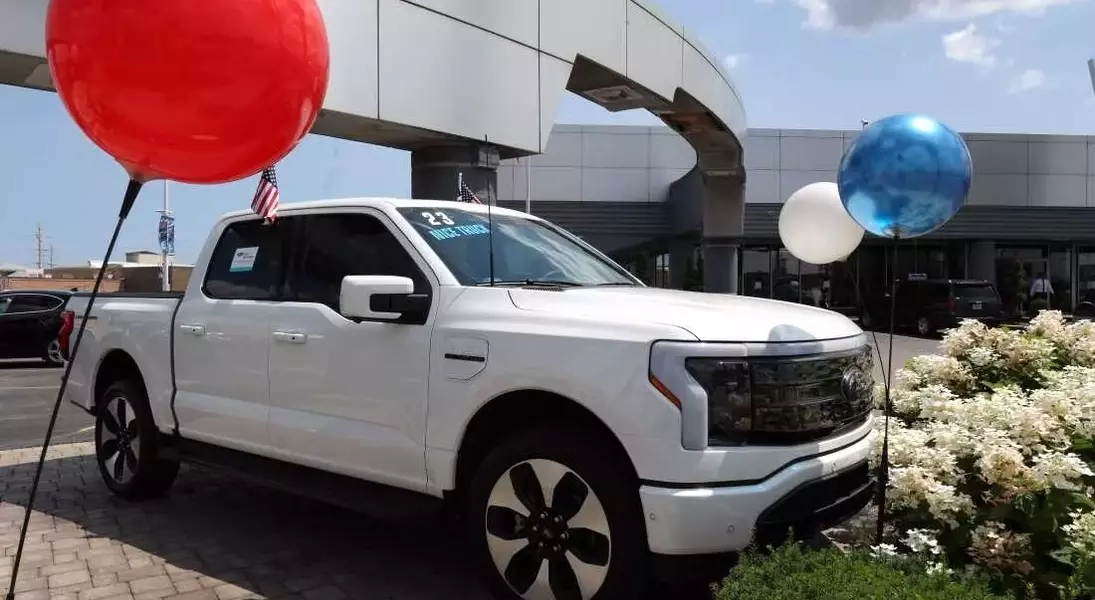
Ford Motor Company has ceased manufacturing its fully electric F-150 Lightning, its premier electric truck. The company is now redirecting its efforts towards hybrid vehicles and a new range of more compact and economical electric vehicles. This strategic shift means that battery manufacturing facilities initially designated for Ford's electric trucks will now supply batteries for reinforcing the electrical grid.
Ford attributes this decision to evolving consumer preferences and the financial unviability of the all-electric Lightning, a situation the company concluded was unlikely to change. Andrew Frick, president of Ford Blue and Ford Model e, highlighted that customers desire the advantages of electrification, such as immediate torque and mobile power, but also prioritize affordability. He emphasized that the company would reallocate resources from large, unprofitable electric vehicles to more lucrative ventures. The Lightning, originally a gasoline-powered truck, will see a return to its roots with an upcoming plug-in hybrid version that includes a gasoline engine, offering extended range.
The all-electric F-150 Lightning was initially launched with considerable anticipation in 2021, featuring an attractive starting price of $40,000. However, its actual market price upon production was significantly higher, around $55,000 for the 2025 model. Despite receiving numerous accolades, including "Truck of the Year" awards from prominent automotive publications and being the top-selling electric truck in America in the last quarter, the overall electric pickup truck segment has faced challenges. The Lightning itself encountered reliability issues and its towing range was limited, which deterred some potential buyers. Furthermore, Ford incurred financial losses on every unit sold, and production costs did not decrease as anticipated. The regulatory environment also played a role, with changes in government policy under the Trump administration reducing incentives and loosening emissions standards that previously encouraged EV adoption. These factors collectively influenced Ford's decision to discontinue the all-electric Lightning and shift its focus to hybrid and more affordable EV options, including a midsize electric pickup truck aimed at a $30,000 price point.
Ford's strategic realignment, while involving significant financial write-offs in the short term, represents a pragmatic response to market demands and economic realities. By pivoting towards hybrid technology and more accessible electric vehicles, Ford aims to achieve greater profitability and sustainability in its future automotive endeavors, while also exploring new revenue streams such as providing stationary battery storage solutions for the grid and industrial sectors.
