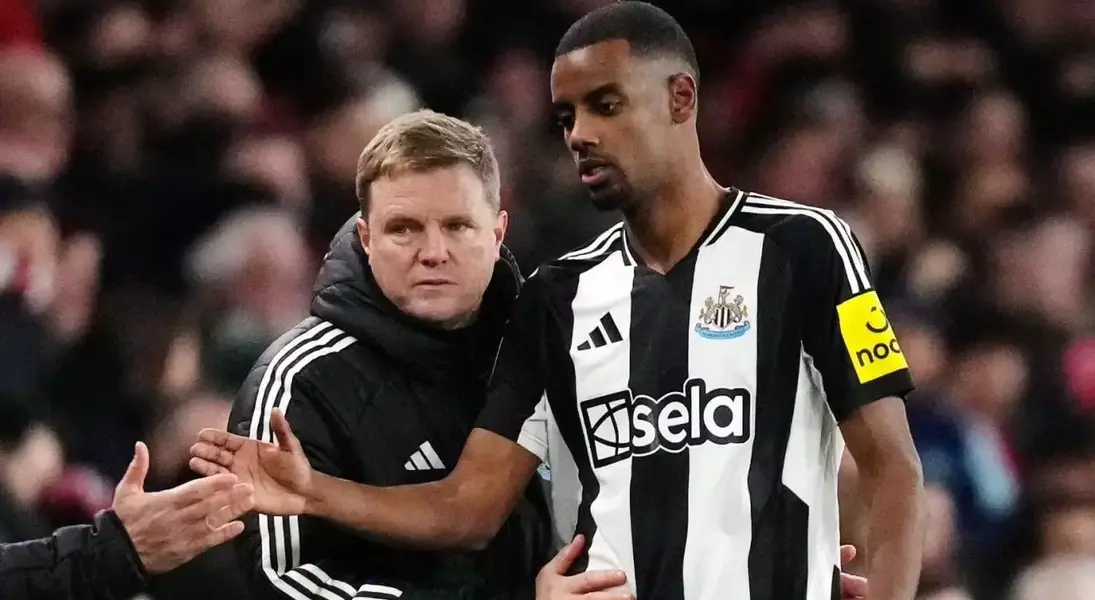
The dynamic world of football transfers is rarely straightforward, often sparking fervent debate among supporters and analysts alike. This piece delves into the intricate web of player valuations, club strategies, and the ever-present tension between financial imperatives and on-field success. The central discussion revolves around Newcastle United's handling of star player Alexander Isak, alongside insights into the transfer philosophies of other prominent clubs like Liverpool.
In the high-stakes realm of professional football, navigating the transfer market requires a delicate balance of ambition and pragmatism. Clubs are constantly weighing the immediate benefits of acquiring new talent against the long-term vision of squad development. This analysis unpacks how these decisions are shaped by various factors, from player performance and market demand to the overarching financial health and strategic goals of a club. It’s a landscape where every move is scrutinized, and the ripple effects can be felt across the entire league.
The Alexander Isak Dilemma at Newcastle
Newcastle United faces a pivotal moment concerning Alexander Isak, with substantial offers from clubs like Liverpool igniting a fierce debate among its fanbase. While some supporters believe that selling Isak for an astronomical sum would provide the financial leverage to acquire multiple new talents and strengthen the squad across various positions, others argue vehemently against parting with such a vital player. This situation underscores a broader philosophical challenge in modern football: whether to prioritize immediate financial gain and squad depth through sales or to retain top-tier talent, even at a high opportunity cost, to build a team capable of competing at the highest levels. The discussion is not merely about Isak’s transfer fee but about the fundamental direction the club will take.
The potential transfer of Alexander Isak presents Newcastle with a complex strategic puzzle. On one hand, a sale at a valuation of £130-150 million could inject significant capital, enabling the club to acquire three or more quality players—a defender, a midfielder, and a forward—thereby addressing multiple squad weaknesses and fostering long-term stability. This approach echoes the rebuild strategies seen at clubs like Liverpool in previous eras, focusing on measured investment rather than single marquee signings. However, the emotional and sporting impact of losing a talismanic figure like Isak cannot be underestimated. Critics of a potential sale argue that no amount of money can fully compensate for the loss of a player who consistently delivers on the pitch and commands respect. Furthermore, the club's recent history of missing transfer targets adds to the apprehension, with fears that even with a large transfer budget, suitable replacements may prove elusive, potentially leaving Newcastle in a weaker position competitively. The outcome of the Isak saga will be a defining moment for Newcastle's transfer policy and its aspirations for the future.
Strategic Maneuvers in the Transfer Market
Liverpool's transfer window strategy, in stark contrast to the perceived anxieties at Newcastle, is characterized by a measured approach, prioritizing continuity and strategic acquisitions over extravagant spending. The club's recent successes, including league titles achieved with minimal summer outlays, reinforce their belief in nurturing existing talent and making targeted additions. While acknowledging the need for defensive reinforcements, especially in central defense, and the potential for shifts in their attacking lineup, Liverpool aims for a net spend that reflects prudent financial management. This philosophy extends to their pursuit of players like Wirtz, who embodies a blend of creative quality and defensive work rate, aligning with the team's dynamic playing style. Their careful consideration of player value and fit within the squad structure exemplifies a disciplined approach to the transfer market.
Liverpool's methodical approach to the transfer market stands as a testament to their long-term vision. Having already invested significantly in new players, roughly half of which has been recouped through sales, the club anticipates further player departures to maintain a healthy net spend. This includes potential exits from players like Nunez and Elliott, which would create opportunities for promising young talents to integrate into the first team. The focus remains on addressing specific squad gaps, such as securing a reliable center-back to mitigate injury risks and potentially bringing in a versatile wide attacker like Rodrygo, who can cover multiple positions. Rather than being drawn into bidding wars for overpriced stars, Liverpool consistently evaluates targets based on their tactical suitability, growth potential, and financial viability. This strategy emphasizes building a cohesive unit, fostering internal development, and ensuring that any new signing genuinely enhances the team's competitive edge, allowing the club to remain a formidable force without excessive expenditure.
