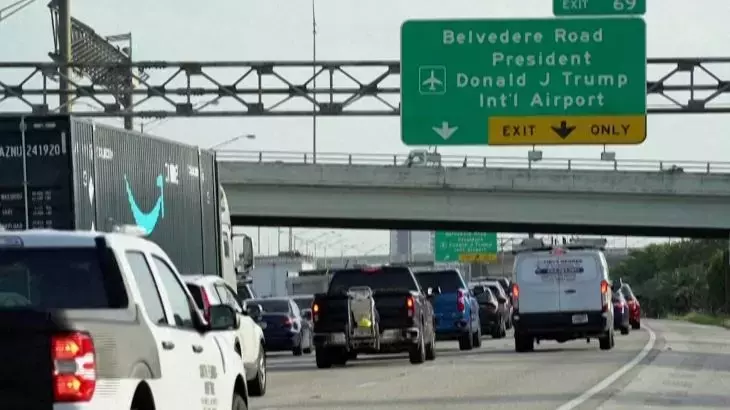
The recent decision to rename Palm Beach International Airport as President Donald J. Trump International Airport has stirred a significant public discourse, drawing both staunch support and vehement opposition. This rebranding initiative, marked by the installation of new signage throughout the terminal, reflects a broader societal debate concerning public honors for political figures. The move has quickly become a focal point for discussions about historical legacy, public sentiment, and the appropriate ways to commemorate individuals, particularly those whose tenures have been met with such polarized reactions. The varied responses underscore deep ideological divisions within the community, turning what might seem like a simple administrative change into a symbolic battleground.
The official renaming took place on July 9, 2026, when authorities confirmed the change and began updating all airport signage to reflect the new designation. This action followed a period of deliberation and public consultation, though the decision itself has clearly not achieved universal consensus. Proponents of the name change view it as a well-deserved recognition of former President Trump's influence and contributions, particularly given his long-standing ties to the Palm Beach area. They argue that honoring a former head of state in such a manner is a traditional practice and a testament to his impact on national and local affairs. For these supporters, the new name serves as a proud acknowledgment of his legacy and a reflection of respect for his past office.
Conversely, a substantial segment of the population has voiced strong objections to the renaming. Critics have labeled the decision as 'in poor taste' and politically charged, arguing that public infrastructure should remain neutral and not become entangled in partisan tributes. Concerns have been raised about the divisiveness such a name might foster, potentially alienating a portion of the traveling public and local residents. Opponents suggest that public spaces should foster unity, and naming an airport after a figure as controversial as the former president undermines this principle. This sentiment highlights a desire for public symbols to represent collective values rather than individual political affiliations.
The controversy surrounding the airport's new name extends beyond mere semantics, touching upon broader questions of civic identity and political expression in public spaces. It exemplifies how historical figures, especially those with polarizing public images, continue to evoke strong emotional responses long after their time in office. The divergent reactions observed in Florida serve as a microcosm of wider national discussions about how societies choose to remember and honor their leaders, particularly in an era marked by heightened political polarization. The debate over this name change is therefore not just about an airport, but about the very fabric of public memory and collective identity.
In essence, the transformation of Palm Beach International Airport into President Donald J. Trump International Airport has become a flashpoint for intense public debate. This decision has polarized opinions, with some hailing it as a merited tribute and others decrying it as an inappropriate and divisive act. The installation of new signage throughout the terminal symbolizes a broader cultural and political struggle over how figures of significant, yet controversial, public standing should be commemorated within civic infrastructure. The episode ultimately underscores the deep-seated divisions prevalent in contemporary society regarding political legacy and public remembrance.
