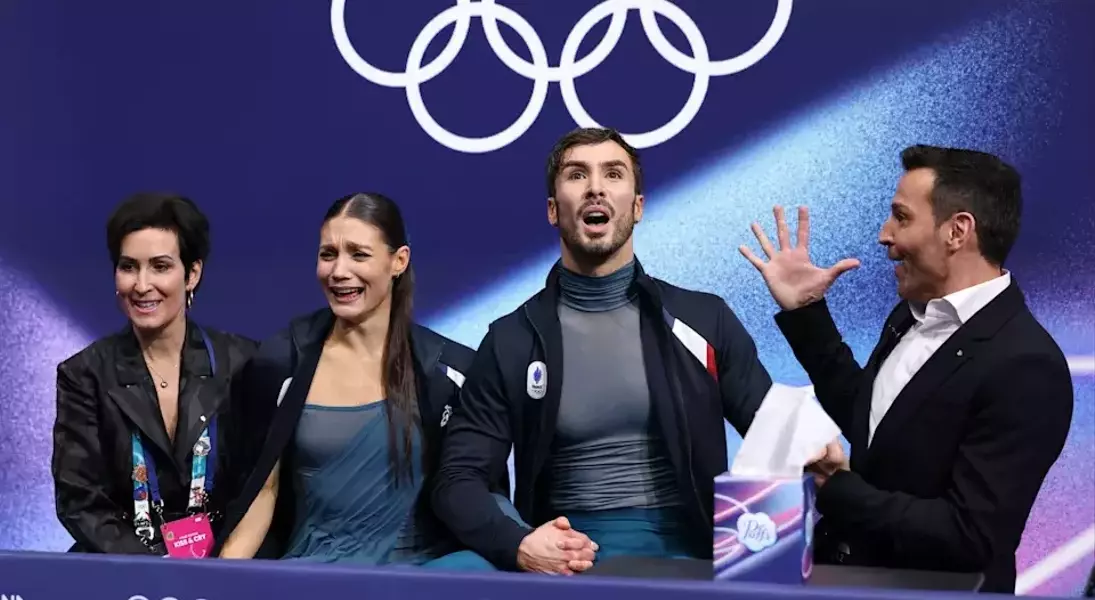
During the recent Winter Olympics, the ice dance competition became a focal point of discussion due to contentious judging. American ice dancers Madison Chock and Evan Bates delivered a performance that many believed was gold-medal worthy, yet they were awarded the silver, with the top honor going to France's Laurence Fournier Beaudry and Guillaume Cizeron. This outcome has intensified the ongoing debate surrounding the subjectivity and fairness of figure skating evaluations, prompting calls for increased transparency from both athletes and spectators.
The intricate scoring system in figure skating, which attempts to standardize evaluation, still faces scrutiny when close results ignite controversy. Despite the International Skating Union's efforts to enhance fairness through mechanisms like publicizing judges' scores and eliminating extreme outliers, issues of perceived bias persist. A detailed analysis of the scores from the Milan-Cortina 2026 Olympic Winter Games revealed a significant discrepancy in the French judge's assessment, which heavily favored their national team and substantially lowered the Americans' score. This observation reignited concerns about judges' national allegiances influencing outcomes, harking back to past scandals and leading to widespread public dissatisfaction.
The situation highlights a broader challenge in sports that rely on human judgment, where the quest for objectivity often clashes with inherent human biases. While the figure skating community seeks solutions, including the potential integration of AI for more impartial scoring or stricter rules regarding judges' recusal when their compatriots compete, the recent controversy risks overshadowing the sport's growing popularity. Ensuring equitable and transparent judging is crucial for maintaining the integrity of figure skating and fostering trust among athletes and fans globally.
Ultimately, a commitment to fairness and integrity in competitive sports is paramount. The passion and dedication of athletes like Chock and Bates deserve a judging system that is beyond reproach, reflecting the true spirit of competition and inspiring future generations. Transparency and impartiality are not just ideals but necessities for sports to thrive and maintain their cherished place in the global imagination.
