
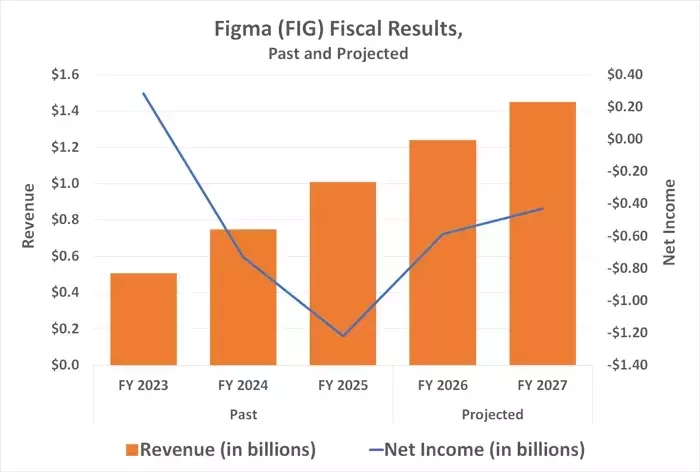
Figma, a company specializing in visual digital design software, recently entered the public market to considerable anticipation. However, following its initial public offering, the company's stock has experienced a notable downturn. This report delves into the reasons behind this post-IPO fluctuation, evaluating whether this presents a strategic investment opportunity or indicates underlying vulnerabilities within the company's market position. It explores the common challenges faced by new public entities and examines Figma's unique situation, particularly its competitive landscape and future growth prospects.
Figma's Market Debut and Subsequent Challenges
In early August, Figma, a prominent visual digital design software platform, made its highly anticipated public debut, generating substantial buzz. Headquartered in San Francisco, California, Figma provides an innovative online collaboration platform that empowers teams to collectively create and refine visual user interfaces for mobile applications and websites. The company reported impressive second-quarter revenue growth of 41% year-over-year, reaching nearly $250 million, with similar growth projected for the remainder of the year. This growth is primarily driven by existing customers expanding their subscriptions. Despite these robust financial indicators, Figma's stock has paradoxically plummeted by more than half its initial post-IPO surge high.
This sharp decline, observed in the wake of the second-quarter results released earlier this week, has left many investors puzzled. While some dismiss it as typical post-IPO volatility, others are more cautious, pointing to the company's near-breakeven profitability. The market's reaction highlights a critical question: is this a temporary setback, an overreaction by the market, or a sign of deeper structural issues? Historical precedents, such as the initial struggles of Meta (formerly Facebook) and Snap, suggest that newly public stocks often undergo a period of significant volatility as the market endeavors to establish a fair valuation. For instance, Meta's stock was halved in the first three months post-IPO in May 2012 before recovering over a year later. Similarly, Snap experienced an over 80% sell-off within a year after its late-2020 offering. Conversely, Coreweave, an AI data center support provider, had a shaky start in March following its public offering but stabilized in April.
However, beyond the inherent volatility of new listings, Figma faces a more profound challenge: a lack of a substantial competitive advantage. Despite its innovative cloud-based software, which facilitates interactive app and web page design for non-coders and engineers, its core business model — a collaborative interface design platform — is not legally protected by patents. This critical vulnerability means that larger, well-resourced competitors could easily replicate Figma's successful platform. The interest from industry giants like Adobe, which previously attempted to acquire Figma in 2023, underscores the marketability of Figma's technology and the potential for formidable rivals, such as Microsoft, to integrate similar functionalities into their existing product suites. The absence of a unique, defensible "moat" raises concerns about Figma's long-term sustainability against encroaching competitors. Therefore, while Figma demonstrates strong growth in a high-demand sector, its future stock performance heavily relies on market sentiment and its ability to withstand intensified competition, rather than a clear fundamental advantage.
The market's current hesitancy towards Figma's stock, despite its growth, signals a broader truth about investing: sustainable success hinges on more than just immediate gains. It requires careful consideration of a company's competitive standing and long-term viability in a dynamic market.
