
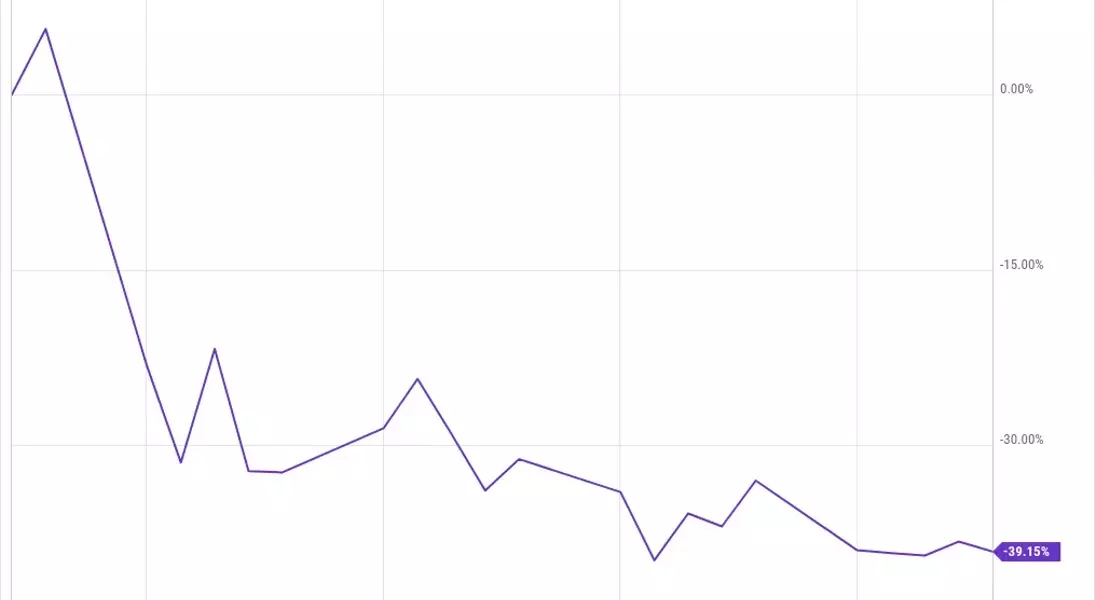
Figma, a prominent cloud software firm, witnessed considerable share price fluctuations in the month of August, subsequent to its highly anticipated initial public offering. Initially, the company's stock experienced an extraordinary surge, more than tripling its opening day value; however, this dramatic ascent was followed by a notable retraction. Throughout August, the stock price adjusted significantly, ultimately registering a 39% decline from its peak, a common occurrence for newly public entities as the market seeks a stable valuation. This period of adjustment saw high trading volumes initially, which then tapered off as the stock's price began to stabilize towards the end of the month.
During this post-IPO phase, Wall Street analysts offered varied perspectives on Figma's market position and future prospects. While some, like Piper Sandler, expressed optimism, citing the company's distinct platform and appealing business model with an 'overweight' rating and an $85 price target, others maintained a more cautious stance. Goldman Sachs, for instance, voiced skepticism regarding the company's valuation, highlighting a lack of clear visibility into its ongoing momentum and revenue growth trajectories. These divergent views underscore the inherent uncertainties and speculative nature often associated with investing in high-growth companies fresh off their public listing.
Looking ahead, Figma is poised to release its first earnings report as a publicly traded company, an event anticipated to influence its stock performance significantly. Market consensus projects revenues around $248.7 million, representing a substantial year-over-year increase of 40.3%, with an expected earnings per share of $0.08. Despite its current high price-to-sales ratio of 36, Figma's rapid growth, profitability, and prior endorsement from Adobe, despite the acquisition being blocked, suggest a promising future. While short-term headwinds may persist due to its valuation, the underlying strengths of the company point to continued potential for expansion and innovation in the cloud software sector.
The journey of a company from private to public ownership is often fraught with both immense opportunities and considerable challenges, demanding resilience and foresight from its leadership. Figma's initial market response, characterized by both explosive growth and subsequent consolidation, exemplifies the dynamic nature of financial markets and the importance of adapting to evolving investor sentiment. Such experiences remind us that true value creation is a long-term endeavor, built on solid fundamentals, continuous innovation, and a commitment to stakeholders, ultimately fostering a positive impact on the broader economic landscape.
