

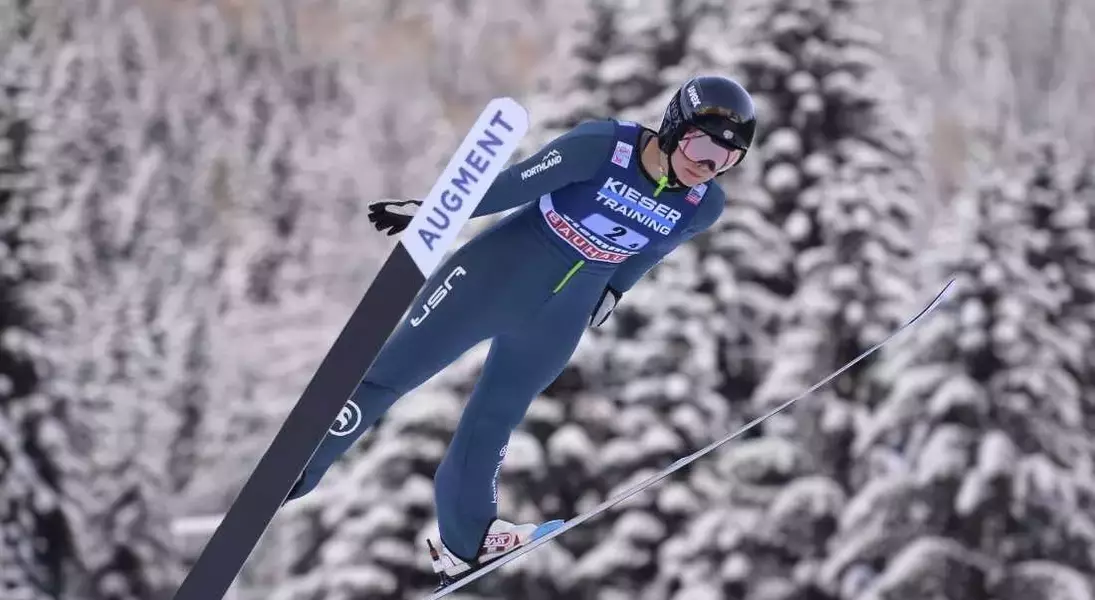
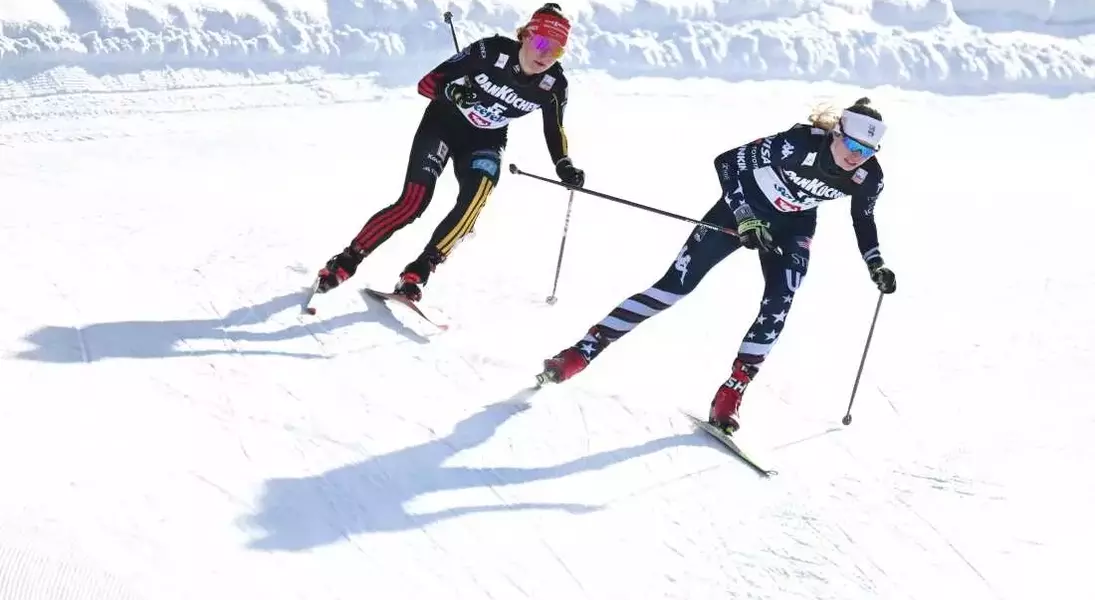
The Nordic combined event, a challenging fusion of ski jumping and cross-country skiing, stands as the only discipline within the Olympic program that continues to exclude female competitors. This exclusion persists despite the International Olympic Committee's stated aim for greater gender representation in the Games. Leading female athletes, such as Annika Malacinski and Tara Geraghty-Moats, express deep frustration over being denied the opportunity to showcase their talents on the world's premier sporting stage, highlighting the significant professional and financial ramifications for their careers. This ongoing disparity has ignited a passionate campaign from athletes, sports federations, and advocacy groups, all striving to secure a place for women's Nordic combined in future Olympic Games, with the upcoming viewership figures for the men's events potentially playing a pivotal role in this crucial decision.
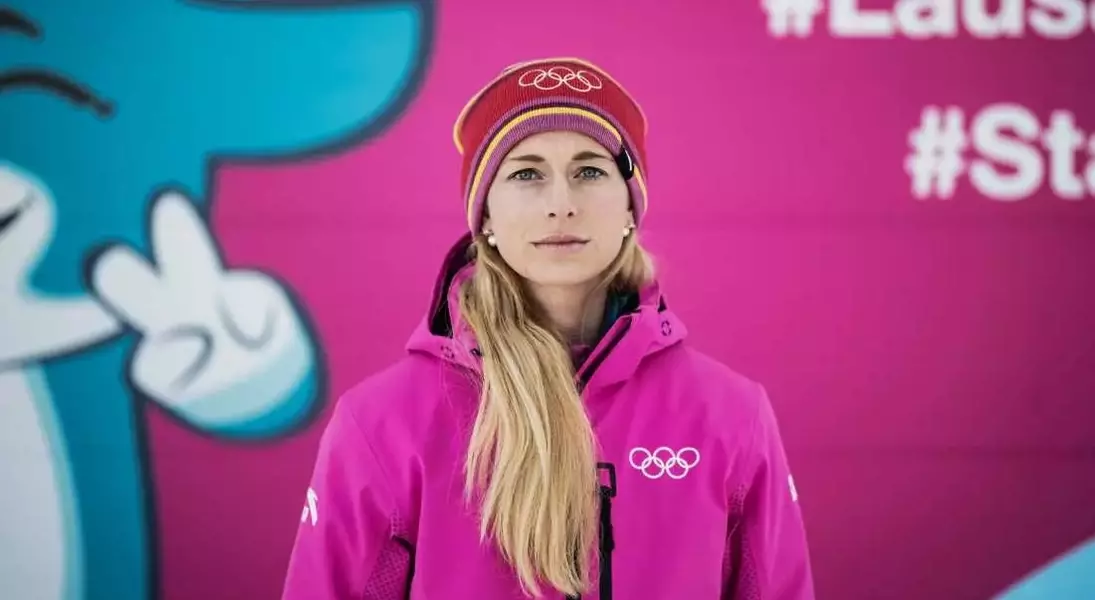
Annika Malacinski, currently ranked among the top 10 Nordic combined athletes globally, is attending the Winter Olympics in Italy, not as a participant, but as a supporter for her brother. Her inability to compete stems solely from her gender, a stark reality she openly criticizes. Malacinski emphasizes that female athletes dedicate the same effort and make similar sacrifices as their male counterparts, including relocating to countries like Norway to enhance their training and performance. Her personal experience underscores a broader issue within the sport, where women have only recently gained access to World Cup circuits and World Championships, with Olympic inclusion remaining an elusive goal for over a century since the sport's debut for men in 1924.
The International Olympic Committee has repeatedly cited low viewership and limited international participation as reasons for denying women's Nordic combined inclusion in the 2022 and 2026 Winter Olympics. This decision has profound implications for female athletes, including significant financial drawbacks. Tara Geraghty-Moats, a former World Cup champion, recounted how agents estimated her potential earnings at a million dollars if her sport were Olympic, a stark contrast to the reality without Olympic recognition. However, proponents argue that the sport has experienced considerable growth, particularly at the youth level, and benefits from its inherent sustainability by utilizing existing ski jumping and cross-country facilities.
Lasse Ottesen, the race director for Nordic combined at the International Ski and Snowboard Federation, expressed surprise at the IOC's continued reluctance, particularly given the sport's recent development and its economical use of existing infrastructure. Data from FIS reports and Nielsen Sports indicates a growing number of female participants from various countries, along with a notable increase in viewership for women's Nordic combined World Cup events. This week's Olympic events are seen as a critical juncture, with high viewership potentially swaying the IOC's decision regarding the sport's future, not just for women, but for men as well, as there's a looming possibility of the entire discipline being removed from the Olympic program.
The push for women's inclusion has garnered considerable public and political support. An online petition advocating for their participation has amassed tens of thousands of signatures, and U.S. Senators Michael Bennet and John Hickenlooper have formally urged the IOC to reconsider its stance. This collective advocacy reflects a broader desire to eliminate gender discrimination in sports and to ensure that all athletes, regardless of gender, have the opportunity to realize their Olympic aspirations. The athletes and their supporters firmly believe that if hard work and dedication grant men a platform, women deserve the same.
The current situation surrounding women's Nordic combined at the Olympics highlights a persistent gender disparity in elite sports. Despite the dedicated efforts and significant achievements of female athletes in this challenging discipline, the International Olympic Committee has consistently overlooked their calls for inclusion. The upcoming viewership numbers for the men's events are now seen as a crucial factor, holding the potential to either pave the way for women's participation or, more drastically, lead to the complete removal of Nordic combined from the Olympic roster. This moment represents a critical juncture for the sport, with the hopes of many athletes resting on the outcome of this evaluation, emphasizing the ongoing fight for equitable opportunities in global sports.
