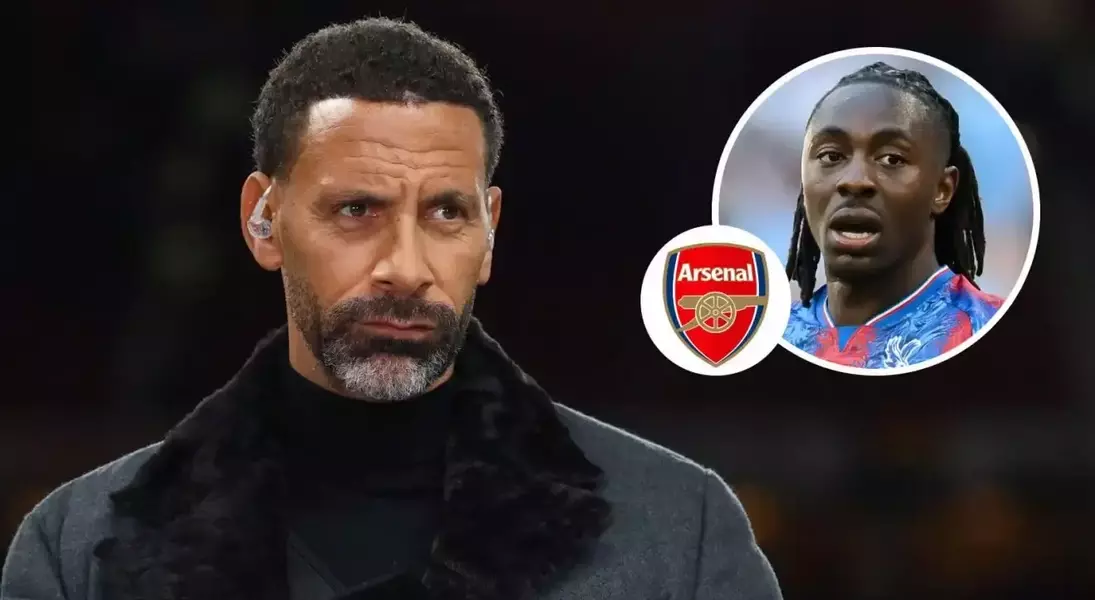
This report delves into the ongoing transfer saga involving Crystal Palace's Eberechi Eze and Arsenal, as seen through the critical lens of football pundit Rio Ferdinand. It highlights Ferdinand's skepticism about Eze's playing prospects at the Emirates Stadium given Arsenal's aggressive recruitment strategy and existing talent pool. The article further explores Arsenal's summer transfer activities, their financial approach to potential acquisitions, and a comparative analysis of new signings, offering a comprehensive overview of the unfolding dynamics in the Premier League transfer market.
Ferdinand Casts Doubt on Eze's Arsenal Move in a Busy Transfer Window
In a recent candid discussion, Rio Ferdinand, a distinguished figure from Manchester United's illustrious past, expressed significant reservations about the potential acquisition of Crystal Palace's dynamic attacker, Eberechi Eze, by Arsenal. This comes as the Gunners, under the astute guidance of manager Mikel Arteta, have already orchestrated six high-profile signings this summer. Notable arrivals at the Emirates Stadium include Kepa Arrizabalaga, Martin Zubimendi, Christian Norgaard, Noni Madueke, Cristhian Mosquera, and Viktor Gyokeres, marking an exceptionally busy period for the North London club.
Ferdinand's central argument, articulated on his popular online platform, revolves around the crucial question of playing time for Eze. With Arsenal's midfield and attacking departments already brimming with talent, Ferdinand pondered aloud, \"Where precisely would Eze slot into the team?\" He specifically pointed to the established presence of Martin Zubimendi as a holding midfielder, Declan Rice commanding the left-sided number eight role, and Martin Odegaard orchestrating play from the right. Furthermore, the wide areas are competently covered by promising talents such as Noni Madueke and Gabriel Martinelli. Ferdinand posited that Eze's most natural position would be where Declan Rice currently operates, raising concerns about direct competition for a starting berth.
Despite these analytical warnings, Arsenal's keen interest in Eze remains undiminished. Reports suggest the club is preparing an initial bid for the England international. However, they are reportedly disinclined to meet Crystal Palace's substantial valuation of £68 million, indicating a strategic approach to negotiations. Arteta himself has kept the door open for further acquisitions before the transfer window concludes, hinting at a flexible and responsive strategy to balance the squad. Beyond Eze, Arsenal is also reportedly monitoring Rennes defender Jeremy Jacquet, underscoring their broad scope in the market.
Adding another layer to his insightful commentary, Ferdinand engaged in a comparative assessment between Crystal Palace's Kudus and Arsenal's new signing, Madueke. While acknowledging a high ceiling for Madueke and viewing him as a valuable addition to Arsenal's ranks, Ferdinand suggested that in terms of sheer potential, the difference between the two players might not be as vast as some perceive. He particularly highlighted Madueke's relatively limited exposure in the Premier League compared to Kudus, providing a nuanced perspective on the burgeoning talents in the league.
This bustling summer transfer period underscores the relentless pursuit of excellence in the competitive Premier League. As clubs like Arsenal meticulously sculpt their squads, every potential transfer is scrutinized not only for its immediate impact but also for its long-term strategic implications. The discussions surrounding Eberechi Eze's future serve as a prime example of the intricate considerations involved in shaping a championship-caliber team.
From a journalist's perspective, this situation offers a compelling narrative on the intricate balance clubs must strike between acquiring top-tier talent and ensuring harmonious squad integration. Ferdinand's comments serve as a pertinent reminder that simply accumulating star players does not guarantee success. True strength lies in strategic recruitment that considers not just individual brilliance, but also how new additions complement existing structures and, crucially, how playing time will be allocated. For fans, it highlights the thrilling, albeit sometimes perplexing, dance of the transfer market, where whispers turn into bids and potential dreams face the harsh realities of squad limitations and financial constraints. It underscores the perpetual challenge for managers like Arteta to build a cohesive unit while navigating the demanding expectations of modern football.
