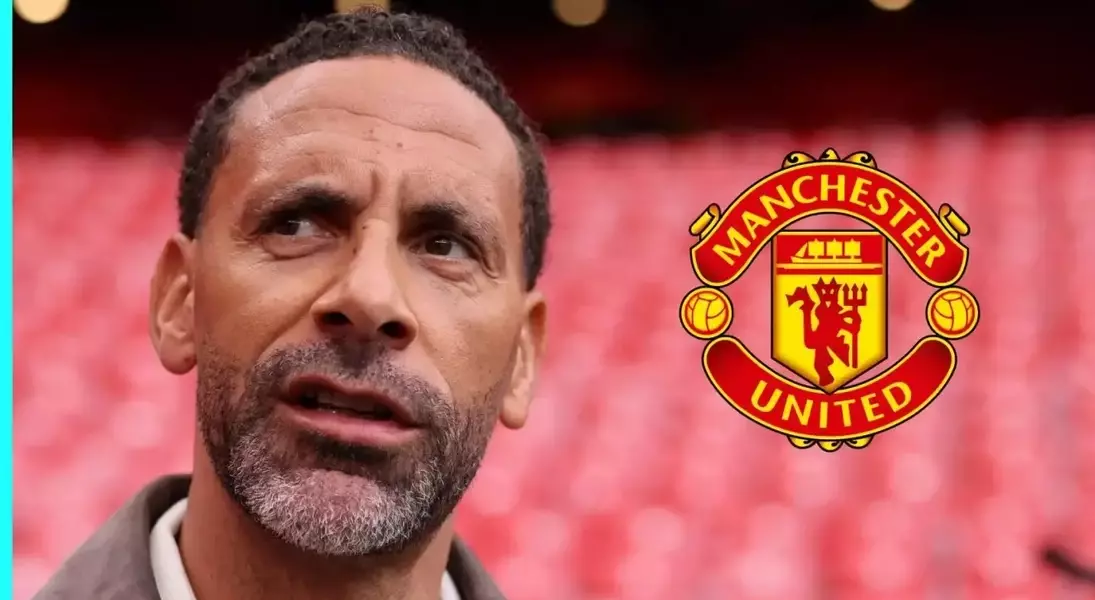
In an insightful assessment of Manchester United's ongoing squad development, former club icon Rio Ferdinand has voiced his perspective on crucial midfield reinforcements. With the transfer window's closure approaching, Ferdinand's commentary sheds light on potential targets and existing talents, underscoring the club's imperative to solidify its central core. His remarks come at a pivotal time, as the team grapples with the need for a dynamic and controlling presence in the heart of the park, a deficiency that was particularly apparent during recent fixtures.
Ferdinand's primary recommendation for the Red Devils is Crystal Palace's gifted midfielder, Adam Wharton. This endorsement follows United's unsuccessful attempt to secure Carlos Baleba, whose exorbitant price tag reportedly deterred the Manchester club. Ferdinand sees in Wharton a player who mirrors the attributes of a classic 'controller' like Michael Carrick, capable of dictating tempo, executing incisive forward passes from deep positions, and thriving under pressure. He lauded Wharton's composure, noting his capacity to slow the game down and perform effectively even against formidable opponents such as Manchester City and Liverpool, demonstrating a maturity beyond his years.
The former England international emphasized that strengthening the midfield is a top priority, especially given the observed reliance on experienced players like Casemiro in recent crucial matches. Ferdinand's analysis suggests that Wharton possesses the blend of technical skill and mental fortitude required to elevate United's midfield. However, acquiring Wharton may prove challenging, as reports indicate interest from other major European clubs, including Spanish giants Real Madrid, setting the stage for a potential transfer battle.
Beyond external recruitment, Ferdinand also turned his attention to Manchester United's own burgeoning talent, Kobbie Mainoo. He expressed strong belief in Mainoo's ability to fulfill a similar deep-lying playmaking role, stressing that the young player has the capacity to control games and facilitate attacking transitions. Ferdinand urged patience and trust from the management, advocating for Mainoo to be given more opportunities to showcase his considerable potential. He posited that a midfield partnership featuring Mainoo would significantly benefit the team, allowing attacking players to flourish by receiving the ball in optimal positions, reinforcing the idea that homegrown talent could be a vital part of the club's future.
Ultimately, Ferdinand’s analysis offers a dual perspective on Manchester United's midfield conundrum: the pursuit of proven talent like Adam Wharton and the nurturing of promising internal assets such as Kobbie Mainoo. His strategic insights highlight the importance of securing a player who can anchor the midfield, dictate play, and relieve pressure, ensuring the team's long-term competitive health. Whether through new acquisitions or by harnessing existing potential, the focus remains on building a robust and adaptable central unit that can withstand the rigors of top-tier football.
