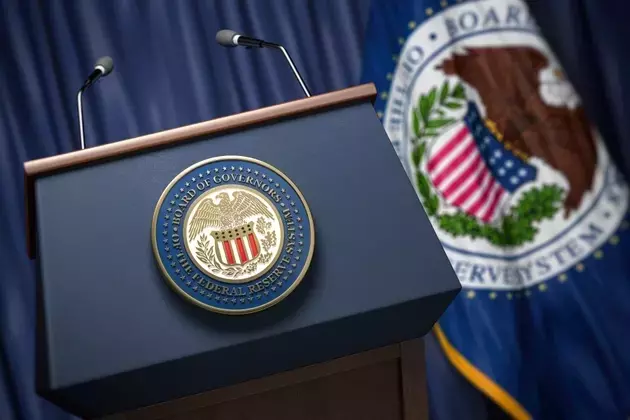
The Federal Reserve's recent decision to maintain its benchmark interest rate, following a series of reductions, signals a period of strategic recalibration for monetary policy. This pause comes amidst a stable yet not overheating labor market and inflation rates that, while above the central bank's 2% target, show no signs of dramatic escalation. The central bank's approach aims to provide a stable environment for future economic adjustments, even as market expectations for rate cuts diverge from the Fed's projections.
Key technological giants are also poised to release their earnings reports, a development closely watched by investors for insights into market trends and the broader economic health. These reports, alongside the Fed's cautious stance, underscore a complex financial landscape where policy decisions and corporate performance intersect to shape investor sentiment and economic forecasts.
The Federal Reserve's Stance on Interest Rates
The Federal Open Market Committee (FOMC) is widely expected to hold its current interest rate levels, halting a sequence of rate reductions. This decision will maintain the benchmark rate within the 3.50%-3.75% range. The rationale behind this pause is primarily attributed to a relatively stable labor market, which, despite some softening, does not present immediate concerns. Additionally, inflation continues to hover above the Federal Reserve's 2% target, negating the urgency for further easing. This strategic pause allows policymakers to assess economic developments and plan their next moves for the upcoming year, particularly in light of differing expectations between the FOMC and market participants regarding the pace of future rate adjustments.
This careful consideration by the Fed aims to let economic conditions "settle a little bit," as noted by Stephen Kates, an analyst at Bankrate. He emphasizes that while the economy is not entirely clear of inflation or labor market risks, it has moved away from a critical juncture, providing policymakers with room to deliberate. The divergence between the FOMC's indicated path of a single rate cut in the coming year and market forecasts of two rate cuts highlights a crucial point of tension. Resetting these market expectations will be vital. Furthermore, attention will be on Fed Chair Jerome Powell's upcoming press conference for any remarks on tariffs, the Fed's autonomy, and the Department of Justice's investigation into the central bank's renovation project, all of which could influence market sentiment and future policy direction.
Corporate Earnings and Market Outlook
Major technology corporations, specifically Microsoft, Meta, and Tesla, are scheduled to disclose their financial outcomes after the closing bell today. These reports are keenly anticipated by the market, as they provide critical indicators of corporate profitability and future growth prospects. The performance of these tech giants, often referred to as the "Magnificent Seven," significantly influences broader market trends and investor confidence. The results will be scrutinized for insights into capital expenditure, returns on artificial intelligence investments, and overall revenue growth, shaping market expectations for the sector's trajectory.
Beyond these significant earnings releases, several other notable developments are impacting the market. Beijing's approval of a substantial import of Nvidia's H200 chips signals a strategic focus on artificial intelligence capabilities, with considerable implications for the semiconductor industry. In other news, SoftBank is reportedly considering a significant investment in OpenAI, further underscoring the growing importance of AI. SpaceX is targeting an initial public offering with a high valuation, indicating robust investor interest in space technology. Additionally, UnitedHealth is signaling benefit reductions, and UPS plans substantial job cuts following the scaling back of its partnership with Amazon. These diverse corporate actions, ranging from technological advancements to strategic restructuring, collectively paint a dynamic and evolving picture of the global economic landscape, underscoring the constant interplay between corporate strategy and market valuation.
