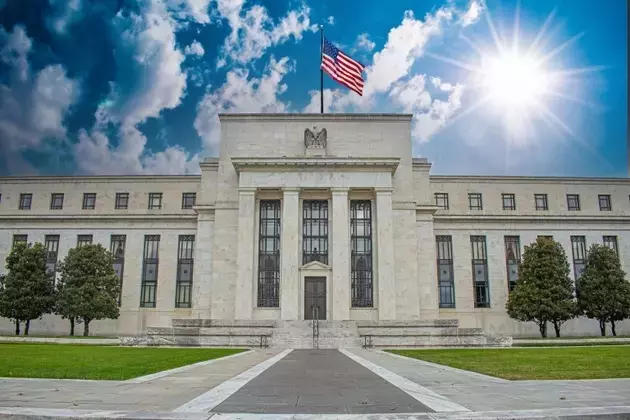
This article explores the intricate relationship between the Federal Reserve's interest rate decisions and market indicators, particularly the 3-Month T-Bill yield. It argues that the Fed's actions often follow, rather than lead, market movements, challenging the conventional perception of the central bank as a proactive economic driver. The piece also contextualizes the Fed's recent history, emphasizing its shift towards more accommodative policies in response to major economic crises.
Understanding the Fed's Reactive Role: Market Dynamics Over Central Command
The Federal Reserve and T-Bill Yield: A Lagging Indicator
The widespread focus on the Federal Reserve's upcoming decisions regarding the Federal Funds rate often overshadows a crucial dynamic: the Fed Funds rate typically mirrors movements in the 3-Month T-Bill yield, with the latter usually anticipating the Fed's adjustments by approximately four weeks. This pattern suggests that market forces, as reflected in T-Bill yields, often precede and influence the central bank's policy shifts, rather than the Fed dictating market direction.
Shifting Priorities: From Inflation Control to Economic Stimulation
Over the past two decades, particularly in the aftermath of the 2008 financial crisis and the Covid-19 pandemic, the Federal Reserve's approach to monetary policy has evolved significantly. The central bank has increasingly adopted an accommodative stance, prioritizing robust economic growth over stringent inflation control. This shift indicates a heightened willingness to intervene in financial markets to ensure stability and foster recovery, even at the risk of higher inflation.
Economic Slowdown and Inflationary Pressures: A Call for Rate Adjustments
As the economy navigates through periods of decelerating inflation and subdued growth, there's a growing expectation for a decline in both T-Bill yields and the Federal Funds rate. Should the economy tip into a recession, these rate reductions are likely to become more pronounced. Such an environment typically signals a flight to safety, where investors move towards less risky assets like government bonds.
Investment Implications: The Appeal of Long-Term Treasury Bonds
In anticipation of a potential economic downturn and corresponding rate cuts, long-term stripped Treasury bonds, exemplified by instruments like GOVZ, are poised to offer substantial benefits. These bonds tend to appreciate significantly when interest rates fall, making them an attractive option for investors seeking refuge and growth during periods of economic uncertainty and monetary easing.
