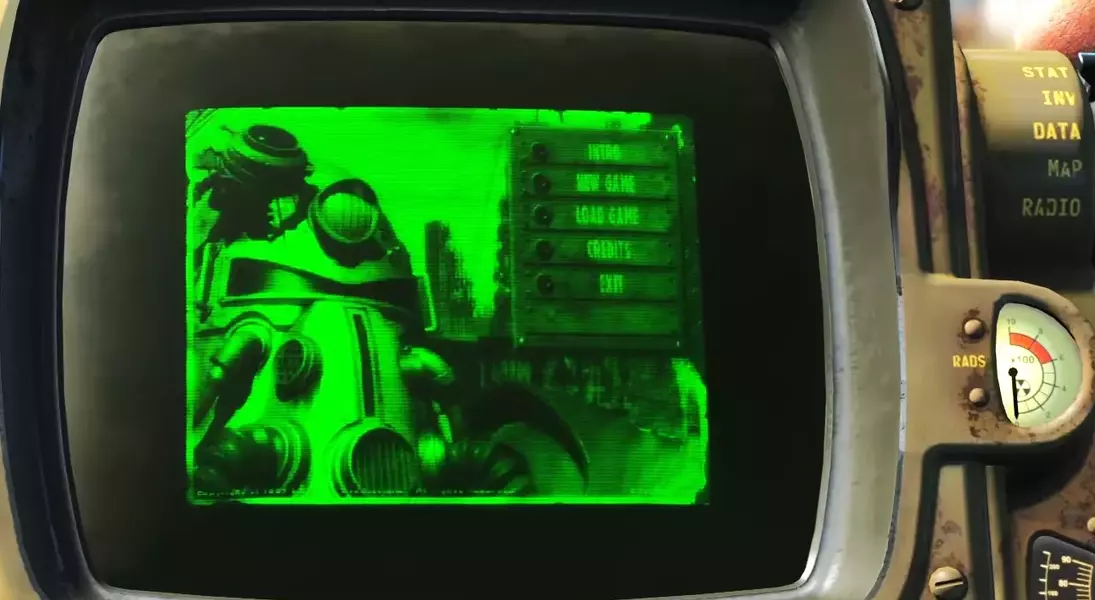
A brilliant mod developer has once again pushed the boundaries of what's possible in gaming, successfully bringing the original Fallout game to the Pip-Boy interface within Fallout 4. This impressive feat follows the modder's earlier achievement of integrating The Elder Scrolls III: Morrowind into the same in-game device, demonstrating a remarkable ability to blend different gaming experiences. The latest creation fulfills a strong demand from the community, further cementing the modder's reputation for innovative and ambitious projects that delight fans of classic titles and modern adaptations alike.
This pioneering modding effort highlights the enduring appeal of classic games and the creativity of the modding community. By enabling players to experience Fallout 1 directly within Fallout 4, the modder not only offers a nostalgic trip but also a novel way to interact with beloved franchises. The project utilizes advanced techniques, including game engine repurposing and frame buffer streaming, to seamlessly integrate these distinct gaming worlds.
Classic Fallout Reimagined on the Pip-Boy
The modding community has recently witnessed an extraordinary display of technical prowess, as a developer successfully implemented the original Fallout into the Pip-Boy interface of Fallout 4. This innovative project allows players to immerse themselves in the retro-futuristic wasteland of Fallout 1 through the iconic wrist-mounted computer, offering a fresh perspective on a beloved classic. The creator, known for their previous work in integrating Morrowind into Fallout 4, has once again captivated the gaming world with this highly anticipated release. The mod leverages sophisticated techniques to bridge the gap between two vastly different game eras, providing a unique and engaging experience for fans of both titles.
This remarkable achievement builds upon the foundations laid by earlier cross-game integrations. The modder's methodology involves utilizing Fallout 4's script extender and a modified source port of Fallout 1, similar to how Morrowind was incorporated. By streaming the classic game's visual data directly onto the Pip-Boy screen, the mod creates an illusion of seamless play, making it appear as though Fallout 4 is natively running its predecessor. This technical ingenuity not only serves as a testament to the modder's skill but also opens up new avenues for how players can interact with and reinterpret their favorite gaming universes. The project stands as a shining example of community-driven innovation, where passion and technical expertise combine to deliver unexpected and delightful gaming experiences.
The Technical Marvel Behind the Integration
The integration of Fallout 1 into Fallout 4's Pip-Boy is a sophisticated technical accomplishment, relying on the same foundational principles that allowed Morrowind to run within the same environment. This process involves the strategic use of Fallout 4 Script Extender, a tool that enables extensive modifications to the game's engine, and a custom-adapted source port of Fallout 1, likely Alex Batalov's Community Edition. These components work in tandem to execute the classic game and project its visual output onto the in-game screens of Fallout 4, creating a seamless "game within a game" experience.
The core of this technical marvel lies in how the mod handles the display of Fallout 1. The Script Extender allows for the interception and redirection of user inputs, passing commands directly from Fallout 4 to the running instance of Fallout 1. Simultaneously, the specialized source port of Fallout 1 is configured to stream its framebuffer data, which represents the raw graphical output typically sent to a display, directly onto the textures of the Pip-Boy and other in-game terminals. This clever re-routing of visual information ensures that Fallout 1 is not merely emulated but is actively rendered and displayed within the confines of Fallout 4's virtual world, offering a genuinely immersive and interactive experience that blurs the lines between two distinct gaming generations.
