In a picturesque village near Lake Como, Raffaele Fabrizio has spent his life weaving together the threads of tradition and innovation. Born into a family that established Dedar, an esteemed Italian fabric house, Fabrizio and his sister Caterina have transformed the company with their unique vision. While Fabrizio once dreamed of becoming an architect, inspired by a dilapidated 17th-century villa, he ultimately found his calling in textiles. His early fascination with abandoned spaces and forgotten beauty has shaped not only his career but also his personal journey. Today, as he prepares to move closer to the family business, Fabrizio reflects on how childhood desires continue to influence his present and future.
For Raffaele Fabrizio, the allure of history began at a young age. Growing up in Fino Mornasco, a quaint village near Lake Como, Fabrizio was captivated by a deserted 17th-century villa just around the corner from his home. This mysterious place, once inhabited by a countess who lost her fortune, became a playground for the young boy’s imagination. He would sneak past locked gates to explore rooms adorned with faded frescoes, creating a world that felt both hidden and enchanting. These experiences instilled in him a deep appreciation for the past, which later influenced his approach to textile design. As he matured, Fabrizio pursued architecture, studying the field and practicing in his twenties. However, his true passion lay in transforming Dedar into a brand known for its innovative use of color, pattern, and texture.
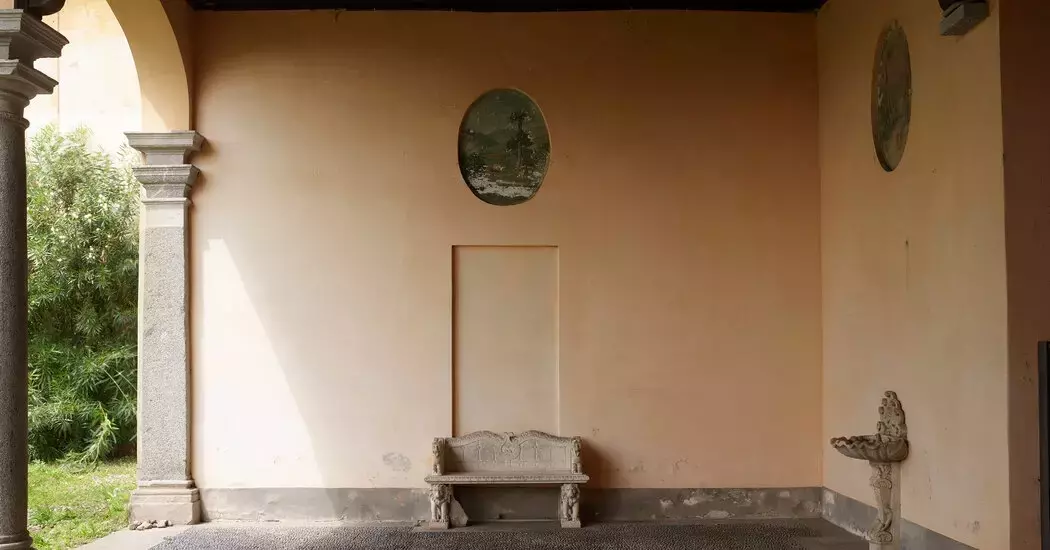
The legacy of Fabrizio’s family is intertwined with the landscape of northern Italy. Founded by his parents Nicola and Elda in 1976, Dedar quickly gained recognition for its luxurious fabrics. Under Fabrizio and Caterina’s leadership, the company has attracted high-profile clients such as Hermès and film director Luca Guadagnino. Yet, despite this success, Fabrizio remains grounded in the emotional depth that comes from understanding the past. On a gray September afternoon, while walking through Valmorea, another village near Lake Como, Fabrizio muses on the importance of memory in creating compelling designs. “It’s not nostalgia,” he explains, “but the feeling of something that was a memory, the atmosphere.” This philosophy is evident in his work and in his decision to purchase a crumbling 17th-century palace on seven acres of land. The property, which he has kept in a state of glorious disarray, symbolizes both his artistic vision and his connection to the past.
As Fabrizio contemplates moving from his Milan apartment to be closer to the family business, he acknowledges that his history is inextricably linked to his destiny. Childhood dreams, once formed by the allure of forgotten places, now guide his professional and personal life. In embracing the textures of the past, Fabrizio continues to create textiles that resonate with both heritage and modernity. His story is one of transformation, where ancient desires are fulfilled through the art of design.
