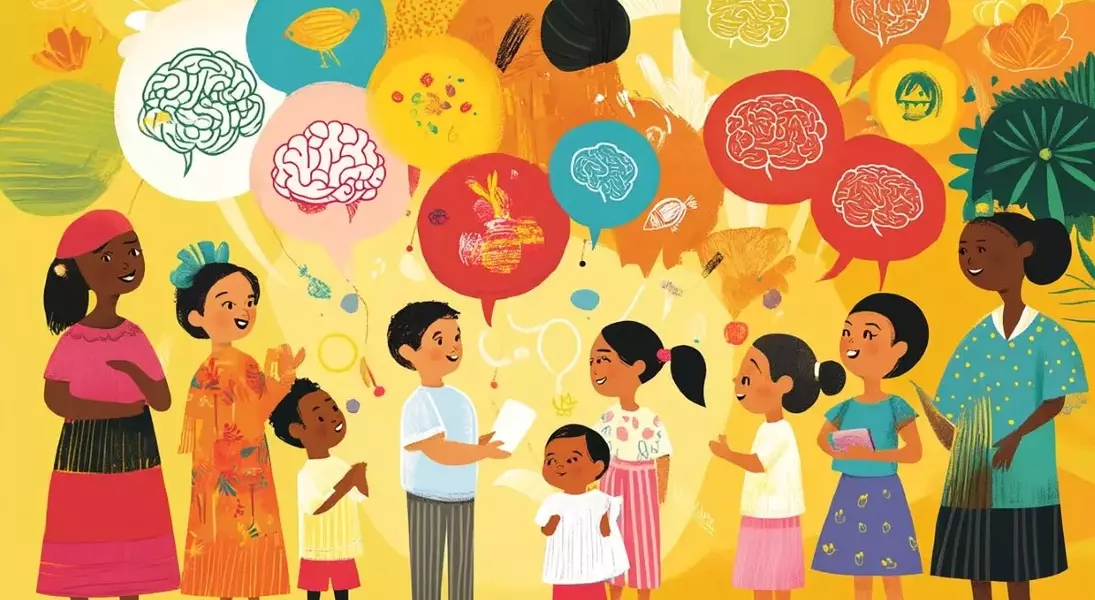
A recent study conducted on 121 infants in Accra, the capital city of Ghana, reveals a fascinating insight into the linguistic environment of children in this African nation. Unlike the conventional Western approach to language acquisition, which typically focuses on learning one language from a primary caregiver, Ghanaian infants are exposed to between two and six languages through various caregivers. This research highlights the importance of direct interactions for local languages like Akan, Ga, and Ewe, while English is predominantly acquired through media and official communication channels. The findings challenge traditional views on language learning and emphasize the need for a broader perspective that reflects global linguistic diversity.
The Rich Linguistic Tapestry of Ghanaian Childhood
In Ghana, children grow up in a vibrant multilingual environment where they hear multiple languages daily. The study found that infants interact with between two and six caregivers, each contributing to their linguistic development. This contrasts sharply with the Western model of language acquisition, where a single caregiver is often the primary source of language input. Instead, Ghanaian infants benefit from a dynamic social setting that enriches their language learning experience from an early age. The researchers noted that this multilingual exposure is not just an additional skill but a fundamental part of the children's identity and social structure.
The unique living arrangements in Ghana, particularly in compound buildings, play a crucial role in shaping this linguistic landscape. These structures facilitate frequent interactions in communal spaces, allowing children to engage with a diverse group of family members, neighbors, and relatives. Such an environment fosters direct language input primarily in local dialects, enhancing the children's ability to acquire these languages naturally. The presence of multiple caregivers ensures that infants receive a rich spectrum of linguistic inputs, making their language learning process more dynamic and diverse compared to the more isolated settings typical in Western cultures.
The Role of Direct and Indirect Language Input
The study also delves into the distinction between direct and indirect language input, revealing that local languages such as Akan, Ga, and Ewe are primarily learned through face-to-face interactions. In contrast, English is mainly acquired indirectly via media and official communication channels. This finding underscores the significance of direct contact in language acquisition while acknowledging the growing influence of indirect sources, especially in urban contexts. The researchers emphasize that both forms of input are essential for a child's overall linguistic development.
Direct interactions provide immediate feedback and context, which are vital for mastering local languages. However, indirect input, particularly through television and official communications, plays an increasingly important role in exposing children to English. This dual approach to language learning allows Ghanaian infants to navigate a complex linguistic environment effectively. The study calls for a reevaluation of language acquisition theories to better reflect the diversity and complexity found in non-Western societies. By recognizing the multifaceted nature of language input, researchers can gain deeper insights into how children in different cultural contexts develop their linguistic abilities. Ultimately, this research challenges the narrow conception of multilingualism prevalent in Western studies and advocates for a more inclusive and comprehensive understanding of language learning.
