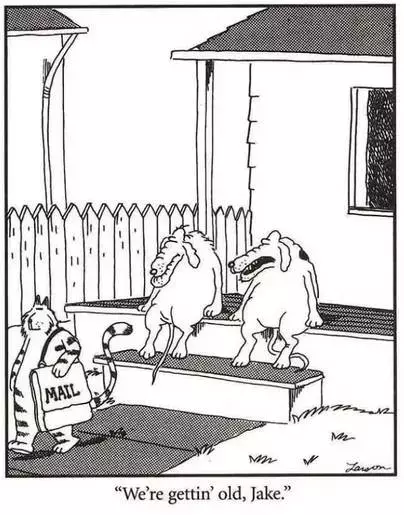
The enduring comedic struggle between dogs and postal workers has long been a source of amusement, a timeless battle brought to life with unparalleled wit by cartoonist Gary Larson in his celebrated series, The Far Side. Larson masterfully explored this perpetual rivalry, consistently depicting canines as clever, often victorious, antagonists, and mail carriers as their frequently bewildered or beleaguered targets. Across numerous panels, The Far Side chronicled this unique clash, transforming mundane encounters into surreal, laugh-out-loud scenarios. From packs of determined dachshunds besieging unsuspecting delivery personnel to more elaborate schemes involving canine infiltration of post offices, Larson's distinct artistic style and observational humor illuminated the absurdities inherent in this classic trope. Even decades after the strip's conclusion in 1995, these memorable portrayals continue to resonate, cementing The Far Side's legacy as a brilliant commentary on the curious dynamics between humans, their pets, and those who dare to venture onto their territory. This collection of his works exemplifies the imaginative range Larson employed to satirize this age-old, comical conflict.
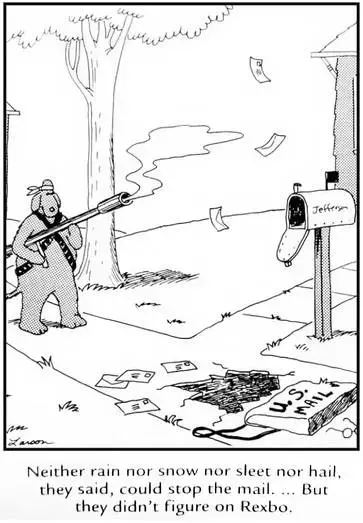
Larson's genius lay in elevating simple interactions to epic, almost mythological confrontations. He frequently illustrated scenarios where dogs, far from being mere household companions, became strategic masterminds or formidable adversaries. One notable instance presents a postal worker overwhelmed by a determined pack of small, elongated hounds, a scene of comedic chaos where the victim appears less harmed and more resigned to his fate, suggesting a common occurrence. Another panel comically reinterprets cinematic action heroes, featuring a weapon-wielding dog engaged in a dramatic altercation with a delivery person, an obvious parody highlighting the exaggerated nature of their perceived feud. This playful militarization of the conflict underscores the imaginative heights Larson reached in portraying this everyday antagonism.
The cartoonist also delved into the psychological depth of these animal protagonists, offering glimpses into their internal worlds. One strip humorously portrays a dog's vivid dreams, centered on the anticipated pursuit and incapacitation of a mail carrier, revealing the canine's primal instincts and focused animosity. Beyond direct confrontation, Larson explored more devious tactics, such as an entire squad of canines ingeniously disguising themselves to infiltrate the very heart of their enemy's domain – the local postal service hub. Such inventive scenarios not only elicited laughter but also showcased the perceived cunning and strategic planning dogs might employ in their relentless campaign against the letter-carrying profession, often leaving the human counterparts utterly unprepared for the unusual challenges.
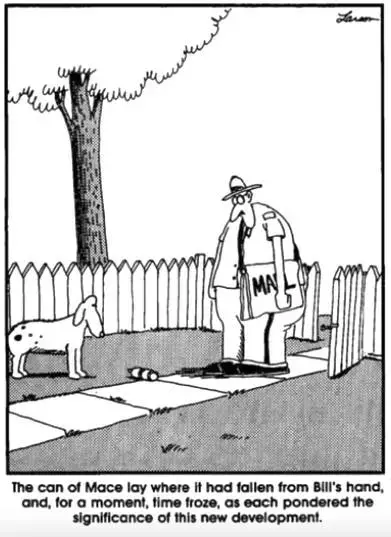
Furthermore, Larson frequently injected existential and satirical layers into his depictions. In a particularly profound yet comical strip, he imagined the canine version of an afterlife, where a dog's ultimate torment involves the ironic fate of having to collect its own waste and, most agonizingly, assume the role of a mail carrier. This humorous reversal of roles perfectly encapsulates the canine perspective on true misfortune. Other panels explored the ethical "rules of engagement," questioning whether postal workers' use of defensive sprays provided an unfair advantage in this ongoing, albeit comical, battle. One memorable illustration even delves into ancient history, presenting a paleontological discovery of fossilized dog and mailman remains, with the canine eternally attached to the mail carrier's leg, humorously suggesting the conflict's prehistoric origins and timeless nature.
Ultimately, Gary Larson's contributions to the narrative of dogs versus mailmen transcend mere humor, solidifying this quirky relationship as a cherished comedic staple. Through his unique artistic vision and unparalleled wit, he crafted a vivid universe where common domestic animals and public servants engage in an eternal, often absurd, rivalry. These cartoons from The Far Side continue to entertain and offer a lighthearted reflection on everyday interactions, reminding audiences of the enduring charm and comedic potential found in the simplest of observations. His work remains a testament to the power of imaginative storytelling in capturing the universal appeal of an age-old joke.
