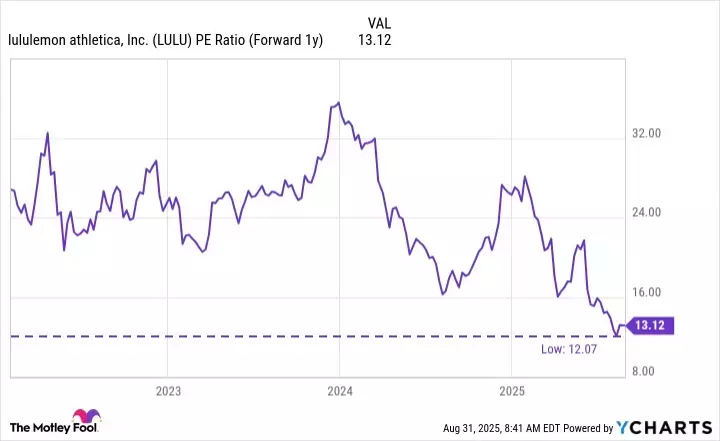

Michael Burry, the prominent investor celebrated for his astute foresight during the mortgage crisis, has once again made a notable move in the market. His investment firm, Scion Asset Management, which manages a substantial portfolio, has recently taken a significant position in Lululemon Athletica. This strategic acquisition, including a notable number of call options, points to a potentially contrarian view on the athleisure brand's future. Despite facing headwinds such as intense competition and evolving consumer preferences, Lululemon's robust international performance and ongoing commitment to product innovation might be key factors underpinning Burry's confidence in its long-term potential. The company's stock is currently valued at an unprecedented low, making this a particularly intriguing moment for an investment of this nature.
Burry, whose investment philosophy often involves identifying undervalued assets, has added Lululemon to a highly concentrated portfolio of only six stocks. This approach, which frequently incorporates options, aligns with his history of profiting from market dislocations. His decision to invest in Lululemon comes at a time when the company, once a darling of the athleisure trend, has seen its stock price decline by 60% from its peak. This downturn is attributed to various factors, including challenges in product assortment, tariff impacts, inventory management issues, and a fiercely competitive landscape within the premium activewear sector. The market's concerns are further amplified by the potential normalization of remote work trends, which had previously boosted Lululemon's sales.
Despite these challenges, Lululemon's recent financial performance reveals underlying strengths. For the first quarter of fiscal 2025, the company reported a 7% increase in revenue and an 8% rise in gross profit, alongside a 1% growth in comparable sales. International markets, especially China, have been significant drivers of growth, with sales surging by 19% year-over-year globally and 22% in China. Lululemon plans to open 40 to 45 new stores this year, predominantly in China, underscoring the vast opportunities it sees in emerging markets. This international expansion provides a crucial counterbalance to the brand's struggles in more mature markets like the U.S., where economic pressures are causing consumers to be more deliberate with their spending.
Lululemon's management remains focused on its core strategy: delivering innovative, high-quality products that resonate with its discerning customer base. The introduction of new product lines like Daydrift, Shake It Out, and Be Calm for women demonstrates the company's continuous effort to refresh its offerings and meet evolving consumer demands. This commitment to product excellence has historically allowed Lululemon to differentiate itself, even amidst the proliferation of imitators. The fact that Lululemon's stock is trading at its lowest-ever forward price-to-earnings (P/E) ratio, around 13 times forward earnings, suggests that the market may be undervaluing its intrinsic strengths and future growth prospects. Burry's purchase of call options further indicates his belief that the stock is poised for an upward trajectory. With the company's upcoming second-quarter earnings report, there is anticipation that positive updates could trigger an upward revaluation of the stock.
In sum, Michael Burry's recent investment in Lululemon Athletica highlights a belief in the company's resilience and untapped potential, even as it navigates a complex market environment. While domestic sales growth faces headwinds, Lululemon's strategic focus on international expansion, particularly in high-growth markets like China, combined with its sustained commitment to product innovation, offers a compelling narrative for recovery. The current low valuation presents a unique entry point for investors who share Burry's contrarian perspective, anticipating that the company's fundamental strengths will ultimately lead to a significant stock price appreciation.
