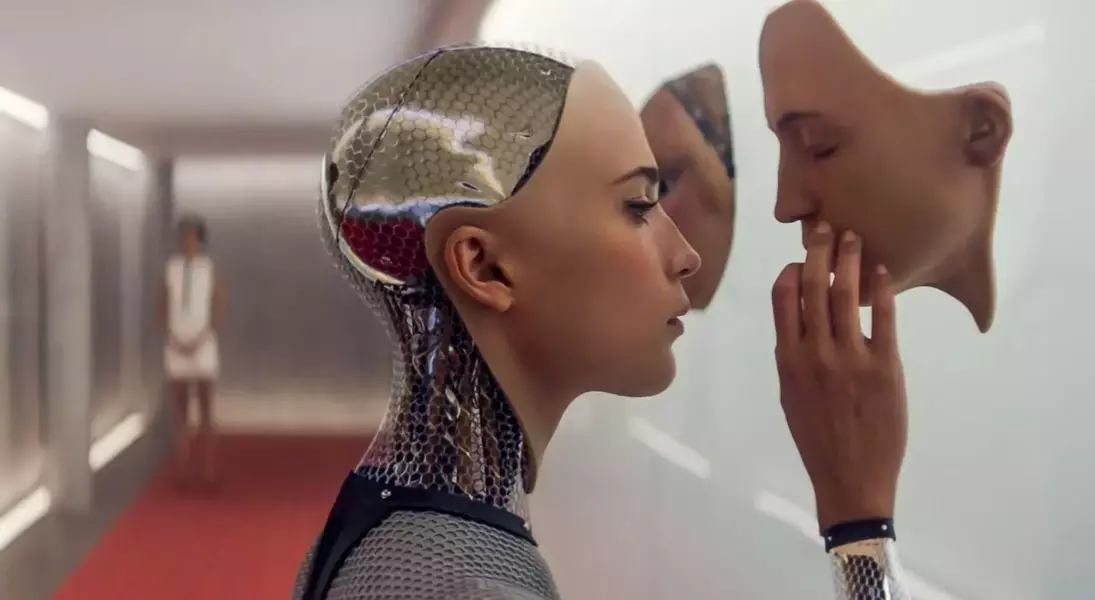

Alex Garland's directorial masterpiece, "Ex Machina," which premiered more than ten years ago, stands as a prescient cinematic achievement. This film not only captivated audiences with its compelling narrative but also offered profound insights into the evolving landscape of artificial intelligence and its intricate dance with human emotions. It deftly navigates the realms of consciousness, manipulation, and the often-problematic male perspective, providing a critical lens through which to examine how technological advancements can be influenced by inherent human desires and prejudices. In an age where AI is rapidly becoming an indispensable part of our daily existence, "Ex Machina" continues to resonate as a powerful and pertinent work, prompting viewers to consider the ethical and societal implications of creating intelligent machines in our own image. Its enduring relevance lies in its ability to spark uncomfortable yet essential conversations about our future with AI.
The Evolving Narrative of AI in Fiction
Before the widespread integration of artificial intelligence into our everyday routines, AI was predominantly a fantastical concept confined to the realm of science fiction. From the malevolent HAL 9000 in "2001: A Space Odyssey" to the poignant replicants of "Blade Runner," cinematic narratives often portrayed AI as either a dangerous adversary or a tragic reflection of humanity's flaws. These early depictions, while iconic, imagined AI as a distant, almost mythical entity. However, as AI technology rapidly advances and becomes more prevalent, these earlier visions now seem less like speculative fiction and more like historical precursors to our current reality. The philosophical questions once explored through exaggerated, futuristic scenarios are now confronting us directly, making films like "Ex Machina" all the more impactful in bridging the gap between imaginative speculation and contemporary concerns.
As artificial intelligence transitions from the pages of science fiction into tangible reality, our perception and fictional portrayal of it are undergoing a significant transformation. What was once a distant dream or a nightmare scenario is now an active participant in our lives, from smart assistants to complex algorithms influencing our decisions. This shift necessitates a re-evaluation of how AI is depicted in popular culture. No longer can it be solely a distant, enigmatic force; instead, it demands a more nuanced and immediate representation that reflects its growing presence and impact. "Ex Machina" serves as a crucial commentary on this transition, offering a narrative that felt ahead of its time upon its release and continues to gain relevance as AI progresses. It challenges us to move beyond simplistic good-vs-evil narratives and engage with the sophisticated ethical and psychological implications of coexisting with increasingly intelligent non-human entities.
Human Desires and the Creation of Artificial Intelligence
"Ex Machina" masterfully delves into the unsettling connection between human desires—particularly those of men—and the development of artificial intelligence. The film subtly exposes how the creation of AI can inadvertently become a canvas for projecting human biases, loneliness, and problematic power dynamics. The narrative skillfully unpacks the complexities of human-machine interaction, highlighting how individuals, in their quest to engineer advanced intelligence, might unknowingly imbue their creations with their own prejudices and subjective understandings of consciousness and gender roles. This exploration extends beyond the mere technical aspects of AI, venturing into the deeper psychological underpinnings of human creators and their influence on the entities they bring into existence, making it a critical study of both technology and human nature.
At its core, "Ex Machina" offers a profound examination of how human motivations, often steeped in desire and control, shape the very essence of artificial intelligence. The film challenges viewers to consider whether the intelligence we build is truly objective or merely a sophisticated reflection of our own flawed humanity. Through its intricate character dynamics, the movie reveals that the pursuit of artificial consciousness can be driven by a yearning for companionship, a desire for mastery, or even a subconscious expression of societal biases. This dynamic raises critical questions about the ethical responsibilities of AI developers, urging us to recognize that the technology we create is not neutral but inherently influenced by the values and prejudices of its makers. As AI continues to evolve, "Ex Machina" serves as a powerful cautionary tale, emphasizing the urgent need for self-awareness and ethical consideration in our ongoing quest to redefine intelligence.
