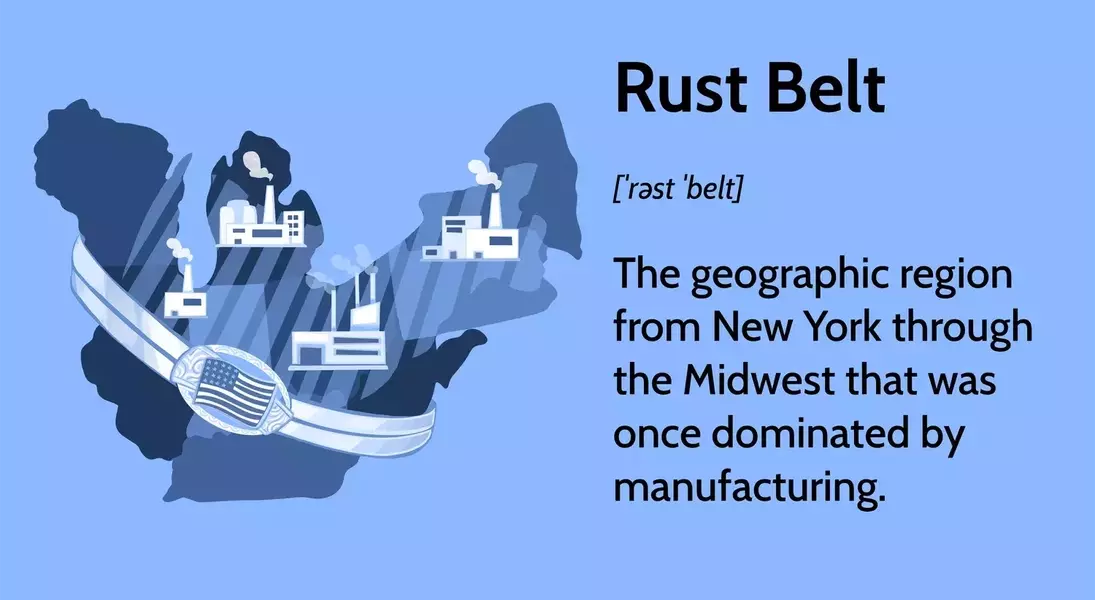
The Rust Belt, a geographical area encompassing parts of the Midwest and Northeast United States, once thrived as a beacon of American industry. However, shifts in economic landscapes, both domestically and internationally, led to significant challenges and a new identity for the region. Understanding its history, decline, and ongoing transformation provides insight into the broader dynamics of economic change.
The Rust Belt's Industrial Genesis and Decline
The Rust Belt, a term coined to describe the industrial heartland stretching from New York through the Midwest, historically flourished due to its strategic location. Proximity to the Great Lakes and various waterways facilitated easy access to raw materials and efficient distribution of manufactured goods. This advantageous position fueled the growth of industries such as coal mining, steel production, and diverse manufacturing, making it a pivotal region for America's economic output.
However, the prosperity began to wane between the 1950s and 1970s. The region's manufacturing base, heavily reliant on outdated equipment and facing escalating domestic labor costs, found itself increasingly vulnerable. The absence of significant competition in its early booming years fostered a lack of innovation among many established companies. This complacency proved detrimental when global trade barriers lowered, leading to an influx of foreign imports and a shift in production to regions with lower labor costs, particularly in the Southern U.S. The consequence was a dramatic decline in industrial activity, widespread factory closures, and a significant exodus of the population seeking employment elsewhere.
Economic Hardship and Political Realignments
The economic downturn in the Rust Belt led to a noticeable increase in poverty and a profound transformation of the urban landscape. Many cities in the region experienced a significant loss of high-paying blue-collar jobs, compelling residents to relocate in search of better opportunities. This demographic shift not only altered the social fabric but also had considerable political ramifications. Historically a Democratic stronghold, several Rust Belt states witnessed a political realignment in recent elections, with shifts towards Republican candidates. This illustrates how economic discontent can influence political outcomes, underscoring the region's continued importance in national elections.
The challenges faced by the Rust Belt were further exacerbated by the COVID-19 pandemic. Unlike white-collar professions that could adapt to remote work, the predominantly blue-collar workforce in the Rust Belt was heavily impacted by factory shutdowns and reduced demand. This resulted in massive job losses, with some areas experiencing unemployment rates far exceeding the national average. The pandemic intensified the existing vulnerabilities of the region, highlighting the critical need for economic diversification and resilient industries to safeguard its communities against future crises.
