
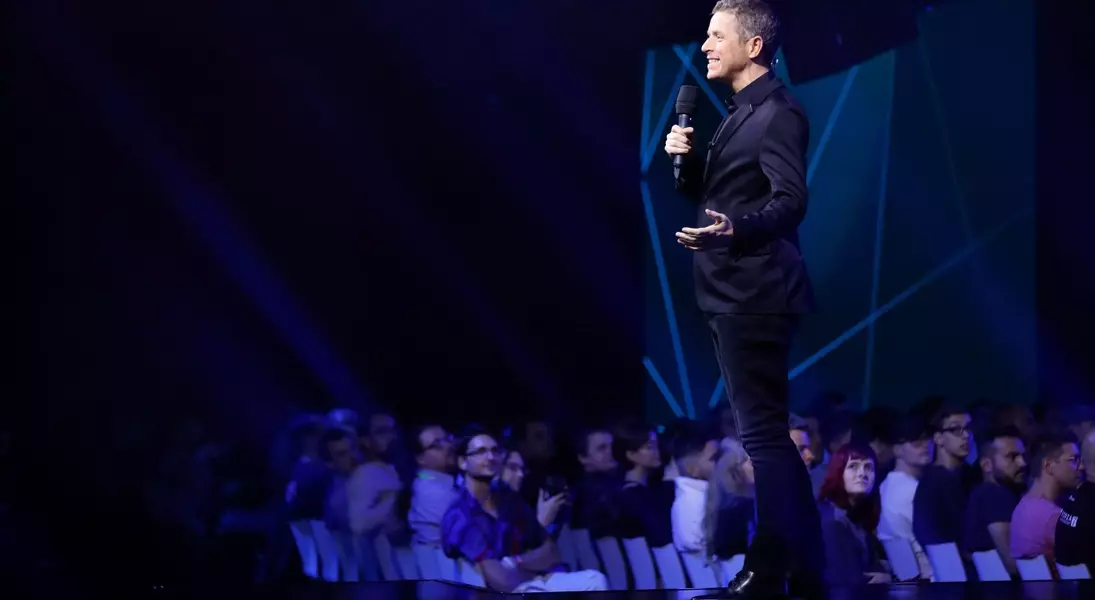
The landscape of major video game industry presentations has undergone a significant transformation, marked by the decline of the long-standing E3 exhibition and the emergence of new contenders. Geoff Keighley's Summer Game Fest has stepped into the void, aiming to provide a consolidated platform for announcements and previews. However, this new format faces inherent challenges in replicating the unified impact of its predecessor, particularly as major platform holders increasingly opt for independent showcases and Keighley's own annual Game Awards event continues to grow in prominence and influence.
E3, once the pinnacle of the gaming calendar, began to show signs of decline around 2020. Industry figures like Geoff Keighley expressed reservations about its shifting focus towards a more consumer-centric festival, a direction that diverged from its traditional role as a trade show for press and industry professionals. This shift was viewed by many, including prominent exhibitors such as Sony, as a sign of desperation. The onset of the COVID-19 pandemic further accelerated E3's demise, leading to the cancellation of its 2020 event and subsequent unsuccessful attempts at virtual and in-person revivals. Observing this trend, Keighley proactively launched Summer Game Fest in 2020, positioning it as an online series of trailer unveilings complemented by limited in-person access for media. This initiative successfully capitalized on the vacuum left by E3's fading presence, establishing itself as a key period for gaming news in June.
Despite its growing recognition as a focal point for game announcements, Summer Game Fest struggles to fully inherit E3's mantle. A significant factor contributing to this is its organizational structure; unlike E3, which was an initiative of the Entertainment Software Association (ESA), Summer Game Fest is primarily spearheaded by Keighley. This centralized leadership means that other key industry players, especially the 'Big Three' platform holders—PlayStation, Xbox, and Nintendo—prioritize their own strategic interests. These companies prefer to schedule their major announcements within a June timeframe, but with enough separation to avoid direct competition, thus fragmenting the collective impact that E3 once provided. Consequently, the main Summer Game Fest broadcast often lacks the concentrated 'wattage' of exclusive, high-profile reveals, as many of the most anticipated announcements are reserved for individual company presentations.
Furthermore, Summer Game Fest faces substantial internal competition from an event also orchestrated by Geoff Keighley: The Game Awards. Initiated in 2014, The Game Awards has meticulously cultivated its reputation as a crucial annual event within the gaming industry. Held in December, it occupies a distinct and undisputed position in the yearly calendar, serving as both an awards ceremony and a powerful platform for major game announcements. Its influence is so profound that it frequently rivals, and at times surpasses, the impact of individual showcases by the Big Three, who often choose to participate and unveil significant news during the event. This dynamic underscores a fundamental challenge for Summer Game Fest: it competes not only with external entities but also with another highly successful and strategically positioned event from its own organizer. The distributed nature of announcements throughout June, coupled with the established success of The Game Awards, means that the gaming industry's summer showcase, while popular, struggles to achieve the singular, all-encompassing significance that E3 once commanded.
