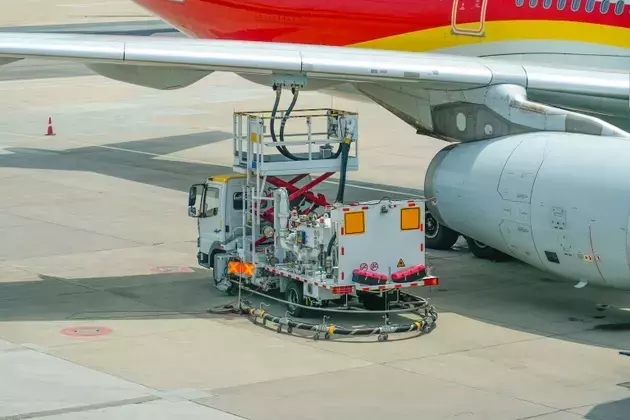
Europe's ambitious goals for decarbonizing aviation, primarily driven by mandates for Sustainable Aviation Fuels (SAF), face significant challenges. While these mandates effectively signal demand, they are insufficient on their own to stimulate the necessary supply. The current gap between the cost of SAF and traditional jet fuel, coupled with a lack of robust incentives for producers and a diverse feedstock strategy, threatens to undermine the continent's climate objectives. Without a more comprehensive approach that addresses these economic and logistical hurdles, Europe risks becoming increasingly dependent on imported fuels, thereby hindering the growth of its domestic SAF industry and potentially falling short of its environmental commitments.
The successful scaling of SAF production requires a multi-faceted strategy that extends beyond mere regulatory directives. Key components of this strategy must include financial mechanisms to reduce the price disparity, long-term contracts that provide certainty for investors, and a flexible policy around raw material sourcing. By prioritizing these measures, Europe can foster a competitive domestic SAF market, attract crucial investments, and secure a sustainable future for its aviation sector, ensuring that its climate aspirations are met with tangible and economically viable solutions.
The Dual Challenge of SAF: High Costs and Limited Supply
The European Union has set forth clear mandates for Sustainable Aviation Fuels, aiming to drastically reduce the carbon footprint of its aviation sector. These mandates serve as a vital signal to the market, indicating a strong governmental commitment to decarbonization and creating a foundational demand for SAF. However, the current strategy primarily focuses on the 'pull' factor of demand without adequately addressing the 'push' factor of supply. The significant cost differential between SAF, which can be more than double the price of conventional jet fuel, presents a major obstacle. This price disparity squeezes airline profit margins, making the adoption of SAF economically challenging without additional support. Consequently, potential investors and producers face considerable financial risks, leading to hesitation in committing to the large-scale projects required to expand SAF production capacity.
Addressing the inherent high costs of SAF production and the resultant supply constraints is paramount for Europe's decarbonization efforts. The current framework, while well-intentioned, neglects to adequately incentivize the upstream investment necessary to bridge the price gap and scale production. This imbalance means that even with mandated demand, the domestic supply of SAF may not materialize at the required pace. The absence of comprehensive support mechanisms for producers, such as subsidies, tax credits, or carbon pricing schemes that value SAF's environmental benefits, leaves the burden largely on airlines. This creates a bottleneck where demand outstrips accessible supply, leading to potential compliance issues and a reliance on more expensive, often imported, SAF, which can compromise the continent's energy security and economic competitiveness.
Forging a Sustainable Path: Incentives and Feedstock Diversification
To overcome the limitations of a mandate-only approach, Europe must implement robust incentive schemes for SAF producers. Financial incentives, such as production tax credits, grants for research and development, and guaranteed purchase agreements, are crucial to de-risk investment in new SAF facilities. These measures can help offset the higher production costs of SAF, making investments more attractive and enabling producers to scale up operations. Furthermore, the establishment of bankable, long-term offtake contracts provides stability and predictability for investors, ensuring a steady revenue stream for SAF producers and facilitating access to financing for capital-intensive projects. Without such economic encouragement, the private sector will be reluctant to commit the substantial capital required to build a resilient and expansive SAF supply chain within Europe.
A critical component of a successful SAF strategy is a flexible and diversified feedstock policy. Currently, the availability of sustainable raw materials for SAF production is limited, posing a significant constraint on scaling. Expanding the types of approved feedstocks, while maintaining strict sustainability criteria, can unlock new production pathways and reduce reliance on a narrow range of resources. This could include exploring advanced biofuels from agricultural residues, municipal solid waste, and sustainable forestry products, as well as synthetic fuels (e-fuels) derived from renewable electricity and captured carbon dioxide. By fostering a broader feedstock strategy, Europe can enhance the resilience of its SAF supply, mitigate potential competition with other sectors for resources, and promote technological innovation in SAF production. This holistic approach, combining strong incentives with flexible feedstock policies, is essential to foster a thriving domestic SAF industry, ensure energy independence, and effectively achieve Europe's ambitious climate targets for aviation.
