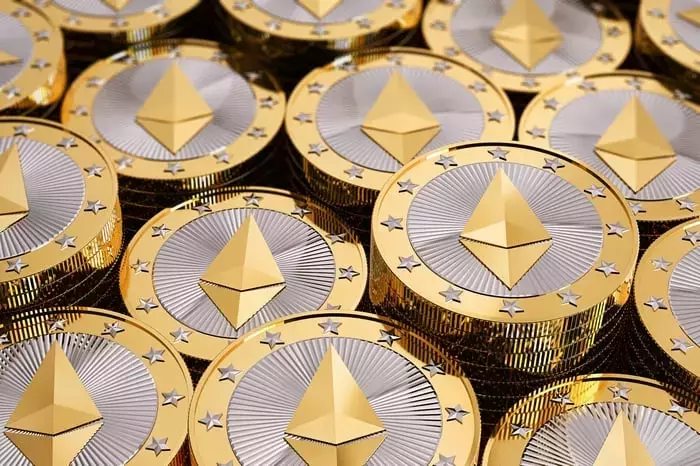
Ethereum, the preeminent blockchain platform, continues to solidify its position as a cornerstone of the burgeoning decentralized finance (DeFi) sector. Its inherent capacity to foster substantial liquidity, particularly within the stablecoin domain, serves as a magnetic force, drawing in significant investment and innovative ventures. This robust ecosystem not only streamlines financial transactions but also underpins a virtuous cycle where capital influx begets further growth and opportunity within the network. Despite the emergence of formidable rivals, Ethereum's established lead in liquidity and its strategic importance for institutional engagement are undeniable, forecasting a trajectory of sustained expansion in the digital financial landscape.
A Deep Dive into Ethereum's Unrivaled Financial Gravitas
In the dynamic realm of cryptocurrency, the presence of ample liquidity is a fundamental driver of widespread adoption and efficiency. This principle holds especially true for Ethereum, which, beyond its native token, boasts an impressive and unrivaled reservoir of fiat currency-pegged stablecoins. This extensive pool of liquidity is a compelling reason for astute investors to consider Ethereum as a key asset in their portfolios. On the first day of September in the year 2025, financial markets keenly observed Ethereum's remarkable command over this crucial segment.
Stablecoins, cryptocurrencies meticulously designed to maintain a stable value, typically pegged to the US dollar, act as the essential lubricant for the entire decentralized finance apparatus. They facilitate a spectrum of activities, from sophisticated lending protocols to high-frequency trading, and from seamless payment solutions to reliable settlement mechanisms. Ethereum stands head and shoulders above its peers, hosting an estimated 146 billion dollars in stablecoin value on its foundational layer alone. This staggering figure overshadows competitors like Tron, which holds approximately 82 billion dollars, and Solana, with a comparatively modest 12 billion dollars in stablecoin reserves.
This overwhelming on-chain dollar float empowers Ethereum's broader ecosystem, explaining why its Total Value Locked (TVL) in DeFi applications also far surpasses other networks. This fertile ground incentivizes new DeFi projects to launch and thrive on Ethereum, as positioning on a network teeming with capital flow is an evident advantage for revenue generation. Thus, the massive influx of tokenized cash creates a self-reinforcing cycle, drawing even more value into the network.
As the digital financial landscape matures, large-scale financial institutions increasingly seek robust and liquid channels for capital movement. The operational risks and prohibitive costs associated with navigating illiquid markets are significant deterrents. Liquidity, by its very nature, minimizes slippage and streamlines post-trade processes, leading to substantial cost savings. With a monumental $27.6 trillion in stablecoin transfer volume across major blockchains in 2024, the demand for reliable digital infrastructure is clear. This burgeoning volume necessitates a dependable home, and Ethereum, with its deep liquidity, presents an attractive proposition for institutional players.
However, Ethereum's long-term dominance is not without its challenges. The competitive landscape is vibrant, with platforms like Tron excelling in retail peer-to-peer stablecoin transactions in various regions, occasionally even surpassing Ethereum in transfer volume for these specific use cases. Furthermore, Solana, renowned for its high transaction speeds and minimal fees, offers a compelling alternative for certain stablecoin-intensive applications. Should low-latency payment solutions gain more traction in the future of on-chain finance, Solana could potentially capture a larger market share, even attracting institutional clients directly. Despite these competitive pressures, Ethereum's foundational strength in stablecoins and DeFi positions it for continued substantial growth for many years to come.
From an objective standpoint, the concentration of financial gravity within the cryptocurrency space appears to be firmly anchored in Ethereum, at least for the foreseeable future. The continued growth of stablecoins, coupled with institutions' natural inclination towards the most liquid and interconnected platforms, strongly suggests that Ethereum is exceptionally well-positioned to reap the benefits of these trends. While the specific configurations of venues, applications, and assets will undoubtedly evolve, Ethereum's role as a central pillar in the digital financial architecture seems assured. It is a testament to the platform's enduring design and its crucial functionality within the ever-expanding world of blockchain technology.
