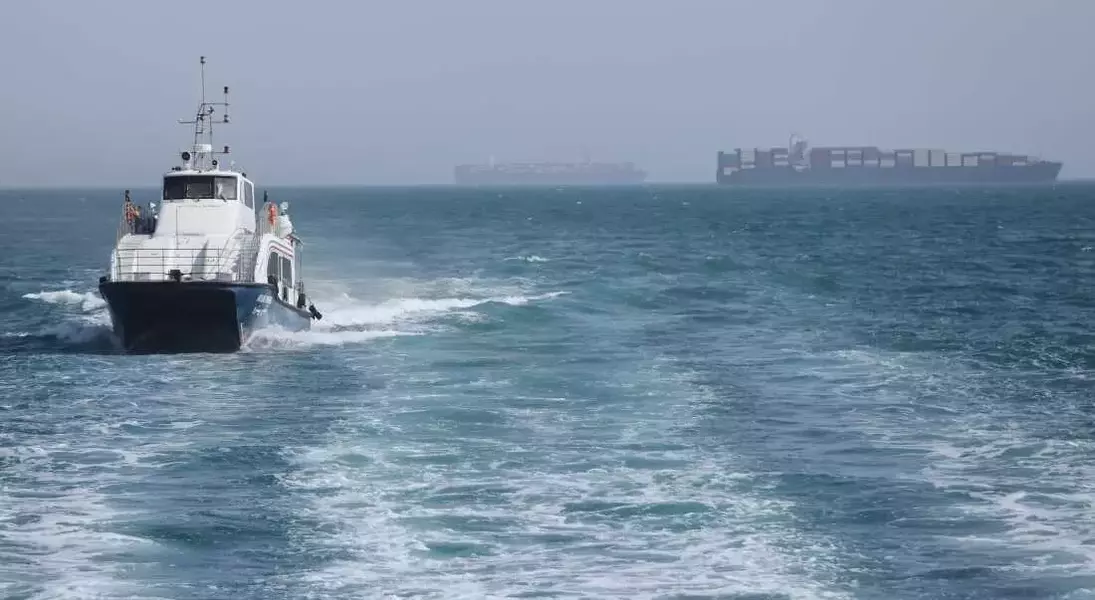
Recent developments in the Persian Gulf indicate a significant deterioration of regional stability, as the United Arab Emirates has accused Iran of launching fresh attacks. These incidents mark the end of a brief period of calm that began in early April and appear to be a direct response to American efforts aimed at re-establishing unimpeded transit through the Strait of Hormuz, a vital maritime corridor for global energy supplies.
The UAE Ministry of Defense confirmed that Iran deployed four cruise missiles, successfully intercepting three while one landed in the sea. Concurrently, authorities in Fujairah reported that an Iranian drone initiated a blaze at an essential oil facility, and the British military observed two cargo vessels engulfed in flames off the UAE coast. These actions transpired shortly after the U.S. military announced the successful passage of two American-flagged merchant ships through the Strait of Hormuz, signaling the commencement of a new endeavor to normalize maritime traffic. Iran's control over this strait, established after the February conflict with the U.S. and Israel, has significantly impacted international fuel prices and disrupted the global economy. Efforts to regain access are seen as crucial for alleviating economic pressures and diminishing Tehran's leverage in ongoing peace negotiations. However, such moves also carry the inherent risk of reigniting widespread hostilities.
In response to these escalating tensions, the U.S.-led Joint Maritime Information Center has advised vessels to navigate through Oman's waters, designating an 'enhanced security area.' The efficacy of this measure, however, remains uncertain, given Iran's previous targeting of ships in the waterway and its vow to persist. The potential for renewed conflict raises serious questions about the willingness of shipping companies and their insurers to accept the heightened risks. Meanwhile, Iranian state media has dismissed the U.S. initiative as a delusion, with Iran's military command asserting its authority over the strait and threatening any foreign military presence that attempts to enter or approach without coordination.
The ongoing dispute over the Strait of Hormuz underscores a complex geopolitical challenge. Restoring stability and ensuring safe passage through this critical international waterway will require meticulous diplomatic efforts and a concerted commitment from all parties to de-escalate tensions. The global community must prioritize peaceful resolutions to safeguard not only maritime commerce but also regional and international peace, ensuring that essential trade routes remain open and secure for everyone.
