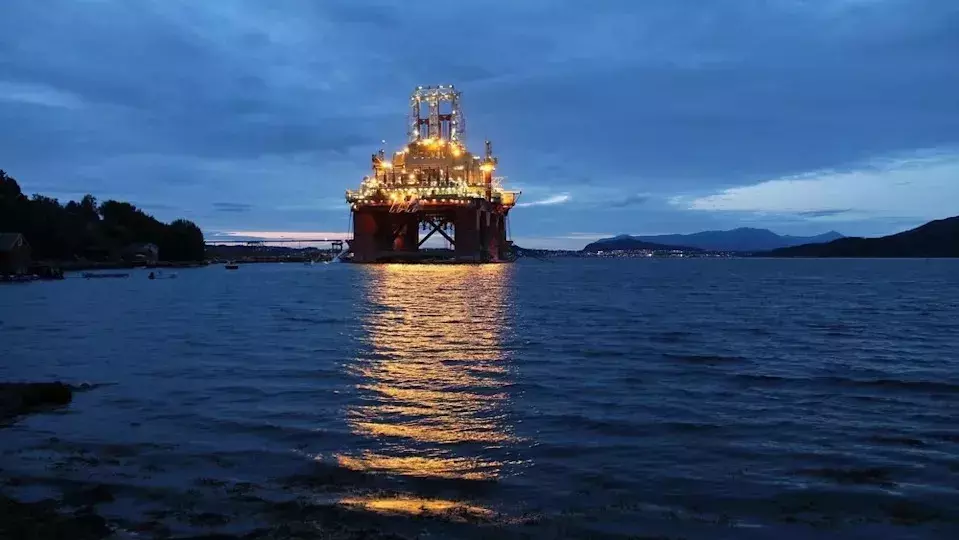
Equinor, the Norwegian energy conglomerate, has announced a phenomenal financial performance for its second quarter, demonstrating significant gains driven by a volatile global energy market. The company's adjusted operating income after tax experienced a remarkable uplift, surpassing analyst expectations and showcasing the substantial impact of rising commodity prices and enhanced production capabilities.
Equinor's Quarterly Financial Triumph Amidst Global Energy Shifts
In a compelling financial disclosure on Wednesday, July 22, 2026, Equinor revealed its adjusted operating income after tax for the second quarter, amounting to an impressive $3.225 billion. This figure represents an astonishing 93% surge compared to the $1.670 billion reported in the corresponding period last year. While slightly below the consensus analyst estimate of $3.38 billion, the results underscore the company's robust operational efficiency and strategic positioning.
Furthermore, the adjusted operating income saw an overall increase of 76%, climbing to $11.482 billion from $6.535 billion, comfortably exceeding the projected $11.37 billion. This financial upswing is primarily attributed to a sharp escalation in global liquid prices and a significant rise in European natural gas prices. Although partially tempered by a decrease in U.S. natural gas prices, the overall trend was overwhelmingly positive for the energy major.
During the second quarter, Equinor realized a European gas price of $15.8 per million British thermal units (MMBtu), marking a substantial 32% increase year-over-year. Concurrently, the price for liquids reached $97.9 per barrel, reflecting a 55% jump from the previous year. These elevated prices, combined with a 3% increase in total equity production to 2.165 million barrels of oil equivalent per day (boepd), were instrumental in bolstering the company's earnings. The increased production was largely due to intensified offshore operations in Norway and significant contributions from its Adura joint venture with Shell in the United Kingdom, as well as the Bacalhau field in Brazil.
The confluence of higher production volumes and favorable market prices propelled Equinor's cash flow from operations to an impressive $9.47 billion, a considerable leap from $2.477 billion reported earlier. Anders Opedal, President and CEO of Equinor, emphasized the company's ability to capitalize on elevated prices through strong production, which translated into robust cash flow and solid financial outcomes. He highlighted the critical role of reliable energy supply in a world grappling with heightened geopolitical tensions, reiterating Equinor's commitment to delivering energy safely and efficiently.
Equinor's early announcement of its second-quarter results positions it as a frontrunner among European energy companies, all of whom are anticipating strong profits driven by the current oil and gas price surge, enhanced refining margins, and increased earnings from trading activities.
Equinor's recent financial success offers valuable insights into the current dynamics of the global energy market. The significant profit surge underscores the profound impact of geopolitical events, such as the Middle East crisis, on energy prices and, consequently, on the profitability of major energy players. It highlights the continued reliance on traditional energy sources like oil and gas, even as the world transitions towards more sustainable alternatives. From a strategic perspective, Equinor's ability to boost production in key regions like Norway, the UK, and Brazil demonstrates the importance of diversified and robust operational capabilities in leveraging market opportunities. This scenario suggests that in an unpredictable global landscape, energy security and the capacity to adapt to rapid market shifts remain paramount for the success of international energy corporations.
