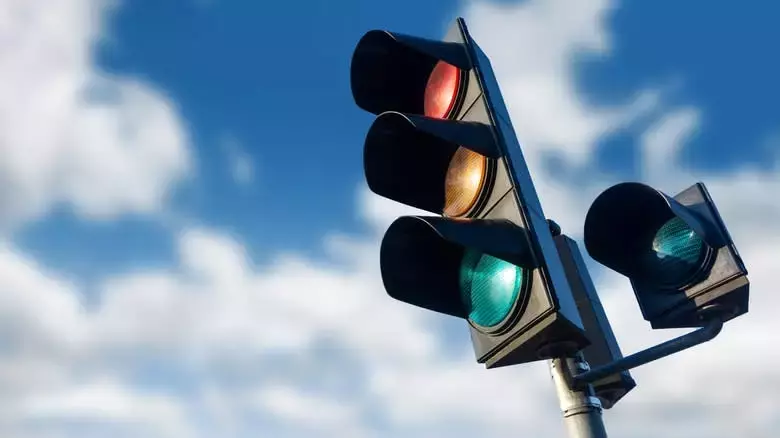
This article delves into the intriguing phenomenon of blue lights occasionally found near traffic signals, explaining their function and significance. It clarifies that these lights serve a specific purpose for law enforcement rather than guiding drivers, highlighting their role in improving road safety and streamlining the process of identifying traffic violations.
Shedding Light on the Sapphire Secret: Why Blue Beacons Guard Our Intersections
Decoding the Azure Indicators: Understanding Their True Intent
Should you recently have observed a subtle blue light positioned either above or below the conventional red, yellow, and green traffic displays at certain road junctions, rest assured, your observation is accurate. These distinctive blue indicators are neither ornamental nor do they convey any new instructions for motorists. Their sole function is to assist law enforcement, and their presence is progressively becoming more common across various urban areas and regions.
The Operational Mechanics of These Distinctive Signals
Referred to as confirmation lights, these devices are directly integrated into the traffic signal system. They become active exclusively when the main signal for a particular direction turns red. This design allows police officers, even when positioned away from a direct view of the primary traffic light, to ascertain whether the signal is red by observing the blue light. Therefore, if the blue light is illuminated and a vehicle proceeds through the intersection, it serves as a clear indication that a red-light violation has occurred, simplifying enforcement and reducing arguments over the signal's status. For motorists, it's crucial to understand that these blue lights are not meant for them. They do not alter right-of-way regulations, nor do they act as warnings or countdown timers. Adhering to the standard traffic signals remains the priority.
The Imperative for Supplemental Illumination in Traffic Control
The disregard for red lights continues to be a significant safety concern across the nation. In the preceding year, over one thousand individuals tragically lost their lives, and more than one hundred thousand sustained injuries due to incidents involving red-light violations. Despite extensive public awareness initiatives spanning decades, a considerable number of drivers still disregard red signals, particularly on expansive roadways or during late hours. Authorities emphasize that confirmation lights facilitate law enforcement by enabling officers to implement traffic laws without jeopardizing themselves or other road users. This innovation eliminates the necessity for officers to position themselves in potentially hazardous or obstructed locations to ensure a clear view, allowing them to monitor violations from safer vantage points and mitigate the risks associated with abrupt maneuvers.
The Strategic Choice of Blue Hues
While earlier iterations of these signaling devices might have featured white or clear illumination, numerous traffic management entities have progressively adopted blue-tinted LED technology. The color blue possesses an inherent capacity to stand out against the ambient light of urban environments, thereby minimizing the potential for misinterpretation with turn indicators or pedestrian signals. Furthermore, its visibility from various angles proves advantageous, particularly in the context of expansive and intricate road junctions. Unsurprisingly, these lights have occasionally caused bewilderment among motorists, especially those unfamiliar with their purpose, leading them to speculate about new traffic directives. Nevertheless, police departments have consistently reiterated a clear message: no new regulations are in effect. Drivers are simply reminded to stop on a red light and proceed on a green light, as standard traffic laws remain unchanged.
Concluding Thoughts on Traffic Signal Innovation
As municipalities explore cost-effective strategies to mitigate traffic accidents without resorting to comprehensive red-light camera installations, confirmation lights present an appealing alternative. These systems do not automatically issue citations, nor do they track individual drivers; rather, they support traditional enforcement methods with enhanced visual cues. Therefore, the next time a subtle blue luminescence catches your eye above an intersection, there's no need for overthinking. It's not intended for you. It merely serves as a subtle reminder that when the signal glows red, attentive observation is indeed in effect.
