
This report delves into the Oakmark Fund's investment philosophy amidst a rapidly evolving market, characterized by significant advancements in artificial intelligence. It examines how a disciplined, value-oriented approach navigates a landscape where high-growth, high price-to-earnings (P/E) technology companies dominate, drawing comparisons to past market bubbles while highlighting key differences.
Embracing Steadfastness in a Volatile Investment Climate
Maintaining Investment Discipline Amid Market Fluctuations
The Oakmark Fund’s performance through the first half of 2026 demonstrated a flat trajectory, contrasting sharply with the double-digit growth seen in the S&P 500 and the Russell 1000 Value Index. This divergence is largely attributed to the fund's deliberate exclusion of a select group of high P/E, cyclical technology firms that have benefited immensely from escalating AI expenditures. These companies, characterized by their high P/E ratios even at the start of the year, illustrate a market trend that the Oakmark Fund, with its significantly lower estimated P/E portfolio, intentionally avoids.
The Paradoxical Shift in Value Investing Paradigms
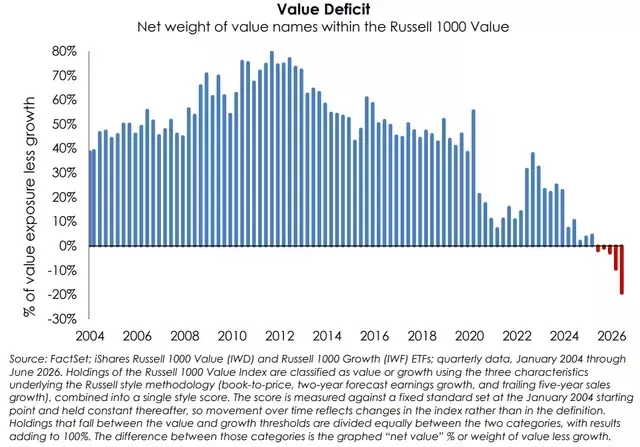
A notable transformation in market indexing has seen giants like Apple and Microsoft integrated into the Russell 1000 Value Index, alongside a substantial re-evaluation of Amazon's value classification. Historically, this index predominantly featured stocks genuinely categorized as “value.” However, the surge in AI infrastructure spending has blurred these lines, pushing many “growth”-oriented companies into what is traditionally considered the “value” segment, highlighting a significant shift in how market value is perceived and categorized.
Echoes of the Past: Parallels to the Dot-Com Era
The present market environment, driven by AI, bears striking resemblances to the internet boom of 27 years ago. Both periods are marked by groundbreaking technological innovation, concentrated market gains, the rapid creation of wealth, and widespread discussions about technology’s societal impact. Furthermore, investor behavior mirrors that of the dot-com era, with a palpable sense of ease in achieving extraordinary stock market returns, leading to a focus on rapidly appreciating assets rather than fundamental company valuations.
Distinguishing Today’s Leaders from Past Speculative Bubbles
Despite these similarities, crucial differences exist. Unlike the dot-com era, where many leading companies were nascent, unprofitable ventures reliant on speculative future potential, today’s market leaders are generally well-established and highly profitable. Their current high valuations, if extrapolated, could suggest they might trade at lower multiples than the broader market in the long run. This raises questions about the sustainability of their current trajectory and whether industries historically prone to cycles will maintain their elevated profitability.
Strategic Allocation: Why AI Hardware Remains Uncharted Territory for Oakmark
The Oakmark Fund has opted not to invest in AI hardware stocks due to uncertainties regarding their long-term profitability and whether current prices offer an adequate margin of safety relative to projected future cash flows. This stance is not a rejection of AI itself but a reflection of the fund’s rigorous valuation criteria. The fund views many of its existing portfolio companies, such as Capital One and AIG, as beneficiaries of AI adoption through efficiency gains and enhanced services.
Redefining Risk: Beyond Index Deviation
Oakmark defines portfolio risk not by deviation from an index but by the probability of a company’s business value falling below its stock price. This company-by-company assessment aims to prevent permanent capital loss and, over extended periods, is expected to yield superior returns compared to index funds. The fund emphasizes that short-term underperformance relative to a high-flying index does not invalidate its long-term strategy.
The Steadfast Commitment to Fundamental Value Investing
The fund remains committed to its core investment principles: purchasing companies — regardless of industry — only when their market price significantly discounts their estimated fair value, and only when management is focused on maximizing long-term shareholder value. This unwavering focus on fundamental business performance, rather than market popularity or index representation, ensures that the fund’s “boring” companies genuinely represent the value segment of the market, offering a grounded approach amidst speculative surges.
