"Eyes Without a Face," a French horror classic from 1960, stands as a testament to the power of subtle, psychological terror. Its influence on subsequent horror cinema, particularly its iconic mask imagery, is widely acknowledged. The film masterfully blends elements of medical horror with a deeply tragic narrative, crafting a uniquely unsettling atmosphere. The central figure, Christiane, enduring a facial disfigurement and confined to a featureless mask, embodies a profound sense of loss and isolation. This visual motif, devoid of expression yet laden with sorrow, has left an indelible mark on the genre, proving that true horror often lies in what is unseen and implied.
The narrative delves into the disturbing actions of Dr. Génessier, Christiane's father, a brilliant but morally bankrupt surgeon. Driven by a desperate desire to restore his daughter's face, he resorts to extreme measures, abducting young women to harvest their features. This grim premise, while sensational, is handled with an artistic restraint that elevates the film beyond mere exploitation. The director, Georges Franju, imbued the adaptation of a lurid horror novel with a poetic sensibility, contrasting the grotesque with moments of stark beauty. The film's lasting impact is a tribute to its evocative imagery and its exploration of themes like identity, obsession, and the ethical boundaries of science, all wrapped in a chillingly serene aesthetic.
The Haunting Visage: Christiane's Mask and Its Legacy
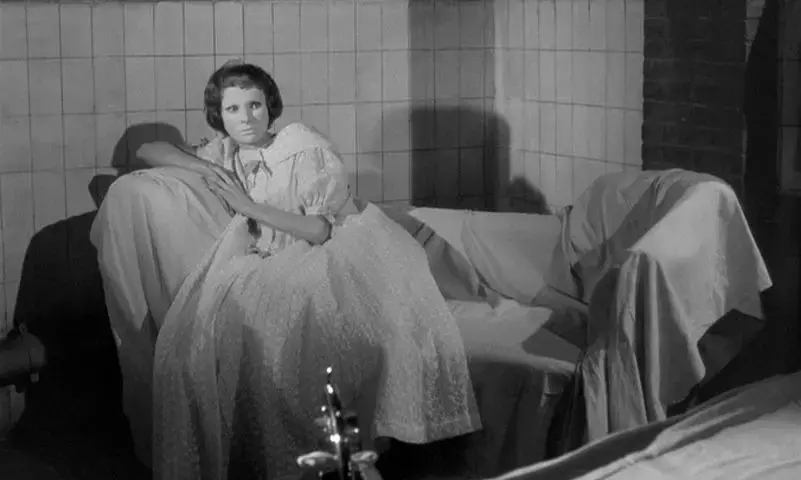
The mask worn by Christiane in "Eyes Without a Face" is not just a prop; it is a profound symbol of her tragic existence and the film's central horror. Its featureless white surface, meticulously crafted to mimic the contours of a beautiful face, paradoxically amplifies the absence of expression, creating an unnerving dichotomy between beauty and blankness. This iconic image, famously cited by John Carpenter as an inspiration for Michael Myers' mask, transcends mere fright. It encapsulates Christiane's emotional imprisonment and physical disfigurement, her eyes, the only visible features, conveying a depth of sorrow and terror that is both captivating and heartbreaking. The mask's power lies in its ability to strip away identity while simultaneously highlighting the character's internal anguish, making it one of the most memorable and influential visual elements in horror history.
The enduring legacy of Christiane's mask extends beyond its direct cinematic influences. It has become a pervasive motif in popular culture, a shorthand for concealed identity, vulnerability, and silent suffering. The sheer simplicity of its design, combined with the complex emotional resonance it carries, allows it to transcend time and cultural barriers. The mask effectively communicates Christiane's limbo-like state, a ghostly presence gliding through her father's mansion, perpetually searching for a reality she can inhabit. This powerful visual storytelling, where a single object conveys so much about character and narrative, underscores the film's artistic merit. The silent, pleading gaze emanating from behind the mask continues to resonate with audiences, cementing its status as an archetype of cinematic dread and a masterpiece of visual metaphor in the horror genre.
A Surgeon's Obsession: Ethical Horrors and Poetic Realism
Dr. Génessier's character embodies a chilling intersection of scientific brilliance and moral depravity, forming the ethical core of "Eyes Without a Face." His unwavering obsession with restoring his daughter Christiane's facial integrity drives him to commit unspeakable acts, blurring the lines between a father's love and a mad scientist's delusion. The film depicts his revolutionary, albeit unethical, surgical experiments with a stark, almost clinical detachment that is far more disturbing than overt gore. This deliberate choice by director Georges Franju to present the horrific in a subdued, poetic manner intensifies the psychological impact. The doctor's calm, emotionless demeanor as he lectures on heterograft techniques, juxtaposed with his clandestine abductions and grotesque experiments, paints a chilling portrait of a man consumed by his own ambition and warped paternal love.
The film's exploration of Dr. Génessier's moral descent and Christiane's resulting tragic existence is deepened by its unique artistic approach. Franju, influenced by early French serials and filmmakers like Jean Cocteau, eschews histrionics for a more introspective and dreamlike quality. This stylistic choice, coupled with the contributions of writers renowned for psychological thrillers like "Les Diaboliques" and "Vertigo," imbues "Eyes Without a Face" with a profound sense of unease. Beneath the tranquil surface of the film lies a simmering undercurrent of obsession, cruel manipulation, and the tragic erosion of self. The doctor's dungeon-like cellar, where his experimental dogs howl, serves as a constant, unsettling reminder of the horrific acts being committed. This blend of ethical horror and poetic realism creates a film that is not only visually striking but also deeply unsettling, inviting viewers to ponder the darker aspects of human nature and scientific ambition.
