While renowned for its whimsical adventures featuring a spirited boy and his imagined tiger companion, the comic strip "Calvin and Hobbes," created by Bill Watterson, consistently ventured into surprisingly profound philosophical territory. Operating from 1985 to 1995, the series seamlessly blended lighthearted escapades like a Tyrannosaurus Rex piloting a jet or mischievous snowmen, with deeply reflective discussions. These dual aspects highlight the strip's rich tapestry, offering both delightful humor and substantial intellectual engagement to its audience.
The enduring charm and relevance of "Calvin and Hobbes" stem from its ability to prompt introspection on fundamental human experiences. Through Calvin's innocent yet penetrating inquiries and his interactions with Hobbes, the strip confronts life's big questions, encouraging readers of all ages to ponder complex ideas. This unique combination of fun and philosophy cements its status as a timeless piece of art, continually inviting new generations to explore its layered narratives and thought-provoking themes.
Calvin's Profound Philosophical Inquiries
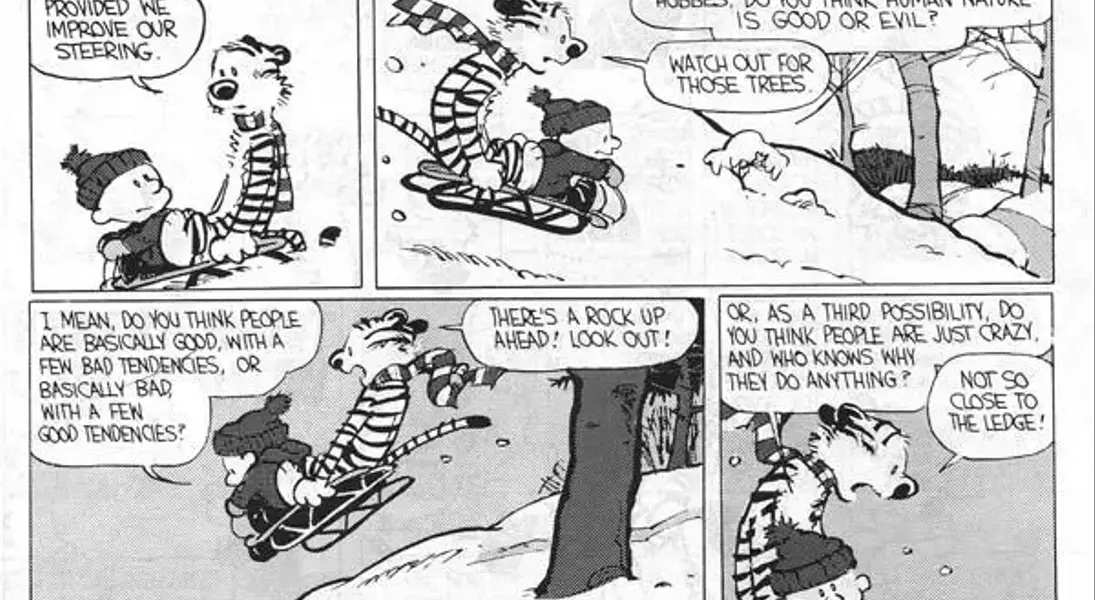
"Calvin and Hobbes" frequently explored complex philosophical concepts through the unpretentious yet incisive observations of its young protagonist. Despite his youthful demeanor and disdain for academic tasks, Calvin exhibited a remarkable capacity for profound thought. A notable instance features Calvin and Hobbes careening down a snowy hill on a sled, where Calvin poses a fundamental question: "Hobbes, do you think human nature is good or evil?" He elaborates further, asking whether individuals are inherently good with occasional bad inclinations, or fundamentally flawed with sporadic good tendencies. This exchange, characteristic of the strip, offers no definitive resolution, mirroring life's ambiguities, but powerfully stimulates contemplation in the reader.
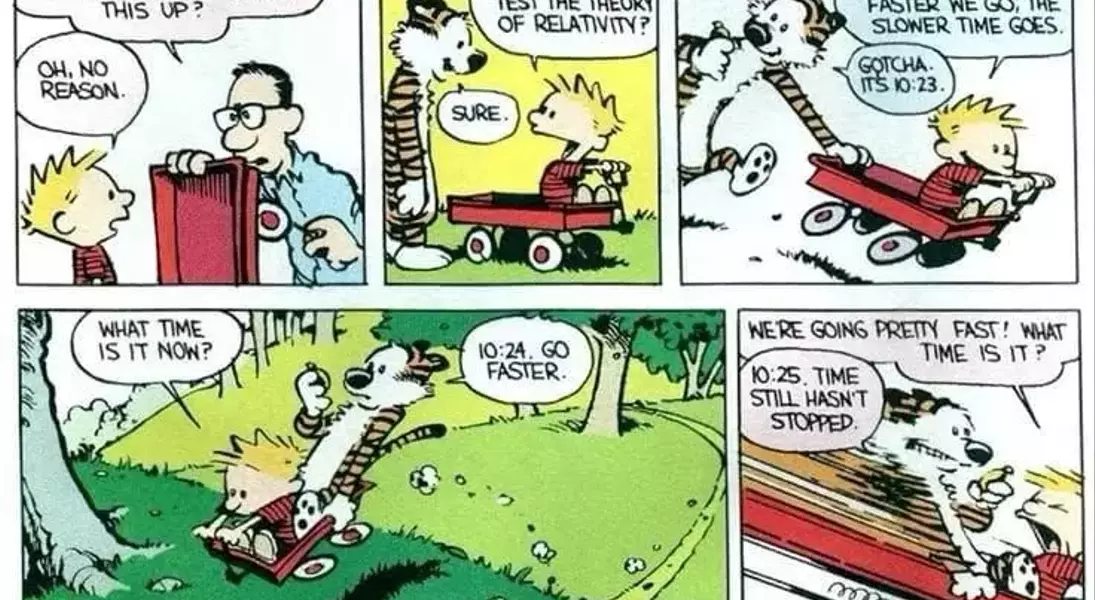
Beyond examining human morality, the comic strip occasionally delves into humanity's position within the vastness of the cosmos. In one poignant strip, Calvin stands alone under a starry sky, proclaiming, "I'm significant!" He then quietly adds, "Screamed the dust speck," highlighting humanity's smallness in the universe while simultaneously acknowledging an intrinsic desire for meaning. These moments often involve Calvin's eloquent, albeit rhetorical, monologues, prompting reflection on our existence. Additionally, the strip humorously tackles complex theories, such as Calvin's attempt to validate Einstein's theory of relativity with his wagon, which comically ends with a broken watch, illustrating the challenges of scientific inquiry and human perception.
Reflections on Nature and Human Connection
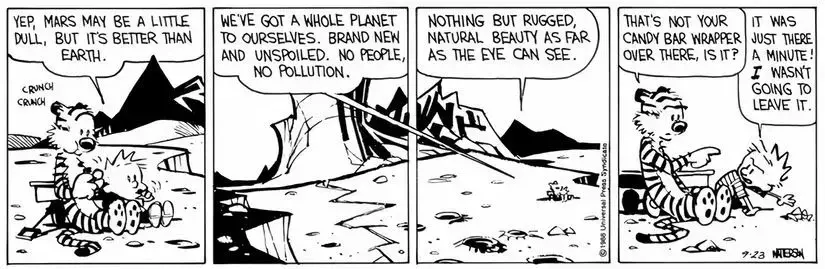
Nature and outdoor environments formed a central aesthetic and thematic pillar of "Calvin and Hobbes." The strip frequently depicted Calvin, either alone or with Hobbes, exploring woodlands or sledding down snow-covered hills, visually underscoring Watterson's deep appreciation for the natural world. This visual reverence was often complemented by Calvin's lamentations over environmental issues, such as felled trees or discarded litter, which evolved into broader discussions on deforestation and pollution, fostering environmental consciousness among readers.
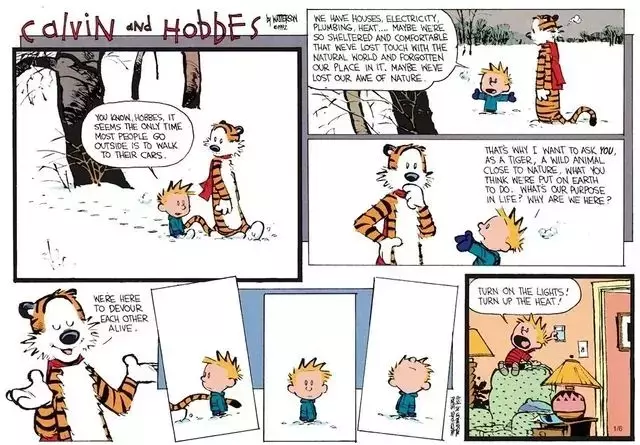
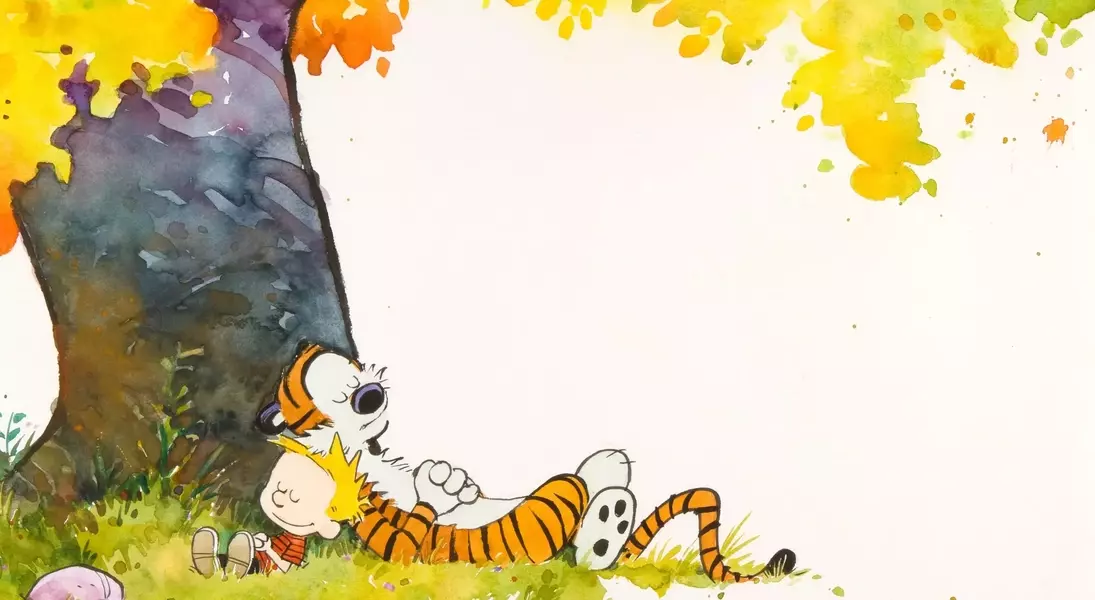
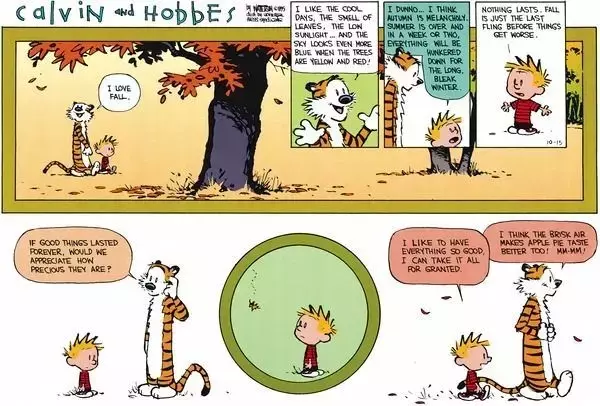
Long before the contemporary emphasis on "touching grass," many of Watterson's comics subtly advocated for connecting with nature. They encouraged readers to immerse themselves in the outdoors and cherish its inherent splendor. A memorable strip vividly portrays Hobbes's delight in the autumn season, contrasting with Calvin's melancholic mood, thereby illustrating diverse perspectives on nature's beauty. A particularly resonant quote from January 6, 1991, depicts Calvin and Hobbes walking through snow, with Calvin observing that modern society's dependence on conveniences like cars, electricity, and heating has distanced people from the natural world, causing them to lose their "awe of nature." This insight remains profoundly relevant today, urging individuals to disengage from digital distractions and embrace their connection to the environment, even in an era dominated by screens.
