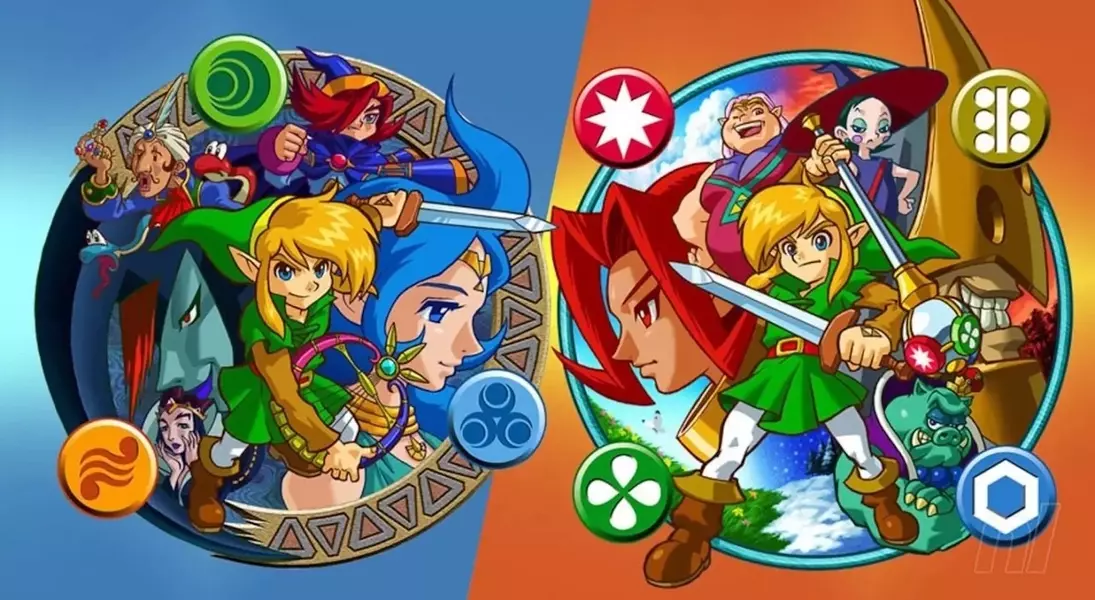
In the early 2000s, Nintendo sought to expand its acclaimed "The Legend of Zelda" series, leading to a groundbreaking collaboration with Capcom's Flagship studio. This partnership resulted in the creation of two distinct yet interconnected titles for the Game Boy Color: "Oracle of Ages" and "Oracle of Seasons." These games, launched in 2001, were lauded for their inventive gameplay mechanics and rich narrative, offering a fresh perspective on the beloved franchise while honoring its classic roots. They quickly established themselves as pivotal examples of 2D Zelda excellence, pushing boundaries and captivating a new generation of players.
Embark on a Dual Quest: Unraveling the Mysteries of Time and Nature
The Genesis of a Dual Adventure: Capcom's Vision for Zelda's Expansion
Towards the close of the 20th century, Nintendo expressed a desire for a greater volume of Zelda titles, aiming to balance new releases with the ongoing availability of classic entries for younger audiences. This ambition saw the intervention of Capcom's Yoshiki Okamoto, who, through his studio's Flagship subsidiary, presented an innovative concept to series creator Shigeru Miyamoto. Okamoto's pitch sought to expand the established scope of the Zelda universe while retaining its quintessential elements. Following several years of intricate development and strategic adjustments, this concept materialized in 2001 as "Oracle of Ages" and "Oracle of Seasons" for the Game Boy Color, now recognized as among the most imaginative and cherished 2D installments in the series.
A Hero's Call: Link's Urgent Mission to Distant Realms
The core narrative of these titles revolves around Link, who, having recently concluded another Hyrulean adventure, receives a mystical summons from the Triforce. This ethereal call alerts him to critical distress in distant lands: Labrynna in "Oracle of Ages" and Holodrum in "Oracle of Seasons." Link's mission is to thwart encroaching darkness before it engulfs these regions. However, he arrives to find the malevolent forces already at play; a wicked sorceress has seized control of the Oracle of Ages, manipulating the very fabric of time, while a menacing general has abducted the Oracle of Seasons, plunging nature into disarray.
Familiar Foundations, Fresh Discoveries: Echoes of Past Adventures
Superficially, these games share significant commonalities with earlier entries such as "A Link to the Past" and "Link's Awakening." Players navigate eight diverse dungeons, acquire new tools to conquer intricate puzzles, confront numerous formidable bosses, and undertake various quests, culminating in the acquisition of powerful weaponry. This design philosophy remained true to Capcom's intention of honoring the series' classic structure, yet it was imbued with a deeper layer of innovation and content.
Vibrant Ecosystems: The Lively Worlds of Holodrum and Labrynna
Holodrum and Labrynna are portrayed as vibrant, thriving fantasy kingdoms, each boasting distinct cultures spread across their expansive maps. These lands feel organically integrated, forming a vivid society rather than merely existing as separate zones. Gorons, for instance, inhabit mountainous regions but are encountered in other areas, underscoring the interconnectedness of these realms. Talking animals are a commonplace phenomenon, not relegated to dreamscapes as in "Link's Awakening." Moblins possess their own subculture and construct fortified settlements. "Oracle of Ages" introduces a quirky island populated by thieving lizards, while "Oracle of Seasons" features a subterranean city brimming with dance-obsessed, cloaked inhabitants. Pirates, sorceresses, desolate farming communities, the memorable Tingle, museums, grand palaces, queens, mystical seeds, and a flourishing jewelry trade all contribute to the rich tapestry of life Capcom wove into these games. Furthermore, connecting the two titles unlocked unique scenes, such as witnessing a named child's growth or discovering secret narrative conclusions.
Beyond the Dungeons: The Enduring Charm of the Oracle Games
Retrospectively, the "Oracle" games present a fascinating blend of the immersive daily life elements found in "Majora's Mask" with the traditional dungeon-crawling and monster-slaying mechanics of earlier Zelda titles. While the dungeons themselves may not always be recalled with the same distinct fondness as those from "A Link to the Past," the surrounding world and its intricate details leave a lasting impression.
Mastering the Elements: The Artistic Brilliance of Seasonal and Temporal Shifts
The ability to manipulate seasons in "Seasons" occasionally verges on being a novelty, yet the pixel art for each quarter of the year is undeniably breathtaking. The map designs, despite their moderate complexity, are remarkably memorable. "Ages," however, often garners recognition as the superior of the two, primarily for its ingenious puzzles centered around shifting between past and future. These challenges expertly utilize cause-and-effect, demanding players to manipulate the landscape to progress. Such maps and puzzles, even in the early stages, exhibit considerable intricacy, exemplified by tasks like navigating the peculiar barter system of thieving lizards to retrieve essential tools.
A Hero Unburdened: Link's Unique Journey in the Oracle Duology
A refreshing aspect of these games lies in their portrayal of Link. Although the Triforce calls him from Hyrule to these distant lands, and in the linked conclusion, he is destined to defeat Ganon and rescue the princess, the remainder of the narrative suggests that any capable hero could fulfill the role. There is no overwhelming sense of predetermined destiny weighing upon the events. Link intervenes simply because he is present at the opportune moment, witnessing a sorceress's possession of a singer and a villain's abduction of a dancer. Capcom's infusion of entirely novel storytelling concepts contributes significantly to this distinct atmosphere. While Nintendo's interpretations of Hyrule were rarely uninspired, even at their most conventional, these titles present worlds governed by their own distinct laws, largely free from the familiar deities, magical triangles, and expected appearances of the iconic red-haired antagonist.
