Gary Larson's iconic single-panel comic strip, “The Far Side,” stands apart from its contemporaries, such as “Peanuts” or “Garfield,” primarily due to its absence of a fixed cast of characters. Nevertheless, Larson frequently depicted a recurring archetype: the “Nerdy Kid.” This character, with his distinctive red hair, glasses, and striped shirt, became a vessel for a particular brand of humor, often finding himself in hilariously unfortunate situations. This compilation explores nine standout instances from “The Far Side's” 15-year run where the “Nerdy Kid” played a central role, highlighting the unique comedic scenarios he inhabited.
Delving into the World of the 'Nerdy Kid' in 'The Far Side'
Among the recurring character types in Gary Larson’s ‘The Far Side,’ a particular child archetype, often termed the ‘Nerdy Kid,’ holds a special place. Though never given a consistent name or backstory, this character, identifiable by his thick glasses, red hair, and striped shirt, frequently appeared throughout the comic’s 15-year run. Unlike protagonists in other strips, this kid was often depicted as a victim of bizarre circumstances, embodying a distinct form of humor that resonated with readers.
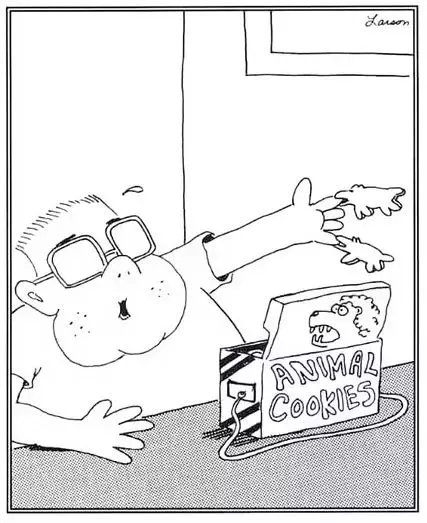
One classic example, titled “Ouch!”, perfectly encapsulates the Nerdy Kid’s perpetual state of being the target of inexplicable misfortunes. In this strip, he is comically shown being bitten by two animal crackers, a scenario that only seems plausible within his whimsical reality. Another notable instance, “Not in the DSM,” presents him as suffering from a fictitious condition named “Luposlipaphobia,” humorously defined by Larson as “The fear of being pursued by timber wolves around a kitchen table while wearing socks on a newly waxed floor.” This portrayal further solidifies his role as an unfortunate, yet endearing, figure.
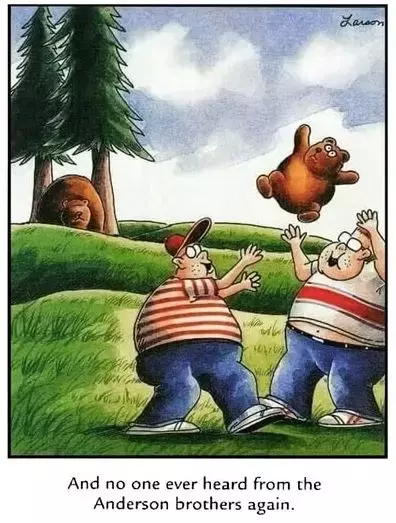
The strip “Let’s see this product on Shark Tank” illustrates his vulnerability in a different light, showing him needing a “Monster Snorkel” to protect himself from nocturnal attacks, suggesting a constant state of mild peril. In “The bear toss,” Larson subtly hints that the “Nerdy Kid” isn't a singular individual but rather a common representation of children in his art style, as two such figures appear simultaneously.
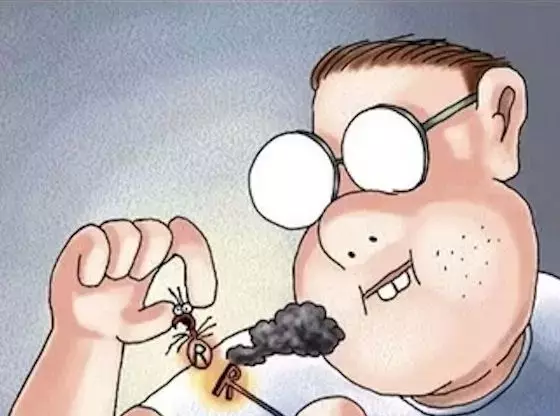
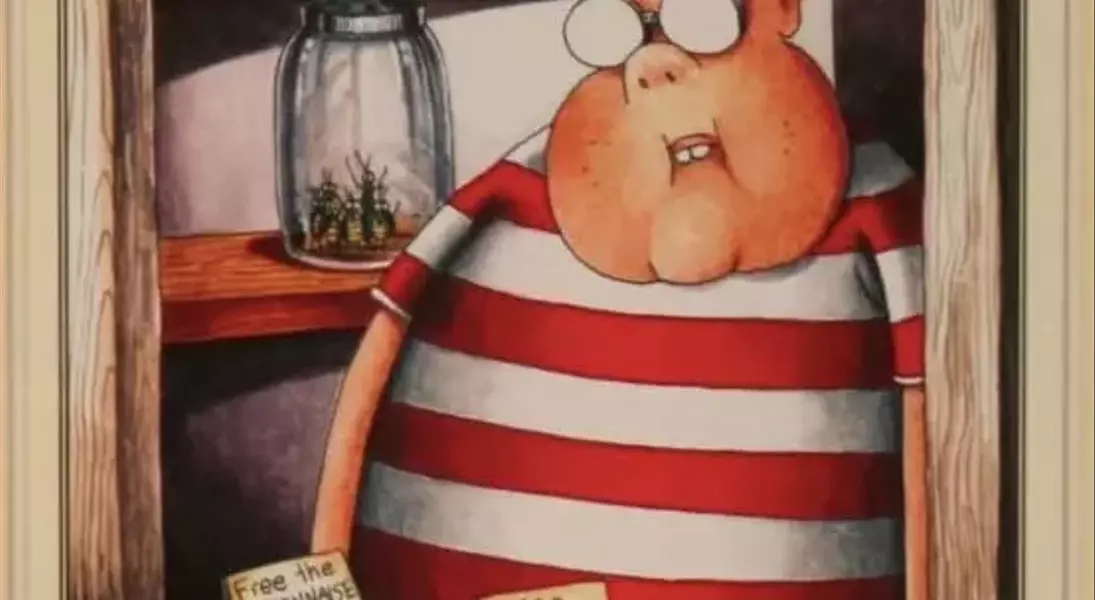
“Pull” cleverly plays on the kid’s apparent lack of common sense, depicting him struggling with a push door. However, the “Nerdy Kid” is not always the victim. In “Activist ants,” he's portrayed as a peculiar observer, with bugs outside his window protesting the captivity of “The Mayonnaise Jar Seven,” suggesting his unique ability to attract odd occurrences. The comic “And some other ants” sees him, named “Robby” for this strip, actively branding ants in his ant farm, revealing a slightly darker, yet still comical, side where he is the instigator rather than the victim.
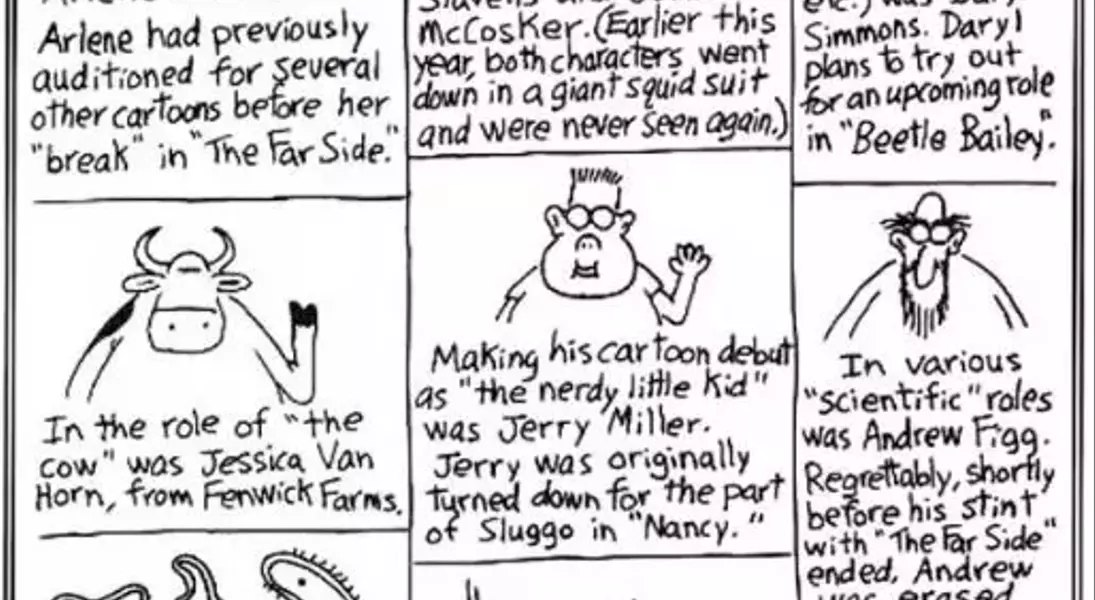
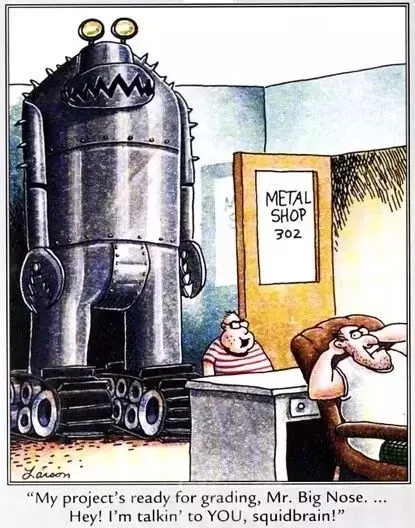
Perhaps the most unexpected turn for the character is in “Metal shop.” Here, he's shown with the upper hand, having built a giant robot to confront his metal shop teacher, implying a backstory of past grievances. Finally, the strip “The Far Side cast,” published in 1988, humorously introduces the Nerdy Kid by stating his theatrical debut as “Jerry Miller,” and then adding, with typical Larsonian wit, that Jerry was originally rejected for a role in “Nancy,” cementing his status as an underdog in the world of comics.
The consistent appearance of the 'Nerdy Kid' in 'The Far Side' offers a fascinating insight into Gary Larson's comedic philosophy. Rather than relying on character development, Larson skillfully utilized this archetype to explore the humor in everyday absurdities and minor misfortunes. The 'Nerdy Kid' serves as a reminder that vulnerability and oddity can be powerful sources of laughter, often mirroring the quirky, unexpected moments in our own lives. His timeless appeal lies in his relatability as an underdog, a figure who, despite or because of his perpetual predicaments, remains endearing and endlessly entertaining.
