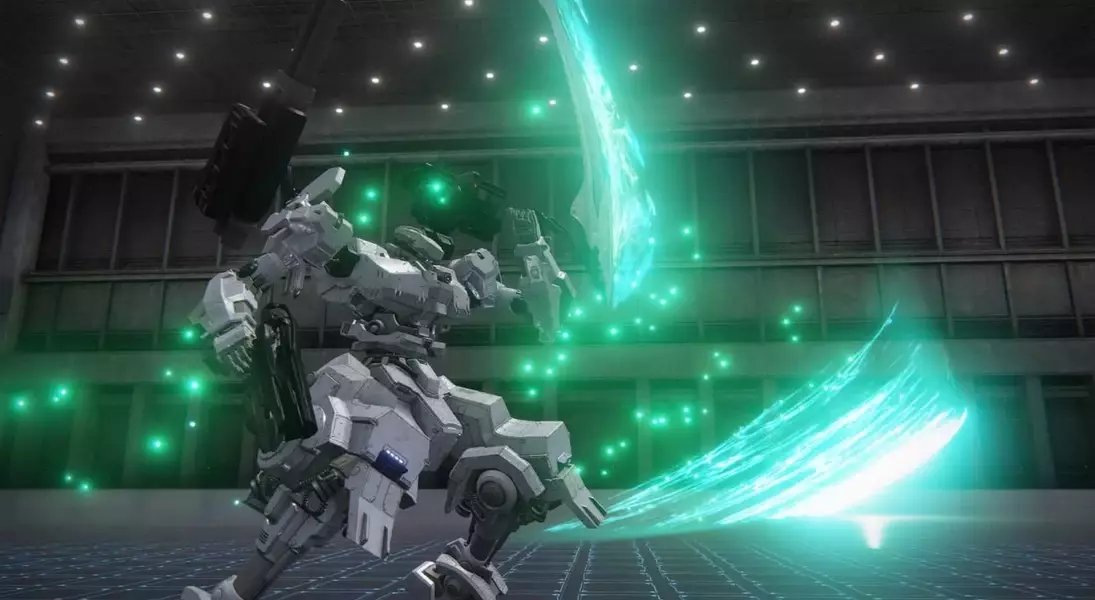
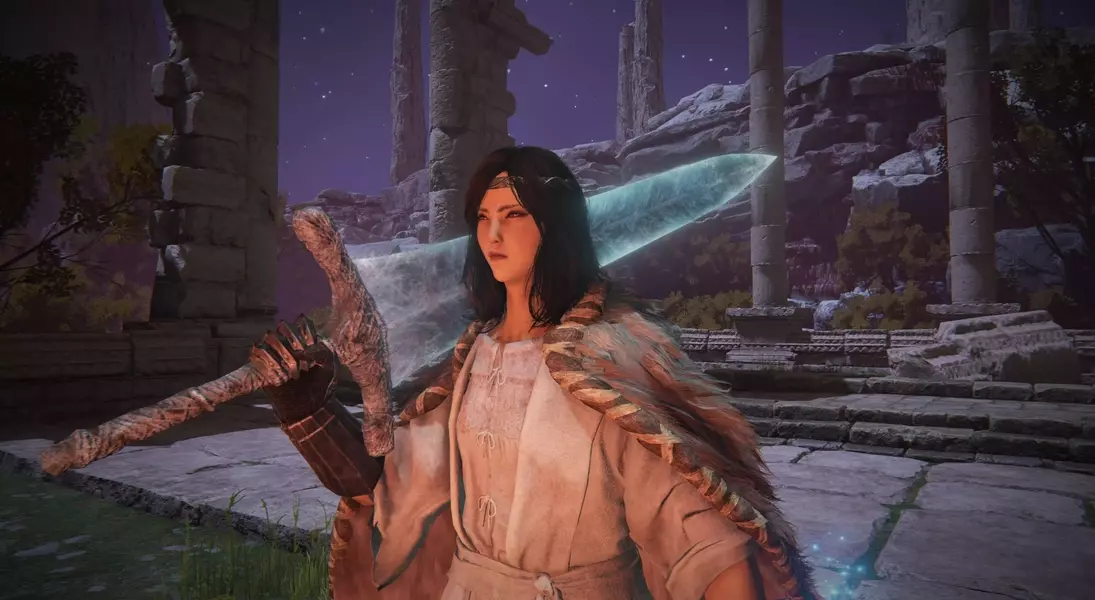
The signature glowing blade, known as the Moonlight Greatsword, has maintained a remarkable presence throughout FromSoftware's diverse game catalog, captivating players for decades. From its earliest iteration in the 1994 title King's Field to its latest appearances in more recent hits like Elden Ring and Armored Core 6, this luminous weapon has transcended individual game mechanics to become a cherished symbol within the studio's creations. Its consistent design, often featuring a distinct seafoam green or cyan hue and the ability to project magical waves, has solidified its status as an enduring fan favorite, sparking debates among enthusiasts about its most powerful or beloved version.
The Enduring Legend of the Moonlight Greatsword
The saga of the iconic Moonlight Greatsword began not in the challenging Soulslike genre, but in FromSoftware's debut game, King's Field, released in 1994. Its initial design was so impactful that subsequent versions rarely deviated from its ethereal glowing blade. This legendary weapon later made appearances in other pre-Soulslike FromSoftware titles, including Otogi: Myth of Demons and Ninja Blade, establishing a legacy long before the punishing difficulties of Demon's Souls arrived in 2009. Each iteration of the sword, while retaining its core identity, adapted to the specific lore and mechanics of its respective game.
In Bloodborne, my first venture into FromSoftware's Soulslikes, the Holy Moonlight Sword is an esteemed trick weapon. It is not available in the core game but can be obtained in The Old Hunters expansion after besting Ludwig, the Holy Blade. In its initial state, it functions as a conventional greatsword. However, when activated, it morphs into a brilliant greenish-blue blade that unleashes potent magical projectiles, making it a formidable tool against foes.
FromSoftware's most recent and popular Soulslike, Elden Ring, which has sold over 30 million copies, naturally features its own variant: the Dark Moon Greatsword. Unlike its counterparts often found in the wild, this cyan blade is a reward for diligently completing the extensive questline of Ranni the Witch, a prominent blue-skinned, four-armed NPC. This includes undertaking tasks such as assisting Blaidd and conquering Radahn. Upon completion, Ranni bestows the sword, which, like its predecessors, begins as a standard greatsword. Its unique ability allows it to emanate a moonlit glow, enhancing its magical damage and enabling the wielder to launch the classic magic waves from a distance.
Intriguingly, the Moonlight Greatsword's influence extends beyond fantasy RPGs. It has also appeared in the Armored Core series, famously featuring as a laser sword. Its most recent appearance is in Armored Core 6: Fires of Rubicon, where it is known as the IA-C01W2: Moonlight light wave blade, further showcasing its adaptability across different genres within the FromSoftware universe.
However, not all FromSoftware Soulslikes feature this iconic weapon. Sekiro: Shadows Die Twice notably lacks a giant, glowing aqua blade. Sekiro distinguishes itself with unique gameplay elements such as a grappling hook, vertical traversal, and a revival mechanic, along with a focus on its protagonist Wolf's katana as the primary melee weapon, precluding the magic-projecting greatsword. While some players hypothesize that the Divine Dragon's Seven-Branched Sword in Sekiro, with its luminous light-green appearance, might be a nod to the Moonlight Greatsword, it is not officially designated as such within the game.
Looking ahead, as FromSoftware prepares for its next title, The Duskbloods (not to be confused with a Bloodborne 2 sequel, despite early speculation), it's highly anticipated that the tradition will continue. Given the weapon's deep-rooted history and consistent appearance, it would be a reasonable assumption that the Nintendo Switch 2 exclusive will also showcase FromSoftware's next iteration of the magnificent and glowing Moonlight Greatsword.
The enduring presence of the Moonlight Greatsword across various FromSoftware titles underscores its profound impact on both game design and player experience. Its evolution from a foundational element in early games to a beloved recurring motif highlights the studio's commitment to creating deep, interconnected worlds that reward attentive players. The consistent reinterpretation of this iconic weapon, adapting it to different lore and combat systems, not only enriches individual game narratives but also strengthens the overarching identity of FromSoftware. It serves as a powerful reminder that certain elements can transcend generational gaps and technological advancements, becoming timeless symbols that resonate deeply with a dedicated fanbase, reinforcing the studio's unique artistic vision.
