In the mid-1980s, Nintendo's visionaries, Shigeru Miyamoto and Takashi Tezuka, alongside their development team, embarked on an ambitious project in Kyoto. They simultaneously crafted two distinct yet interconnected game concepts. One was conceived as a structured, linear progression, a direct path towards a defined objective, while the other embraced a non-linear, enigmatic maze, presenting a world ripe for unpredictable exploration. These titles sought to redefine the nascent video game landscape, shifting focus from raw player skill to creating immersive experiences with distinct beginnings and conclusions, a stark contrast to the dominant arcade games of the period. Miyamoto meticulously assigned innovative gameplay ideas to either project, unknowingly laying the groundwork not just for two iconic franchises, but also for fundamental principles of video game design. These groundbreaking titles were none other than Super Mario Bros. and The Legend of Zelda.
Super Mario Bros. rapidly became a cultural sensation, securing its place among the best-selling games of all time. The Legend of Zelda, while successful, achieved a more modest sales record. Over time, subsequent Zelda titles often adopted elements from its more commercially successful counterpart, incorporating intricate gear-gating systems to guide player progression through their expansive, labyrinthine environments. This evolution arguably enhanced the games' quality and accessibility. However, 2017's Breath of the Wild marked a significant departure, radically reinterpreting open-world and role-playing conventions, and returning to Zelda's foundational non-linear design philosophy. This bold reinvention proved immensely popular, outselling all previous Zelda installments and, remarkably, even surpassing a contemporary Mario release, demonstrating that the gaming world had finally embraced the expansive adventure Miyamoto and Tezuka had envisioned decades earlier.
The Genesis of an Untamed World
In the nascent stages of video game development during the mid-1980s, Nintendo's creative stalwarts, Shigeru Miyamoto and Takashi Tezuka, orchestrated the creation of two seminal titles: Super Mario Bros. and The Legend of Zelda. While the former offered a structured, linear journey, Zelda defied convention by presenting a boundless, enigmatic realm designed for open-ended exploration. This marked a profound shift from the prevailing arcade game paradigm, prioritizing immersive narrative and discovery over mere skill-based challenges. Miyamoto's discerning allocation of emergent gameplay mechanics between these two projects inadvertently established core tenets of modern game design. Despite initial commercial disparities, with Zelda's sales being a fraction of Mario's, its enduring influence and pioneering spirit laid the groundwork for future advancements in the industry. The 2017 release of Breath of the Wild dramatically validated this original vision, achieving unprecedented success by embracing the very non-linear freedom that defined its ancestor, proving the world was finally ready for the adventure Miyamoto and Tezuka had first conceived.
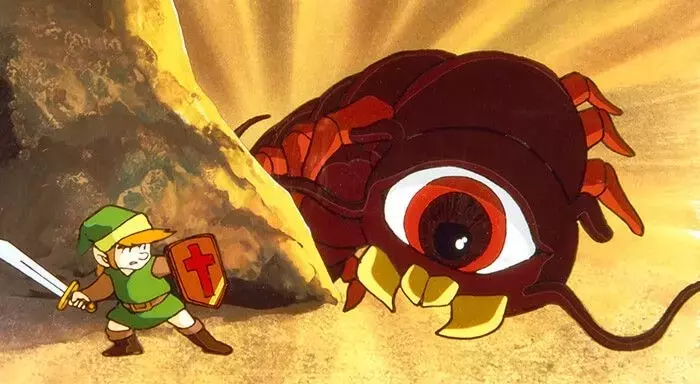
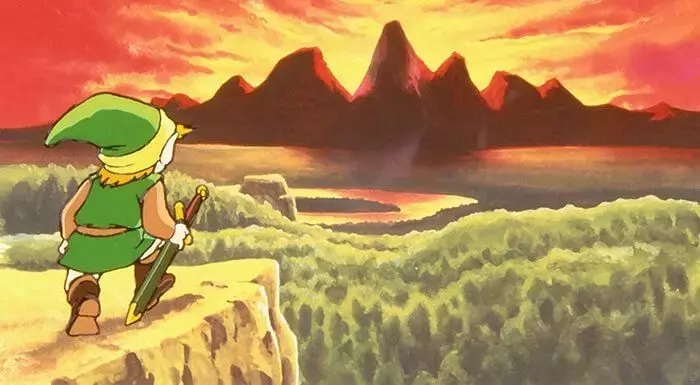
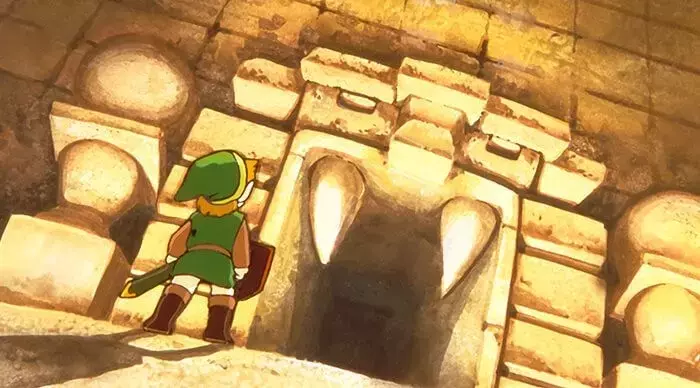
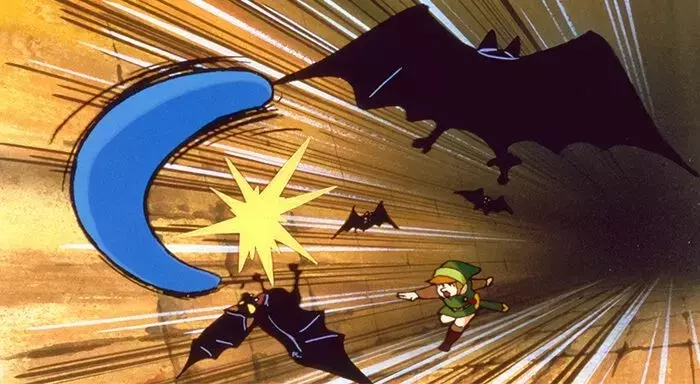
The initial outing of The Legend of Zelda stands as a testament to audacious game design, a stark contrast to many contemporary titles. Unlike its sequels and the more recent Breath of the Wild, which often root themselves in an established history or tradition, the original Zelda sheds almost all narrative context. The setup is remarkably succinct: Princess Zelda has scattered the fragments of the Triforce of Wisdom across various dungeons and requires a hero to retrieve them and vanquish the villainous Ganon. Enter Link, a character devoid of pre-ordained destiny, appearing in a clearing with no clear direction or even a weapon. This inaugural adventure is characterized by its freshness; nothing is foretold, and everything is new. Players are immediately faced with a world devoid of explicit guidance, where a cryptic old man’s warning of danger underscores the necessity of solitary exploration. Monsters roam in unpredictable patterns, and the path to the next Triforce piece is an ambiguous journey through diverse landscapes. This is a universe without digital signposts or names, presenting a living, constantly unfolding map where only a small segment is visible at any given time, fostering a true sense of untamed wilderness and discovery.
Evolving Exploration: From Enigma to Modern Masterpiece
Even with my two decades of experience writing about and playing Zelda games, truly experiencing the original The Legend of Zelda for the first time has been an unexpected revelation. This classic title, now considerably aged, presents a challenging, somewhat obscure, and minimalist experience compared to contemporary standards. While it may not offer the same immediate enjoyment as later entries like 1991's A Link to the Past, its brilliance lies in its raw, unfiltered game design. The Legend of Zelda stands as an extraordinarily bold and unconstrained vision of what an interactive adventure could be. It feels both profoundly familiar as the progenitor of the entire Zelda series and strikingly distinct from its subsequent evolutions, a disparity that largely persisted until the advent of Breath of the Wild. This foundational game was so ahead of its time that it took its own creators over three decades to fully realize its pioneering concepts.
The game's daringly open design allows for remarkable player freedom. While direct access to the final boss is restricted, players can inadvertently stumble into perilous situations or acquire powerful items far ahead of their intended use, potentially altering the game's balance. The few structural barriers within the game feel like organic mysteries, emerging naturally from the environment—a design philosophy that later Zelda titles would refine, though eventually becoming more predictable. Although some fans might have resisted a departure from these established, linear conventions, the diminishing returns of such a design made Breath of the Wild's reinvention a necessary and successful choice. What its developers sought, and ultimately achieved, was to rekindle the sense of an unexplored, authentic wilderness that even the finest intervening Zelda titles had lost. This recaptured essence mirrors the untamed countryside Miyamoto explored in his youth, fostering a feeling of being the first to discover new landmarks, a truly immersive and unmapped adventure.
