This retrospective celebrates the enduring impact of the film 'Apollo 13,' marking its 30th anniversary. It takes readers behind the scenes, revealing the intricate process of bringing a real-life space crisis to the big screen, as told by the director, producers, writers, and stars who made it happen. The piece explores the film's meticulous recreation of historical events, its groundbreaking visual effects for its time, and the personal journeys of those involved in both the original mission and its cinematic adaptation.
Reliving the Odyssey: A Cinematic Journey Through Apollo 13's Creation
The Genesis of a Space Saga: From Crisis to Script
In April 1970, the harrowing journey of Apollo 13's crew captivated the world, leaving three astronauts adrift far from Earth. Remarkably, Ron Howard, then a teenager engrossed in filming, remained unaware of the unfolding global drama. Two and a half decades later, Howard would meticulously revisit this historical event, directing a film that pushed cinematic boundaries. The idea for the movie originated from Michael Bostick, whose father was a mission controller. His father's collaboration with author Jeffrey Kluger on a book proposal, Lost Moon, sparked producer Brian Grazer's interest. The project was secured in a competitive bidding process, and screenwriter William Broyles Jr., along with Al Reinert, embarked on extensive research, interviewing key figures like Jim Lovell to accurately capture the essence of the crisis. Howard vividly recalls being moved to tears by the initial screenplay draft, a testament to its powerful narrative. A notable detail was the script's decision to alter Lovell's famous line to \"Houston, we have a problem\" for dramatic effect, drawing slight criticism from purists.
Casting the Stars: Finding the Perfect Crew for 'Apollo 13'
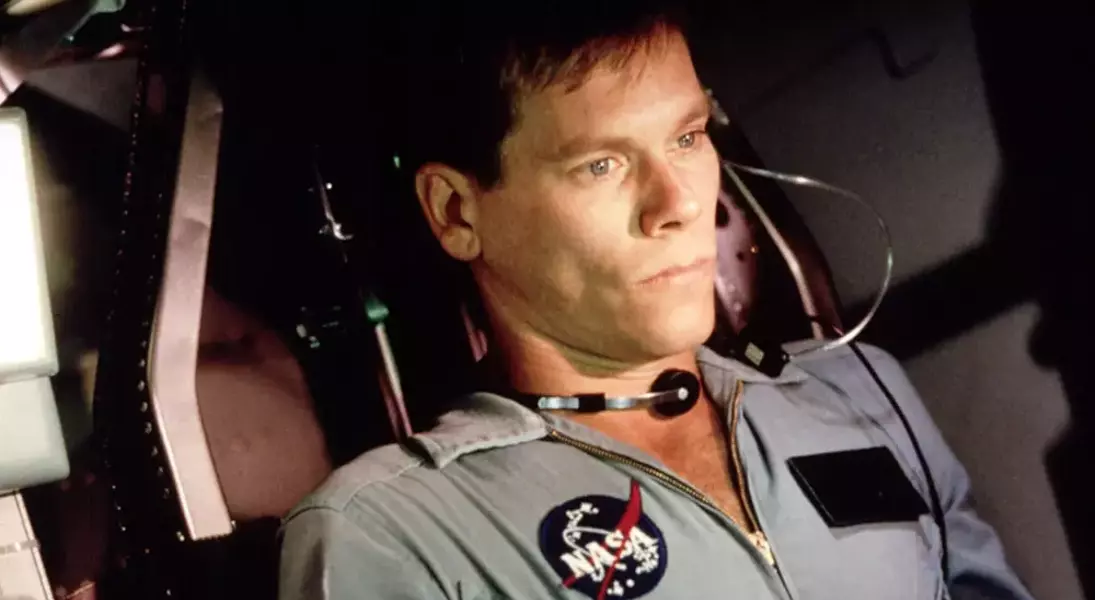
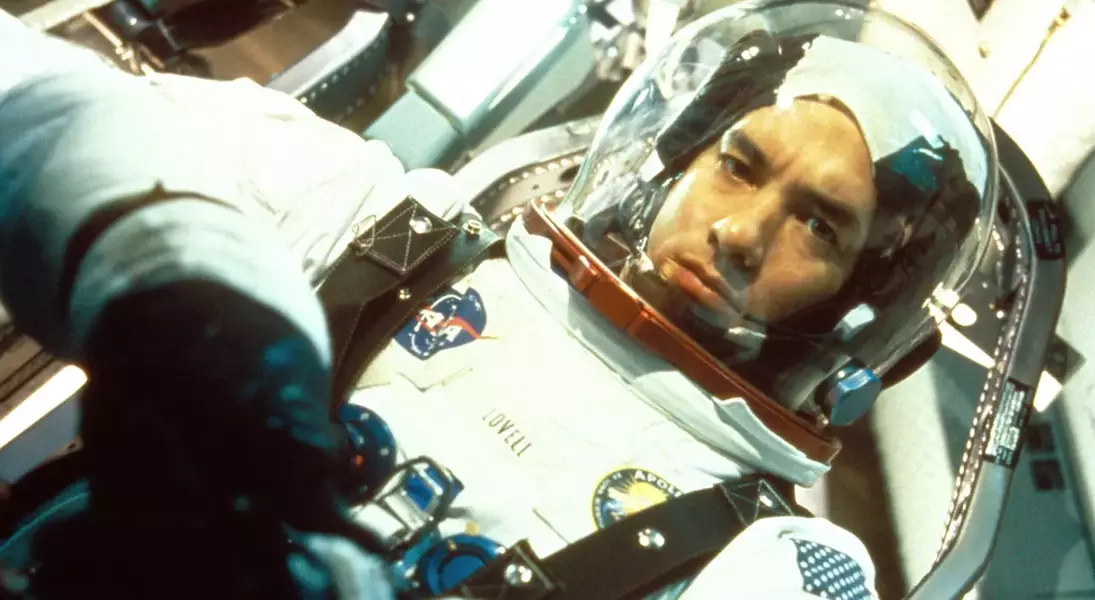
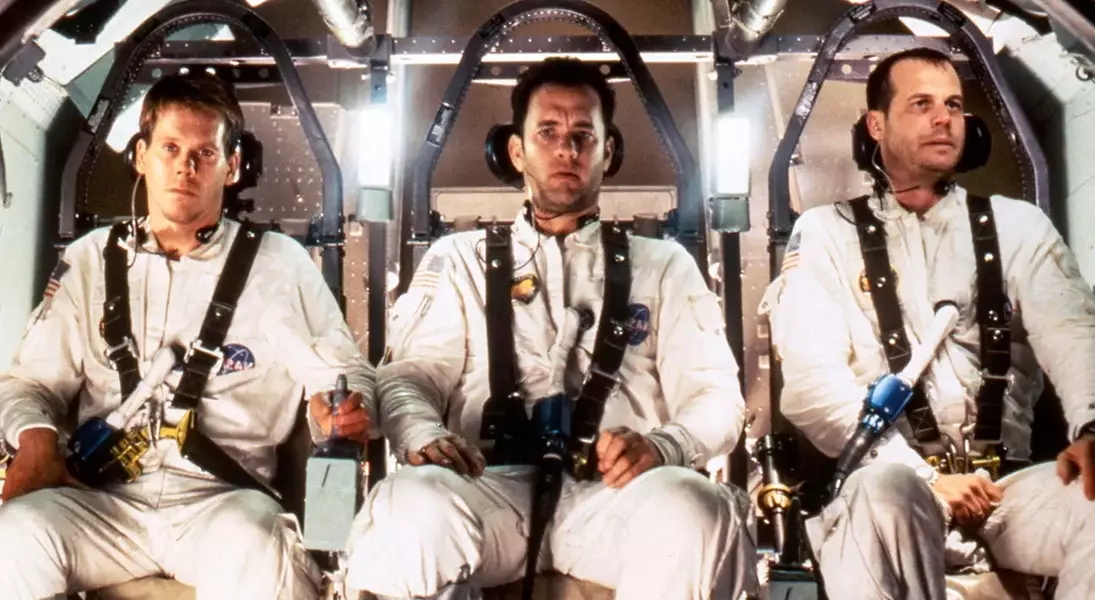
The selection of the cast was a pivotal step in the film's development. Initially, Kevin Costner was considered for the role of Jim Lovell, but it was Tom Hanks, through his agent, who expressed a profound desire to portray an astronaut. This revelation shifted the casting trajectory. Grazer recognized Hanks' universal appeal, pondering who audiences would most wish to see saved. Despite initial concerns that Hanks, known for his comedic roles, might lead to a less serious interpretation, his acclaimed performances in 'Philadelphia' and 'Forrest Gump' soon dispelled any doubts, making him the undeniable choice. Kevin Bacon recounted a serendipitous encounter with Brian Grazer, rumored to have led to his casting as Jack Swigert. Gary Sinise, fresh from working with Hanks on 'Forrest Gump,' successfully auditioned for Ken Mattingly, drawn to the character's vital role in the mission's ultimate success. Clint Howard, Ron's brother, strategically chose his role as Sy Liebergot to ensure his screen time, while Kathleen Quinlan secured the part of Marilyn Lovell. A heartwarming anecdote involves Ron's mother, Jean Speegle Howard, auditioning for Grandma Lovell, even removing her false teeth to appear older and more fitting for the part.
The Weight of Authenticity: Simulating Space for the Screen
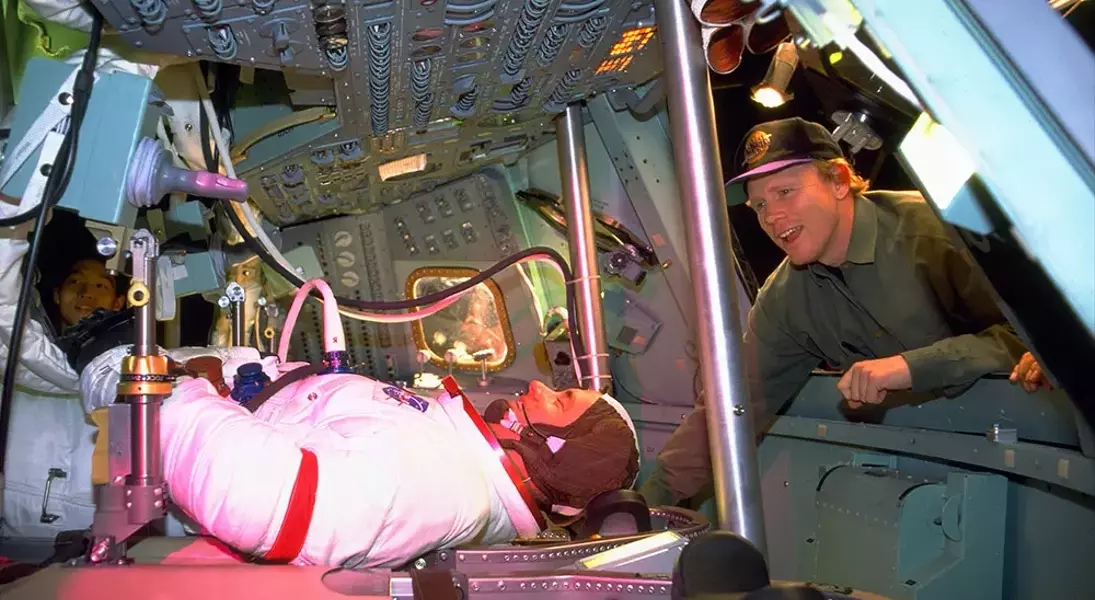
To recreate the experience of zero gravity, the filmmakers faced a significant challenge. Initial attempts with wires proved awkward and impractical. A chance conversation between Ron Howard and Steven Spielberg led to the discovery of the \"Vomit Comet,\" a KC-135 training plane that simulated weightlessness through parabolic flights. This innovative approach allowed the cast, including Hanks, Bacon, and Paxton, to experience genuine weightlessness, despite the accompanying nausea and fatigue. The actors were given medication to combat motion sickness and maintain energy. Howard, realizing the effectiveness of this method, convinced the studio to invest in extensive filming aboard the KC-135, capturing crucial master shots in a truly unique way. Tom Hanks emphasized that this method was unparalleled at the time, arguing that no amount of CGI or conventional techniques could have replicated the authentic feel of zero gravity. The commitment to realism extended to the ground sets, where the stage was cooled to near-freezing temperatures to simulate the cold of space, and actors even drank hot liquids before takes to ensure visible breath, adding another layer of authenticity to their performances.
Recreating Mission Control: Where Failure Was Not an Option
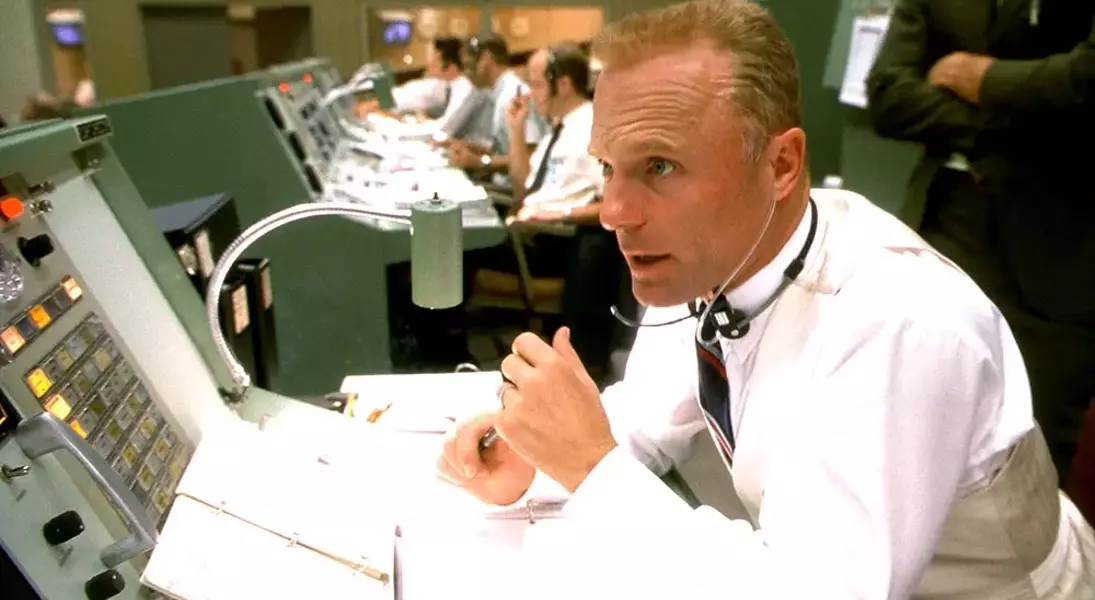
The film's dedication to historical accuracy extended to the painstaking recreation of Mission Control. Every detail was meticulously measured and replicated, so much so that even technical advisors were momentarily disoriented by the realism. Ron Howard fostered a collaborative environment among the actors portraying Mission Control staff, providing them with intensive training and encouraging them to delve into the technical vernacular. Clint Howard recalled the stacks of paperwork and cassette tapes containing actual communications, which helped the cast internalize the rhythm and cadence of real flight controllers. Ed Harris, who played flight director Gene Kranz, immersed himself in interviews and news footage to understand his character's demeanor and the technical complexities. The film also benefited from medical student Ed Yoon, who advocated for incorporating extensive technical dialogue, believing audiences appreciated the realism, much like in the popular show 'ER.' A poignant moment in the film is the line, \"Failure is not an option,\" which, though never uttered by Gene Kranz during the actual mission, became a powerful statement, so much so that Kranz later adopted it as the title of his memoir. This detail, brought to the filmmakers by an original mission controller, epitomizes the film's blend of dramatic license and profound respect for historical truth.
The Legacy of 'Apollo 13': A Timeless Cinematic Achievement
Upon its completion, 'Apollo 13' underwent test screenings, garnering overwhelmingly positive responses. Ron Howard recounted a memorable instance where one viewer, unaware it was a true story, fiercely criticized the ending as unrealistic, highlighting the film's success in making an incredible true event feel believable. Astronaut Buzz Aldrin himself was fooled by the film's recreated launch sequences, a testament to the visual effects team's masterful work. Kathleen Quinlan described the film as an instant classic, a sentiment echoed by many. James Horner's evocative musical score further elevated the film, deeply moving audiences and even Tom Hanks during recording sessions. Gary Sinise lauded the film's ability to create intense suspense despite the audience knowing the historical outcome, praising Howard's directorial prowess. Although 'Apollo 13' did not win the Best Picture Oscar, losing to 'Braveheart,' producer Brian Grazer shared a touching moment with Jim Lovell, who, in a gesture of empathy, reminded him, \"I never made it to the moon either,\" offering a profound sense of perspective. Legendary director Billy Wilder later complimented Howard on the film, particularly appreciating its powerful narrative about someone who ultimately doesn't achieve their lifelong dream.
