The author reflects on the resurgence of PhysX in discussions, a technology once considered outdated, and examines its current relevance in modern gaming. The piece delves into how Nvidia's recent changes to 32-bit CUDA application support for RTX 50 series graphics cards have impacted the hardware-accelerated PhysX effects. Through testing with games like Batman: Arkham Asylum and Arkham City, the article illustrates the significant visual and performance differences when PhysX is active versus disabled, highlighting the CPU's role as a bottleneck without proper acceleration. It also evaluates the effectiveness of new driver updates and the potential benefits of using a dedicated PhysX card.
Unlocking the Full Potential of Game Physics: A Deep Dive into PhysX's Modern Relevance
PhysX's Unexpected Comeback in Contemporary Gaming Discussions
It's quite astonishing to find PhysX being a focal point of conversation in 2025. This technology, which originated during the author's academic years, was largely thought to have faded into obscurity. However, recent developments have brought it back into the spotlight, challenging previous assumptions about its obsolescence.
Nvidia's Driver Evolution and its Ramifications for PhysX
Earlier this year, Nvidia ceased support for 32-bit CUDA applications with its latest RTX 50 series GPUs. This change rendered hardware-accelerated PhysX effects in 32-bit games unplayable. PhysX traditionally offloads intricate in-game physics calculations from the main processor to a dedicated card, allowing for richer, more dynamic environmental effects. Without this acceleration, the CPU becomes solely responsible for these computations, leading to significant performance degradation and frame rate limitations, even on powerful modern CPUs.
The Indispensable Role of PhysX in Visual Fidelity
Initially, the idea of simply deactivating PhysX seemed like a straightforward fix for performance issues. However, extensive testing in games such as Batman: Arkham Asylum and Batman: Arkham City revealed the profound impact of this setting. Disabling PhysX resulted in a noticeable absence of various environmental elements, including detailed objects, volumetric fog, realistic smoke, flag animations, and diverse particle effects, often making the game world appear significantly less immersive and visually flat.
Comparative Performance Analysis: PhysX Enabled vs. Disabled
Performance metrics collected during testing vividly illustrate the performance penalties incurred when PhysX acceleration is absent in older titles. Using a consistent test setup, with only the graphics card varying, and with frame rates unlocked via configuration files, the data showed substantial frame rate drops when PhysX was set to high without hardware support.
Overcoming Challenges: Driver Updates and Multi-GPU Configurations
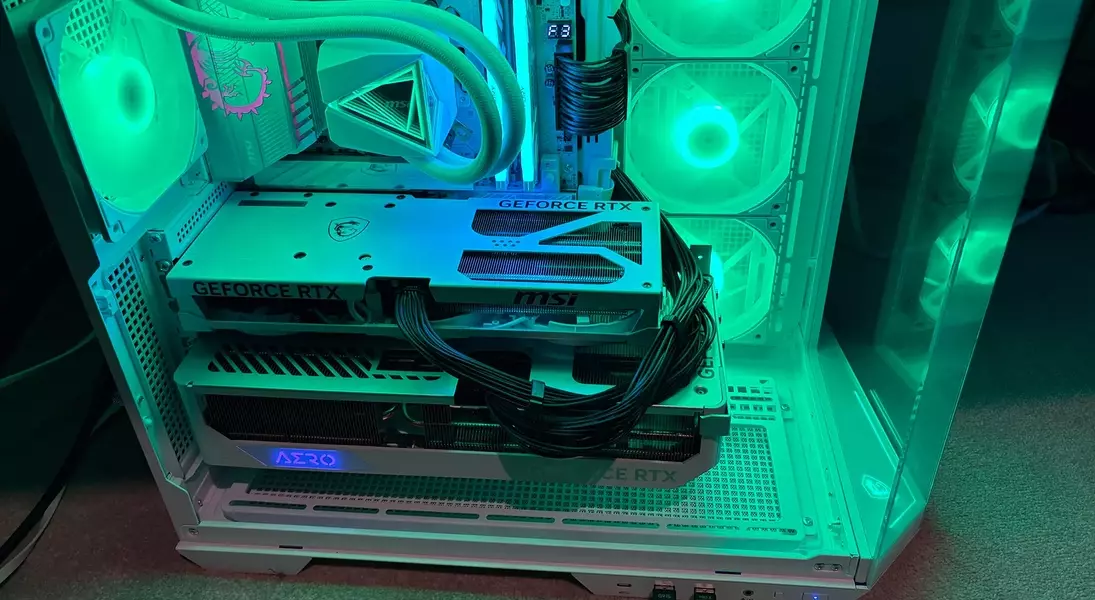
While Batman: Arkham Asylum currently lacks specific driver support for PhysX on RTX 50 series cards, Nvidia plans to introduce it soon. For titles like Batman: Arkham City, which received support in driver version 591.44, performance on the RTX 5080 showed improvement, though it still lagged behind the RTX 4080 Super when PhysX was active. This suggests an overhead in the translation process. The most significant performance gains were observed by utilizing a multi-GPU setup, where an RTX 4080 Super was dedicated solely to PhysX processing alongside an RTX 5080, dramatically enhancing frame rates and overall gameplay fluidity. Despite thermal considerations in such configurations, this approach yielded superior results.
Re-evaluating PhysX's Value in Preserving Gaming Heritage
The testing journey led to an unexpected appreciation for PhysX's contribution to these classic games. What began as an expectation of minimal impact transformed into a recognition of its substantial role in delivering a visually rich and dynamic gaming experience. While the decision to discontinue 32-bit support may be logical from a technological standpoint, retaining some form of PhysX compatibility is crucial for preserving the integrity and playability of beloved older titles on modern hardware, underscoring the PC's role as a platform for gaming longevity.
