Enbridge's recent performance has been notable, particularly for a stock with a low beta, indicating its stability relative to the broader market. Despite its inherently defensive nature, the company has managed to hold its ground. This analysis will explore the key facets of Enbridge's current standing, including its growth initiatives, potential operational vulnerabilities, and financial considerations.
Enbridge has a substantial secured growth backlog, valued at CAD 41 billion, which is projected to drive a 5% long-term compound annual growth rate in adjusted EBITDA, distributable cash flow (DCF) per share, and earnings per share (EPS). A significant portion of this growth is expected to materialize in 2027, which is anticipated to be a major commissioning year for new projects.
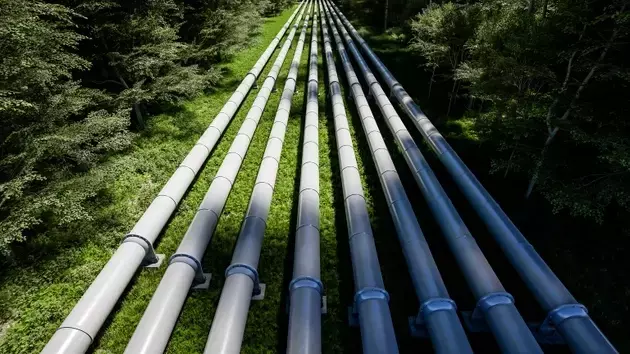
However, the company faces material medium-term throughput risks, primarily stemming from its Mainline System, which contributes approximately one-third of Enbridge's EBITDA. The emergence of competing egress pipelines could challenge the Mainline System's market share and overall profitability. Monitoring the competitive landscape is crucial for assessing Enbridge's future revenue streams.
From a financial perspective, Enbridge's debt-to-EBITDA ratio stands at 5.1x, exceeding its target range of 4.5x to 5.0x. Furthermore, interest expenses consume roughly 27% of its adjusted EBITDA. This elevated debt level and significant interest burden warrant close monitoring, especially in an environment of rising interest rates, as it could impact the company's financial flexibility and profitability.
In terms of valuation, Enbridge currently trades at 13.0x its one-year forward enterprise value to EBITDA, which is above both its peer average and its historical median. Technical analysis suggests that the share price is likely to remain range-bound near its support levels. For investors seeking a more insulated position against operational business risks, Canadian-denominated preferred shares are considered a favorable option over their U.S.-denominated counterparts, primarily due to the elimination of foreign exchange risks and the preference for securities with a rate reset mechanism.
Looking ahead, Enbridge's strategic investments in growth projects position it for long-term expansion in its key financial metrics. While the company demonstrates resilience, the competitive pressures on its Mainline System and its elevated debt levels are critical factors that could influence its future performance. These aspects require careful observation to fully understand the trajectory of the company's operational and financial health.
