
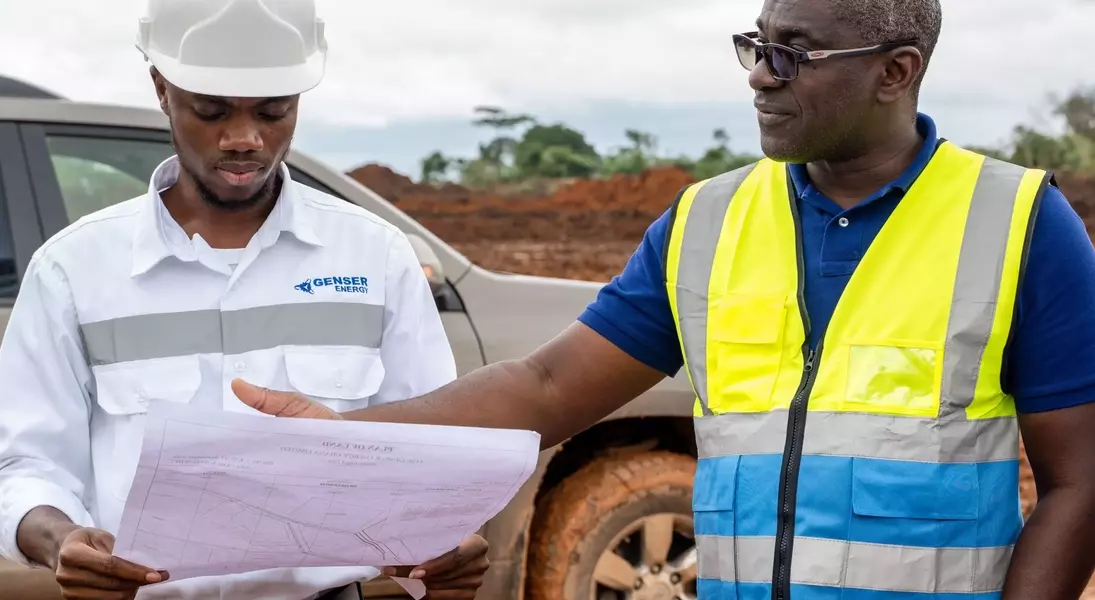

This article explores the remarkable journey of Baafour Asiamah-Adjei, a visionary engineer and MIT alumnus, who founded Genser Energy, a major private power provider in Ghana. It highlights his unexpected path to MIT, his pivotal decision to leave a lucrative consulting career to address West Africa's energy challenges, and his company's innovative and ethical approach to sustainable power infrastructure development.
Illuminating a Continent: How One Engineer's Vision is Powering West Africa's Future.
From Humble Beginnings to a Pivotal Decision: The Genesis of a Lifelong Purpose
Baafour Asiamah-Adjei, an alumnus of MIT's 2003 class, now stands as the CEO and founder of Genser Energy, a prominent private electricity enterprise in Ghana. Yet, his journey to this influential position, and even to MIT itself, was far from straightforward. Growing up in Tafo, Ghana, the son of a dedicated primary school teacher, he excelled academically at the esteemed Achimota School. Despite his achievements, the idea of attending MIT seemed beyond his reach until a serendipitous encounter with Nancy Keteku, a regional educational advisor, who questioned why he hadn't applied given his perfect SAT scores. With the application deadline looming, Asiamah-Adjei rapidly completed his application, which was then hand-delivered to New York, setting in motion a chain of events that would redefine his future. After graduating from MIT with a degree in mechanical engineering, he embarked on a successful career at McKinsey, a global consulting firm. While intellectually stimulating, he felt a deeper calling, a sense of missing purpose that prompted a career reevaluation.
The Spark of Inspiration and the Genesis of Genser Energy in West Africa
A transformative discussion in 2005 with his friend Pablo Tribin, an MIT peer, sparked Asiamah-Adjei's interest in the power sector. This conversation coincided with a critical time for Ghana, where in 2005, only 41% of the population had access to electricity, heavily relying on hydro-power susceptible to climate variability. Drawing on his MIT thermodynamics knowledge, he recognized the immense potential in addressing this energy deficit. Taking a sabbatical from McKinsey, he returned to Ghana to assess the landscape, realizing the imperative for a more resilient power supply to drive industrialization and economic growth. He envisioned an infrastructure built on precision, scalability, and local relevance, fostering ethical practices by empowering Ghanaian engineers, embracing environmentally conscious technologies, and investing in communities. This profound realization led him to establish Genser Power Ghana in 2007, a sister company to Tribin's Colombian venture. With a shared vision, they aimed to deliver dependable and efficient power systems, initially fueled by natural gas and transitioning to sustainable sources, supported by a U.S. holding company for expansion and investment.
Foundational Principles and Innovative Engineering: The MIT and McKinsey Influence
Genser Energy's operational philosophy is deeply ingrained in the principles Asiamah-Adjei acquired from MIT and McKinsey. MIT instilled in him a commitment to fact-based decision-making, humility in the face of the unknown, and an unyielding curiosity for research and discovery. From McKinsey, he learned to translate inquiry into tangible action, distinguish between facts and subjective judgments, and cultivate a culture of constructive disagreement within his team. A pivotal concept from his MIT mechanical engineering course, the modular design of computer software, profoundly influenced his approach to power plant construction. This "modular thinking" became the core of Genser's strategy: instead of on-site construction, they fabricate pre-engineered, factory-built units that are then transported and assembled like building blocks. Collaborating with companies like Caterpillar, they re-engineered standard generators into skid-mounted, scalable units. This innovative method drastically reduces construction costs and time, enabling Genser to offer flexible, incremental power solutions tailored to the needs of developing economies, a stark contrast to the traditional, massive, one-size-fits-all power deals.
Strategic Growth and Navigating Challenges: Expanding Genser's Footprint
Genser initiated its operations by directly supplying power to Ghana's industrial sector, particularly gold mines, identified through a comprehensive market analysis by two MIT interns. This strategic focus proved successful due to the mines' consistent energy demands and limited access to reliable power. Over time, Genser expanded its reach, establishing eight power plants across Ghana and Burkina Faso, significantly contributing to West Africa's industrial power supply with over 200 megawatts of generated electricity. The company's growth, however, was not without its trials. In 2022, accusations of preferential gas tariffs and regulatory circumvention led to a rigorous investigation by the Ghanaian parliament. These claims, which Asiamah-Adjei refuted as misinformed, were ultimately dismissed, reinforcing Genser's standing and public recognition as a legitimate private infrastructure developer. Moreover, Genser has actively mitigated the environmental impact of its fossil fuel operations through meticulous environmental assessments, land restoration initiatives, and a commitment to planting one million teak seedlings by 2028, showcasing its dedication to environmental stewardship.
Forging Cross-Border Connections and Investing in Future Generations: A Legacy of Impact
Genser's most ambitious endeavor is a cross-border natural gas pipeline extending from Prestea, Ghana, to Abidjan, Côte d'Ivoire, with future plans for expansion into Guinea. This project is a crucial step in displacing diesel reliance with cleaner energy and eventually transitioning to renewable sources like solar and wind. To optimize the pipeline's route, Genser enlisted MIT Technology and Public Policy graduates, who leveraged regional development trends to anticipate future industrial zones, demonstrating Asiamah-Adjei's continued reliance on MIT expertise. Beyond infrastructure, Genser is deeply invested in human capital development in Ghana. Through partnerships with organizations like Sponsors for Educational Opportunity (SEO) Africa, Genser offers professional development programs and internships for university graduates, with many advancing to leadership roles within the company. This commitment extends to aligning university curricula with industry demands, fostering a platform for training skilled Ghanaians. Looking ahead, Asiamah-Adjei is establishing a STEAM-focused boarding school in Ghana, a tribute to his late mother, designed to provide rigorous education and full scholarships to talented students from lower-income families. This multifaceted approach, driven by robust relationships and a commitment to enduring systems, solidifies Genser's role as a catalyst for energy, education, and economic progress across West Africa.
