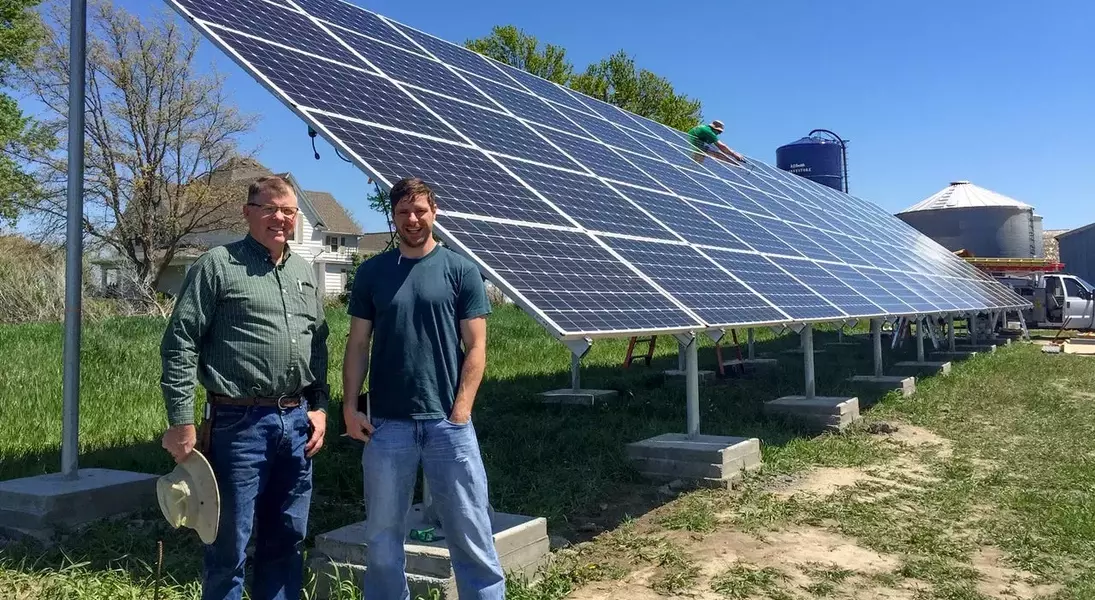
A forward-thinking Nebraska farmer is championing a significant shift towards energy independence within the agricultural sector. Through his innovative enterprise, GC ReVolt, he is actively assisting farms in transitioning from being solely energy consumers to becoming active energy producers. This paradigm shift holds considerable promise, not only in reducing operational costs for farmers but also in bolstering their ability to withstand disruptive events, such as severe weather, which can jeopardize power supply and, by extension, food production. The ultimate objective is to foster a network of self-sufficient farms, contributing to a robust and resilient localized food system, capable of maintaining productivity even in challenging circumstances.
Graham Christensen, a fifth-generation farmer in Nebraska, experienced firsthand the vulnerability of traditional energy systems when a powerful storm devastated Burt County, leaving many without electricity. His own farm, however, remained fully operational thanks to its integrated solar and generator system. This personal experience solidified his commitment to promoting energy resilience in farming communities.
In 2017, Christensen founded GC ReVolt with a clear mission: to help farmers achieve self-sufficiency, reduce expenses, and enhance the security and sustainability of their operations. The company has since implemented approximately 100 alternative energy systems across Nebraska and Iowa, primarily focusing on smaller-scale installations tailored for agricultural use.
Christensen's deep-rooted connection to both agriculture and energy production runs in his family. His great-uncle played a crucial role in establishing the Burke County Public Power District, and his great-grandfather was instrumental in the rural electrification efforts during the 1930s New Deal era. This legacy fuels his vision for a future where farms are not merely consumers but generators of energy, ensuring continuity for generations to come.
Beyond immediate power solutions, solar energy forms a critical part of microgrids—localized energy systems that can function independently from the main electrical grid. These microgrids, often incorporating generators and battery storage, represent a significant leap towards complete energy self-sufficiency for farms. Christensen envisions a future where these independent farm systems collectively form a distributed energy network, fundamentally altering the landscape of rural power generation and distribution. Such a decentralized approach would significantly enhance national food security, allowing agricultural operations to continue uninterrupted regardless of external grid disruptions.
The financial advantages of adopting these energy solutions are substantial. As extreme weather events become more frequent and energy costs continue to climb, investments in local energy systems like solar arrays, generators, and batteries offer considerable returns. For instance, farmer Keith Berns, who installed a 99-kilowatt solar array with support from the USDA's Rural Energy for America Program (REAP), anticipates a seven-year payback period. Similarly, Christensen's farm has seen its electricity bills dramatically decrease, with the solar system poised to offer free power once fully amortized.
The integration of microgrids also opens doors for powering future agricultural technologies, including electric vehicles, autonomous machinery, and robotic farm equipment. This transition from centralized energy generation to a distributed, on-farm model positions farmers as key players in a more efficient and secure energy ecosystem, fostering collaborative partnerships with utility companies to optimize energy flow across the region.
Embracing energy independence transforms farms into pillars of stability, providing a steady and reliable food supply for the nation. This innovative approach offers both financial benefits and enhanced operational security, safeguarding agricultural productivity against future uncertainties.
