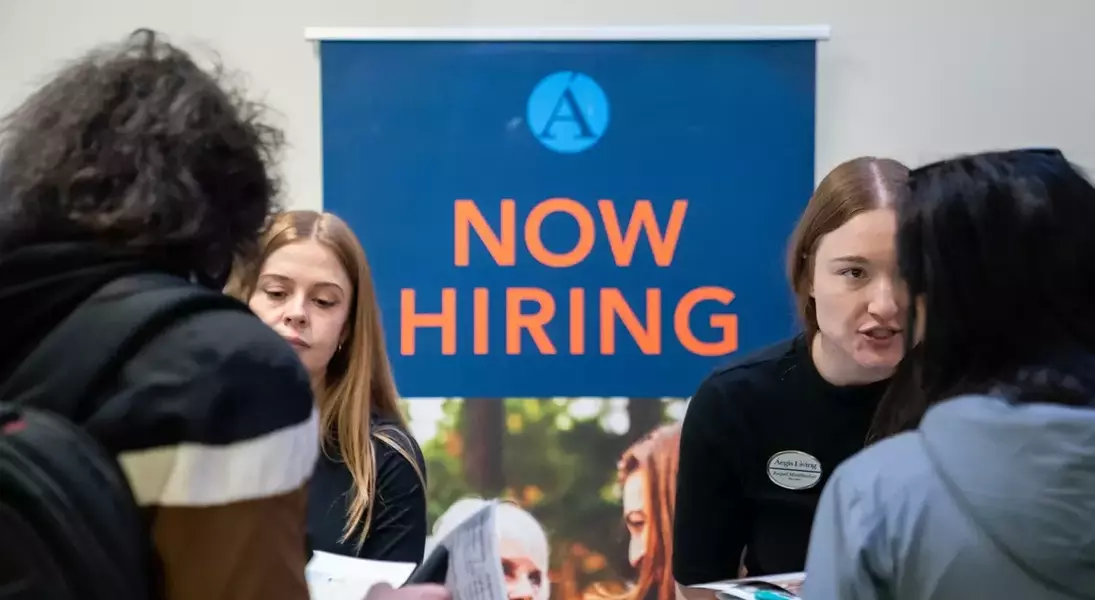
This article delves into the recent employment report for January 2026, offering a comprehensive look at the state of the US job market. It covers the unexpectedly strong job additions for the month and significant retrospective revisions to 2025's job creation figures, highlighting both positive and concerning trends.
Navigating the Evolving Employment Landscape: A January 2026 Perspective
January's Unexpected Boost: A Closer Look at Recent Job Figures
The dawn of 2026 brought a surprisingly robust performance in the employment sector. In January, American businesses expanded their payrolls by an impressive 130,000 positions. This figure far surpassed the 55,000 jobs predicted by forecasters. Concurrently, the national jobless rate saw a decline to 4.3%, reaching its lowest point since August of the previous year. This initial surge suggests a potential re-energizing of the labor market, contrasting with earlier concerns about a hiring slowdown.
The Shadow of the Past: Significant Downward Adjustments for 2025
Despite the positive start to 2026, a deeper analysis reveals a less optimistic picture for the preceding year. After incorporating new data, the Bureau of Labor Statistics significantly reduced its job creation estimates for 2025. What was initially thought to be 584,000 new jobs was revised down to a mere 181,000. Furthermore, job growth for the period ending March 2025 was cut by nearly 900,000 positions. These substantial revisions position 2025 as the weakest year for employment growth outside of a recession since 2003, indicating underlying challenges in the economy.
Economic Ramifications: Impact on Federal Reserve Policy and Public Sentiment
The brisk pace of hiring in January could ease anxieties regarding a downturn in employment, potentially influencing the Federal Reserve's monetary policy. With strong job numbers, the Fed might sustain its focus on managing inflation rather than being pressured to reduce interest rates to stimulate the job market. This situation highlights a complex economic scenario where robust employment data could defer rate cuts, maintaining a cautious approach to economic management.
Industry-Specific Gains and the Broader Economic Paradox
A notable portion of the recent job growth originated from the healthcare sector, which alone contributed 137,000 new jobs. This expansion helped mitigate losses observed in government, finance, and logistics. Manufacturing also showed a positive trend, adding 5,000 jobs—its first increase since November 2024. This uneven distribution of job creation points to a dichotomy: while the overall economy and stock market show strength, a significant segment of the public remains pessimistic due to financial pressures and a previously stagnant job market. This contradiction presents a nuanced challenge for policymakers and economic analysts alike.
Future Outlook: Balancing Momentum with Uncertainty
The current state of the job market is described as largely stable, yet still susceptible to fluctuations. Experts suggest that a sustained improvement in hiring could harmonize conflicting economic indicators, aligning employment growth with overall economic expansion. Conversely, a failure to maintain this momentum could lead to rising unemployment rates and prolonged job searches. As the economy navigates ongoing uncertainties, individuals are likely to prioritize job security, and those seeking employment may face continued competition and extended search periods.
