The recent San Sebastián Industry Awards celebrated the achievements of both nascent and established filmmakers, showcasing a rich tapestry of cinematic narratives and international collaborative efforts. The spotlight was particularly on emerging talents, whose innovative projects captivated the jury and secured significant recognition across various categories.
San Sebastián Celebrates New Voices and Global Collaborations in Film Industry Awards
On September 24, 2025, the prestigious San Sebastián Europe-Latin America Co-Production Forum announced its top award recipients, bringing renewed attention to the vibrant global film landscape. The event saw remarkable success for Francisco Rodríguez Teare from Chile and Laura Baumeister from Nicaragua, whose films 'Do Not Let Me Die Alone' and 'What Follows Is My Death' respectively, were among the big winners.
Francisco Rodríguez Teare's 'Do Not Let Me Die Alone,' his sophomore directorial effort, follows the journey of a melancholic delivery boy in Iquique, Northern Chile, tasked with handling ancient mummies. Producer Rodrigo Díaz emphasized the film's exploration of mortality and memory, highlighting how the Chinchorro mummies serve as profound guides for the characters. This project represents a robust international collaboration between Chile's Axolotl and Mimbre Films, and Belgium's Michigan.
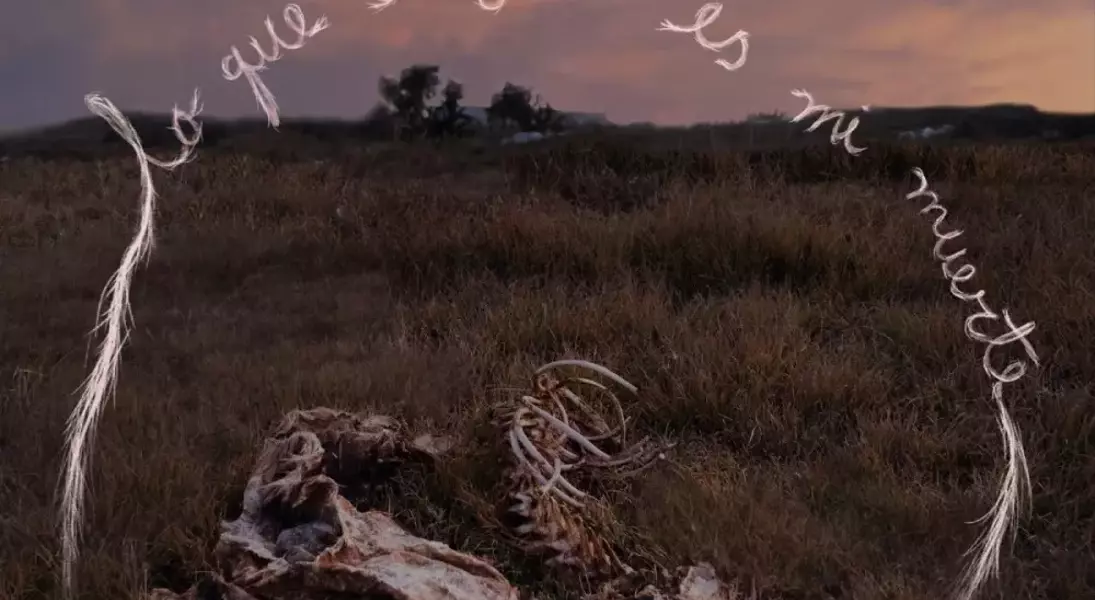
Laura Baumeister's 'What Follows Is My Death,' also her second feature after the critically acclaimed 'Daughter of Rage,' offers a compelling narrative set in the Mexican desert. The story unfolds as Virginia, a young Nicaraguan migrant, is rescued by Aurora, a sheep shearer, leading to a profound connection and Virginia's mystical transformation into a nahual woman. Baumeister described her film as a \"transgender story, narratively speaking: risky and entertaining,\" blending genres to portray migration as a metamorphosis, a concept she shared with Variety.
Beyond these notable wins, the forum also honored other significant projects. Uruguayan auteur Álvaro Brechner received the Artekino International Award for 'La piel de león,' marking another collaboration with Oscar-winning production company Tornasol Media. Meanwhile, Mexican director Fernando Eimbcke, known for 'Olmo,' earned the top WIP Latam award for 'Flies,' a story about a solitary woman, Olga, suddenly entrusted with the care of a nine-year-old boy. Esteemed Mexican producer Michael Franco, who also produced 'Olmo,' supported this project. The Egeda Platino Industria Award was presented to Colombian directorial duo Esteban Hoyos García and Juan Miguel Gelacio Ramírez for 'We Were No Longer Five,' a fantasy-infused tale of a mother's search for her son lost in Colombia's armed conflict.
In the European segment, German-Ukrainian filmmaker Tatjana Moutchnik's debut feature, 'February, Seven Days,' swept the WIP Europa awards. This poignant family drama centers on two estranged brothers reuniting for their mother's funeral amidst the backdrop of the Russian invasion of Ukraine. Additionally, the Ikusmira Berriak Award, supported by Sideral, recognized 'La Koreana, un poema ferromagnético de luz y memoria,' a project by Joana Moya Blanco from Spain, which garnered significant industry buzz and is expected to receive backing from a major Spanish company.
These awards not only celebrate individual achievements but also underscore the San Sebastián Festival's vital role in fostering international co-productions and providing a platform for diverse and compelling storytelling from around the globe.
The San Sebastián Industry Awards underscore the importance of international collaboration and nurturing new talent within the film industry. The recognition of diverse narratives, from the exploration of ancient mummies in Chile to a mystical transgender journey in the Mexican desert, highlights a growing openness to unique perspectives and innovative storytelling. This forward-thinking approach, blending cultural heritage with contemporary themes, promises a richer and more inclusive future for global cinema. These accolades not only boost the careers of individual filmmakers but also inspire a broader dialogue about identity, migration, and the human condition, demonstrating cinema's power to transcend borders and foster understanding.
